

Network Effects: Multi-Site Research for Children with Medical Complexity – Complex Care Journal Club Podcast
Current Status
Price
Get Started
Course Credit
The following credits are available for this course:
| AMA PRA Category 1 Credits™ (MD, DO, NP, PA) | 0.5 hours |
| Contact Hours (Nurse) | 0.5 hours |
| American Academy of Physician Assistants (AAPA) Category 1 CME Credits | 0.5 hours |
| ASWB ACE Continuing Education Credits (Social Worker) | 0.5 hours |
| ABP Part II MOC (American Board of Pediatrics) Credits | 0.5 hours |
(Note: a course evaluation is required to receive credit for this course.)
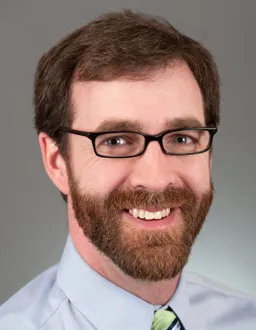
Jay Berry, MD, MPH
Executive Director, Systems and Policy Research Network for Children and Youth with Special Healthcare Needs Co-Director, Children’s Hospital Association Health Services Research Academy Chief, Complex Care, Division of General Pediatrics Department of Pediatrics and Department of Plastic and Oral Surgery, Boston Children’s Hospital Associate Professor of Pediatrics, Harvard Medical School
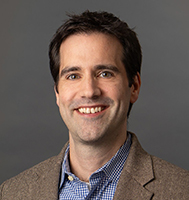
Ryan Coller, MD, MPH
Associate Professor, Chief, Division of Hospital Medicine and Complex Care University of Wisconsin Co-Director, SPRNetwork School of Medicine and Public Health, UW Health Kids American Family Children’s Hospital
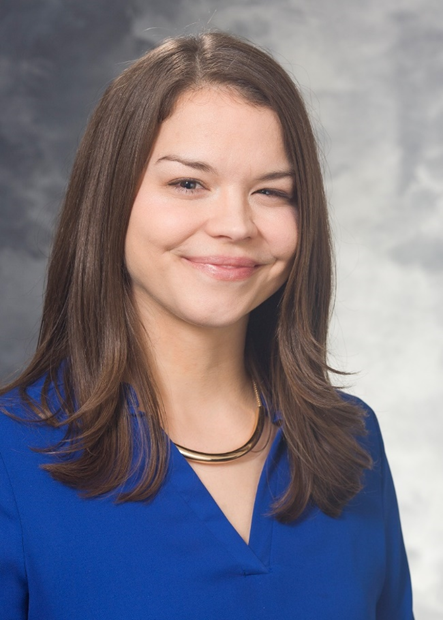
Dania Champion, MS, BS
Associate Professor, Chief, Division of Hospital Medicine and Complex Care University of Wisconsin Co-Director, SPRNetwork School of Medicine and Public Health, UW Health Kids American Family Children’s Hospital
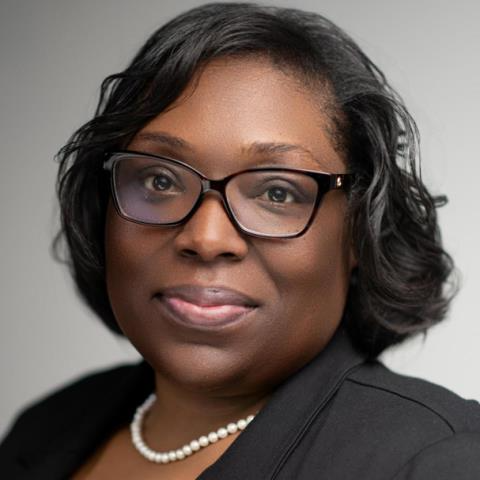
Allysa Ware, PhD, MSW
Co-Director, SPRNetwork, Executive Director Family Voices
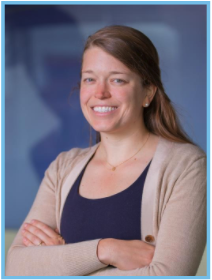
Moderator: Kristina Malik, MD
Assistant Professor of Pediatrics, University of Colorado School of Medicine Medical Director, KidStreet Pediatrician, Special Care Clinic, Children’s Hospital Colorado
In this Complex Care Journal Club podcast episode, Drs. Ryan Coller, Jay Berry, Allysa Ware, and Ms. Dania Champion describe the Systems and Policy Research Network (SPR Network), a multi-site research collaborative focused on children with special healthcare needs. They discuss the network’s core research areas — child quality of life, family well-being, and family engagement — as well as recent work leveraging national Medicaid and hospitalization data to inform federal policy. They also highlight the network’s Early Investigator Program, its lived experience partner advisory model, and pathways for researchers and families to get involved at SPRnetwork.org.
Learning Objectives:
At the conclusion of this educational program, learners will be able to:
- Discuss emerging evidence in the care of children with medical complexity.
- Describe methodological considerations for recent publications in complex care
- Identify opportunities to translate research findings into clinical practice.
In support of improving patient care, Boston Children’s Hospital is jointly accredited by the Accreditation Council for Continuing Medical Education (ACCME), the Accreditation Council for Pharmacy Education (ACPE), and the American Nurses Credentialing Center (ANCC), to provide continuing education for the healthcare team.
Physician
Boston Children’s Hospital designates this live activity for a maximum of .5 AMA PRA Category 1 Credits ™. Physicians should claim only credit commensurate with the extent of their participation in this activity.
Nurse
Boston Children’s Hospital designates this activity for .5 contact hours for nurses. Nurses should only claim credit commensurate with the extent of their participation in the activity.
Physician Assistant
Boston Children’s Hospital has been authorized by the American Academy of PAs (AAPA) to award AAPA Category 1 CME credits for activities planned in accordance with AAPA CME Criteria. This activity is designated for .5 AAPA Category 1 CME credits. PAs should only claim credit commensurate with the extent of their participation.
Social Worker
As a Jointly Accredited Organization, Boston Children’s Hospital is approved to offer social work continuing education by the Association of Social Work Boards (ASWB) Approved Continuing Education (ACE) program. Organizations, not individual courses, are approved under this program. State and provincial regulatory boards have the final authority to determine whether an individual course may be accepted for continuing education credit. Boston Children’s Hospital maintains responsibility for this course. Social workers completing this course receive .5 ACE CE continuing education credits.
MOC II
Successful completion of this CME activity, which includes participation in the activity, with individual assessments of the participant and feedback to the participant, enables the participant to earn:
0.5 MOC points in the American Board of Pediatrics (ABP) Maintenance of Certification (MOC) program
Disclosures
Boston Children’s Hospital adheres to all ACCME Essential Areas, Standards, and Policies. It is Boston Children’s policy that those who have influenced the content of a CME activity (e.g. planners, faculty, authors, reviewers and others) disclose all relevant financial relationships with commercial entities so that Boston Children’s may identify and resolve any conflicts of interest prior to the activity. These disclosures will be provided in the activity materials along with disclosure of any commercial support received for the activity. Additionally, faculty members have been instructed to disclose any limitations of data and unlabeled or investigational uses of products during their presentations.
The following planners, speakers, and content reviewers, on behalf of themselves, have reported the following relevant financial relationships with any entity producing, marketing, reselling, or distributing health care goods or services consumed by, or used on patients:
Jay Berry, MD, MPH
None
Ryan Coller, MD, MPH
None
Allysa Ware, PhD, MSW
None
Dania Champion, MS, BS
None
Kristina Malik, MD
None
Please see the FAQs below for common questions about how to work through a course. If you have a question or issue that is not addressed in the FAQ, please use this form to submit a help request, or if your issue is urgent, call the CME office at: 617-919-9908.
How do I navigate this course? There are two ways to access and navigate course content with the interactive table of contents: at the bottom of the main course page or in the sidebar on the right side of the page. Select the links in the table of contents to access the corresponding content. Depending on the course, access to content may be linear, in which case each content module or section can only be accessed if the prior ones are completed, or non-linear, in which case modules and sections can be accessed in any order. Use the breadcrumbs at the top of any course page to orient yourself within a course, or return to a previous course section or the main course page. How do I claim credit? If the course has been accredited, available credits will be displayed on the course home page. Select only those credits that apply to your profession, and click/tap “Apply Selection.” You may make your selection at any point while you are taking the course, or after you have completed it. How do I download a certificate? There are two ways to view/download your certificate: from within the course or from the course listing under your profile (select the document icon). In either case, you must have selected at least one available course credit type to generate a certificate. How do I view/print my transcript? You must be logged in to view your transcript. Select My Profile at the top of the page. If you do not see the transcript selector, be sure the Courses tab is selected. Select the type of credit and dates to include in your credit report. To include all credits from all time, leave the options blank. Select Download Transcript to view/download your transcript. Note each credit type in your transcripts starts a new page. How do I request a refund? Please email the CME Department to request a refund.How do navigate this course?
How do I claim credit for this course?
How do I download a certificate?
How do I view/print my transcript?
How do I request a refund?
Click Here to View Transcript
Kristina Malik, MD 00:03
Hello and welcome to the Complex Care Journal Club Podcast. My name is Kristie Malik, and I am a pediatrician at Children’s Colorado, and your host for this episode. In this podcast series, we seek to discuss emerging evidence in the care of children with medical complexity and its implications for practice. I am delighted to have the leadership team from the Systems and Policy Research Network, also known as SPR Network, joining me today. I have Dr. Ware from Family Voices, Dr. Berry from Boston Children’s and Dr. Coller and Dania Champion from University of Wisconsin. Thank you so much for being here.
Ryan Coller 00:36
Kristie, thanks so much for having us. It’s really great to be chatting with you about the network.
Kristina Malik, MD 00:40
So, I’d love to learn a little bit more about the network’s evolution and its current goals.
Ryan Coller 00:46
The Systems and Policy Research Network, or SPR Net, used to be called CYSHCNet [Children and Youth with Special Health Care Needs Network] not too long ago, and we started back in 2017 initially with funding from the Maternal and Child Health Bureau. And we’re currently about 15 member sites as well as it really integrated, kind of connection, to Family Voices, and our connections really extend beyond just that basic description as well. In our most recent focus on what the network is doing, we’ve been charged from the Maternal and Child Health Bureau to focus on a few areas that are central to the network, but we also have quite a few areas that extend beyond those as well, which we’re happy to talk about all of that. But the three core areas are thinking about how child quality of life is measured, thinking about family well-being similarly, and thinking about family engagement. We can all elaborate and go into more detail on any of those, as you’d like. And then some of the most exciting stuff is projects that have come out of the network that complement that focus, or take us in some other directions, all really with the goal at the end of the day of meeting our mission, which is to improve the health, quality of life and well-being of all children with special healthcare needs and their families by conducting rigorous multi-site research.
Kristina Malik, MD 01:55
Yeah, tell me a little bit more about the evidence and impact that the network has supported, especially for children with medical complexity. In our podcast, we try to highlight some recent practice changing articles, especially with outcomes on the patient level. We’ve definitely highlighted work from this network before, so I’d love to know what you’re working on now, through your collaborative efforts, in patient level care?
Ryan Coller 02:21
Thanks Kristie, that’s a great question. I think a terrific example of that’s very timely is research that Dr. Jay Berry recently led.
Jay Berry 02:28
Yes, thank you. One component of the network that we’re so thankful for is as a nice partnership with the Children’s Hospital Association and all of their fantastic statisticians and national data sets that they can bring to bear for conducting health services research for children with medical complexity. And part of the data that that we’ve been working with them on is some national Medicaid data as well as some national data on hospitalizations for children across the country, and given recent legislation on the federal level on Medicaid, the network has been thinking a lot about the impact of that legislation, the impact it could have on children and families. So many children with medical complexity rely on Medicaid for accessing care. And of course, Medicaid payments from, on the state level are going to pay for all the health care that these children need across the care continuum. Their hospitalizations, emergency department visits, all their outpatient visits, medications, durable medical equipment, supplies and home and community based services as well, including home nursing with some of the recent Medicaid legislation, some hospitals, especially in rural areas of the of the US, have been nervous about some of the cuts in funding that could occur and how that could impact pediatric health services. And so, we were able to take national hospitalization data for kids across the US, carve out the population of kids that use Medicaid to cover their hospitalizations, and provide a national profile of how many kids with Medicaid or hospitalized across the country in a given year, what are they coming in for? What types of hospitals do they use? And who are the children in a way? if Medicaid, obviously is doing so much to help children and families who are living in poverty or around the poverty level, which is absolutely wonderful, but Medicaid is also covering children who have a disability or chronic disability, and so showing the how Medicaid is underwriting and covering hospitalizations for kids with disability across the US and of all race ethnicities, of all income levels, of families residing in urban and rural areas. Everywhere it’s been having such an impact. So the network was able to again partner with the Children’s Hospital Association to leverage such data and put out a rigorous health services research study and fast track it to publication, it was published in JAMA Pediatrics, get this out there for use by legislators or on the state level, Medicaid program directors, patients and families that just want to do what they can to advocate to make sure that Medicaid stays strong and is safeguarded and optimized to enable health services and good outcomes for children with medical complexity. Ryan, do you have others that you’d like to talk about?
Ryan Coller 05:28
I was going to highlight just a few others that came to mind that are really, I think relevant to the broader field. Kristie, to your question about really cutting-edge stuff. Several of the network members are leading studies in collaboration with the network to develop some new measures that are focused on children with medical complexity, including a great project that Dr. Stephanie Ames at Utah is leading to develop a measure of ableism in partnership with the networks that’s focused on ableism in healthcare. And then there are also studies that Dr. Carolyn Foster’s been leading to develop measures of quality of home healthcare and caregiving, self-efficacy for children with medical complexity as well. And so, a lot of that work is up and coming, and really exciting to see continue to get developed within the network.
Kristina Malik, MD 06:10
So, Dr. Ware, I also would love for you to talk a little bit about what the network supports in regard to family partnership. That’s also something that we in our podcast try to highlight, is publications with family partnerships. So, can you tell me about that?
Allysa Ware 06:26
Absolutely, and thank you for the question. Everything that’s been shared, really at the heart of it is our commitment to families being at the table from our structure as our leadership team. So, I am the Executive Director for a family led organization. I come to this as a family leader in the hat that I wear in the work that I do, and that trickles into every part of the network. And we have a lived experience partner advisory council that informs all the work that we do. So every project that we want it goes before that advisory group to ensure that it’s actually asking the questions that matter to families. Because we can’t actually get the solutions and actually engage in research without those questions being defined by families, and then ultimately, families being involved in every aspect, all the way from recruitment to dissemination, and certainly within academic journals. The other pieces I’ll just share about the network and family partnerships is that they are really a required component of any project becoming a network project. And so, it’s a question that we’re going to ask that we help support that we help foster. And that includes in our emerging investigator program, where they are new investigators that are up and coming, and they’re just really digging into research. And we want to set this tone from the beginning that families can be effective partners in that process, and so we support them in navigating that. And finally, the other piece is that we have been able to bring families when, for example, we had an in-person meeting, we brought five family leaders that really helped to engage in some of the Medicaid work that Jay shared a minute ago. And so, we just, we really take it to heart that we want people in the room that are living this and breathing it every day in order to guide and inform our work as equal partners in the process.
Kristina Malik, MD 08:22
You mentioned the Early Investigator Award. Dania, I know this is something you want to talk a little bit about. I was wondering if you could tell our listeners a little bit about this and some of the outcomes?
Dania Champion 08:32
Absolutely so we have an early investigator program, and it’s a quite rigorous process, it’s for early career professionals that are interested in this work, that are very passionate about children/youth with special health care needs, and they want to further something, and so they pursue research in particular areas that goes through the selection committee. We have a group of three investigators that then get awarded some per year, and are then pursuing projects throughout the year, we have monthly meetings with each topic, and also, they have mentors. We have a lot of great discussions around current topics and also just logistics of the research itself and how to move things along. And then we also have presentations and deliverables that come from that work. And we have a great website, SPRnetwork.org, if anybody would like to take a look at information that’s listed on the website, there’s a lot of information about their early investigator program. And also there’s all kinds of great research resources on our website to learn more.
Kristina Malik, MD 09:44
Yeah, the website has, you’ve had 48 publications over the years of this early Investigator Award, and that’s amazing. And all, and like Dr. Ware said, every single one of these had a family partner. That’s a huge impact.
Dania Champion 09:57
Absolutely, yeah, we definitely make the lived experience partners a big part of that program. We have partners that join the monthly meetings. We have a whole process by which we ensure that they are integrated into the projects and are offering insights all throughout.
Kristina Malik, MD 10:15
And what happens after someone’s an early investigator, what goes from there? What’s the next steps? Are they still part of your team? Can they still be involved?
Dania Champion 10:24
Absolutely, yes, that’s a great point. And a lot of our early investigators go on to become continued researchers in the network and offer fantastic publications and deliverables, many of which are listed on the website.
Kristina Malik, MD 10:38
Another thing that you all are doing, can you tell me about the complex care award? What is the goal of the award? Who are you trying to honor here?
Jay Berry 10:46
Absolutely, we are so proud of this award. This is an award given out for lifetime achievement and mid-career achievement in caring for kids with medical complexity. And it’s to celebrate those individuals who have dedicated their lives to helping children and families with medical complexity. In any area. Can be clinical research, medical education, policy, advocacy, it can be on the local level, regional, national level, we just want to celebrate all the individuals who are doing work in that space, and by celebrating them, inspire others to step up and, and do the same. It’s co-sponsored by our network as well as Family Voices and the Academic Pediatrics Association Special Interest Group for Complex Care and Disability, the Children’s Hospital Association and the Lucille Packard Foundation for children’s health also offers a stipend for the recipients, which is really wonderful.
Kristina Malik, MD 11:46
And how do we nominate someone? Is it there a form on the website? How do we do that?
Jay Berry 11:52
That’s right, you can go through the website. You’re also welcome to email Dania or I. Our emails are on the website as well for more information. But we typically put the applications out sometime in the fall, early winter, is when they’ll come out every year. And yeah, the applications aren’t too onerous, just teeing things up for individuals and nominators to really showcase the great work that people are doing out there.
Kristina Malik, MD 12:15
This is wonderful. What is your vision for the future for this network?
Jay Berry 12:20
It’s such a great question. We really want to see all of our research being translated into some enabling policy, or some type of health systems change that reaches the families, reaches the bedside; to improve the health outcomes well-being of children with medical complexity and their families. We’re just a means to an end. In like we, we want to tee up all of our assets, and we’re so grateful for those. As Dr. Ware was talking about just being able to have our lived experience partners who are so seasoned can guide us on which projects to focus on and how to approach our research projects, all the data assets that we have to bring to bear for the research and then all the sites who are with the clinician researchers who are caring for kids, and our wonderful steering committee, who have also been around the block dozens of times on trying to design impactful research, we just want to leverage all that to conduct the most meaningful research that we can. And I think the future of our network is really stemmed in which projects we choose and making sure that whatever we launch on new has a clear pathway that will lead to change and optimization at the end of the day. We absolutely love when we put something out and it lands in a fantastic medical journal with a high impact factor and all that. That’s all wonderful, but again, that’s secondary. We want our work to actually, again, reach the families, reach the bedside, and know that there’s a clear pathway forward for the findings of any research that we conduct.
Ryan Coller 13:53
I was going to muse on first agreeing with all of that and also adding the research network brings value, because what we’re trying to do is have a really inclusive approach to doing research. And so, bringing together the lived experience partners like we talked about, but also, if you’re doing research in populations for which any one center doesn’t have that many patients, it really, you really need to be partnering with lots of folks. And then that makes the research a lot more rich as well. And so, a lot of what many of us hope to aspire to do, to have that meaningful change requires partnership with others at lots of different institutions. And so I think the network is at its best when it’s working as a facilitator to bring people together and to make the effort that it takes to do multisite research a lot easier, and essentially has processes and systems and attitudes and knowledge to be able to facilitate that, and I think that we’ve made some progress there, and certainly have lots of room to continue growing, but I think that’s some of the stuff that excites all of us the most, because it really takes that to drive meaningful change.
Kristina Malik, MD 14:56
I mean, yeah, that’s a part of the podcast. We recognize that just as much as the people who are doing the research, it’s funders and collaborative networks that really impact what research is being done. And the most meaningful impact of research is actually getting to the patients. Do you have any additional messages for the researchers or the families that are listening to this. And also, I’d love for you to talk a little bit about how researchers or families could be involved in your network if they want to be.
Ryan Coller 15:25
I’d be happy to get us started. There’s a bunch of ways to get involved. So, first of all, we mentioned the sites of the network, but we’re not limited to those sites. And working together we, I think all recognize that we want to be partners very broadly. So, if folks are interested in working with us, and they’re not at one of the main sites, I would not let that be a barrier to reaching out. And I think reaching out can occur many different ways. All of our emails are on the website, and then there’s other things on the website you could do too to reach out. If you click on the research tab, there’s a couple of different ways that you can actually click a button and then get into a quick form to express interest in developing a project together, getting a consultation, requesting a data set that the network might have access to. I would encourage anyone who’s interested to not hesitate to reach out to us directly by email or use one of those tools on the website.
Allysa Ware 16:14
And I’ll just add to that, I think, for the families that are listening and the families that many researchers are working with, you know, I want them to know that our research network is a home for if they have questions that, they want researchers to be thinking about, to be putting together challenges that they’re experiencing. There’s a place and a home for those ideas to be cultivated, taken serious and moved forward, so that we can actually get to changes that are going to impact their lives, and so really seeing their role as a critical part in the research process, so that we actually are designing programs and systems and policies that actually are defined by and for those that are going to be impacted by it. So, I think that’s important that families know that is something that they can step into as they’re navigating these systems.
Jay Berry 17:08
That’s well said. Dr. Ware. Yeah, I’ll just echo. We are open for any topic in any aspect of the health system that would work in that area would benefit these kids the most from any hospital, side, home and community based services, outpatient medication management, DME [durable medical equipment] any part of the health system that families and clinicians say we need help in this space, or we really feel like this could be a priority area to focus on. We’re up for diving into that and seeing what we can do.
Kristina Malik, MD 17:39
Thank you all so much for your time here today. Thank you so much for being an integral part of advancing the care for children with medical complexity.
Jay Berry 17:47
And Kristie, thank you as well for the podcast and what you do. You’re such a national leader, an advocate for these kids, and thinking about the research side of it and the dissemination, we totally appreciate you as well.
Kristina Malik, MD 18:00
And thanks for listening to the Complex Care Journal Club podcast. We aim to highlight research that has potential to be practice-changing, that values patient and family engagement, is relevant across disciplines and diagnoses and uses high quality or novel research methods. We invite you to join the conversation by suggesting an article that you would like to see discussed in the podcast using the form provided on the OPENPediatrics YouTube channel. Thank you for joining us.
Journal Club Article
Systems & Policy Research Network. Research. Accessed March 18, 2026. https://sprnetwork.org/research/
Other References
Berry JG, Williams DJ, Wright SM, Sanders LM, Agarwal D, Foster C, Vasquez J, Perrin JM, Lomangino S, Hall M. US Pediatric Hospitalizations Among Children Enrolled in Medicaid. JAMA Pediatr. 2026 Jan 1;180(1):101-103. doi: 10.1001/jamapediatrics.2025.4537. PMID: 41247751; PMCID: PMC12624467.