

Practice-Changing Research in Complex Care at the Pediatric Academic Societies 2026 Annual Meeting - Complex Care Journal Club Podcast
Current Status
Price
Get Started
Course Credit
The following credits are available for this course:
| AMA PRA Category 1 Credits™ (MD, DO, NP, PA) | 0.75 hours |
| Contact Hours (Nurse) | 0.75 hours |
| American Academy of Physician Assistants (AAPA) Category 1 CME Credits | 0.75 hours |
| ASWB ACE Continuing Education Credits (Social Worker) | 0.75 hours |
(Note: a course evaluation is required to receive credit for this course.)
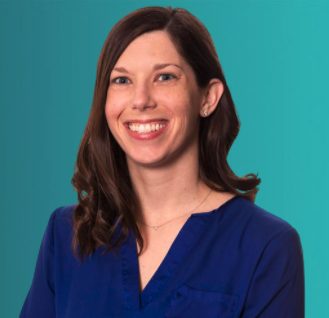
Moderator: Emily J. Goodwin, MD
Clinical Associate Professor of Pediatrics, University of Missouri Kansas City School of Medicine
Pediatrician, General Academic Pediatrics Beacon Program, Children’s Mercy Kansas City
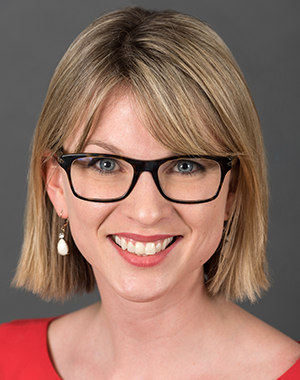
Moderator: Kathleen Huth, MD, MMSc
Pediatrician, Complex Care Service, Division of General Pediatrics
Boston Children’s Hospital
Assistant Professor of Pediatrics
Harvard Medical School
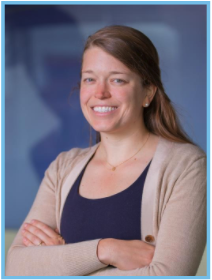
Moderator: Kristina Malik, MD
Assistant Professor of Pediatrics, University of Colorado School of Medicine Medical Director, KidStreet Pediatrician, Special Care Clinic, Children’s Hospital Colorado
In this special Complex Care Journal Club podcast episode, co-hosts Emily Goodwin, Kristie Malik, and Kathleen Huth interview presenters of posters and oral abstracts relevant to the care of children with medical complexity at the Pediatric Academic Societies (PAS) 2026 annual meeting, as well as at a pre-PAS event focused on home- and community-based care and training in complex care. Speakers describe their key findings, messages for care teams including patients and families, and opportunities to translate their findings into practice.
Learning Objectives:
At the conclusion of this educational program, learners will be able to:
- Discuss emerging evidence in the care of children with medical complexity.
- Describe methodological considerations for recent publications in complex care
- Identify opportunities to translate research findings into clinical practice.
In support of improving patient care, Boston Children’s Hospital is jointly accredited by the Accreditation Council for Continuing Medical Education (ACCME), the Accreditation Council for Pharmacy Education (ACPE), and the American Nurses Credentialing Center (ANCC), to provide continuing education for the healthcare team.
Physician
Boston Children’s Hospital designates this live activity for a maximum of .75 AMA PRA Category 1 Credits ™. Physicians should claim only credit commensurate with the extent of their participation in this activity.
Nurse
Boston Children’s Hospital designates this activity for .75 contact hours for nurses. Nurses should only claim credit commensurate with the extent of their participation in the activity.
Physician Assistant
Boston Children’s Hospital has been authorized by the American Academy of PAs (AAPA) to award AAPA Category 1 CME credits for activities planned in accordance with AAPA CME Criteria. This activity is designated for .75 AAPA Category 1 CME credits. PAs should only claim credit commensurate with the extent of their participation.
Social Worker
As a Jointly Accredited Organization, Boston Children’s Hospital is approved to offer social work continuing education by the Association of Social Work Boards (ASWB) Approved Continuing Education (ACE) program. Organizations, not individual courses, are approved under this program. State and provincial regulatory boards have the final authority to determine whether an individual course may be accepted for continuing education credit. Boston Children’s Hospital maintains responsibility for this course. Social workers completing this course receive .75 ACE CE continuing education credits.
Disclosures
Boston Children’s Hospital adheres to all ACCME Essential Areas, Standards, and Policies. It is Boston Children’s policy that those who have influenced the content of a CME activity (e.g. planners, faculty, authors, reviewers and others) disclose all relevant financial relationships with commercial entities so that Boston Children’s may identify and resolve any conflicts of interest prior to the activity. These disclosures will be provided in the activity materials along with disclosure of any commercial support received for the activity. Additionally, faculty members have been instructed to disclose any limitations of data and unlabeled or investigational uses of products during their presentations.
The following planners, speakers, and content reviewers, on behalf of themselves, have reported the following relevant financial relationships with any entity producing, marketing, reselling, or distributing health care goods or services consumed by, or used on patients:
Emily J. Goodwin, MD
None
Kristina Malik, MD
None
Kathleen Huth, MD, MMSc
None
Please see the FAQs below for common questions about how to work through a course. If you have a question or issue that is not addressed in the FAQ, please use this form to submit a help request, or if your issue is urgent, call the CME office at: 617-919-9908.
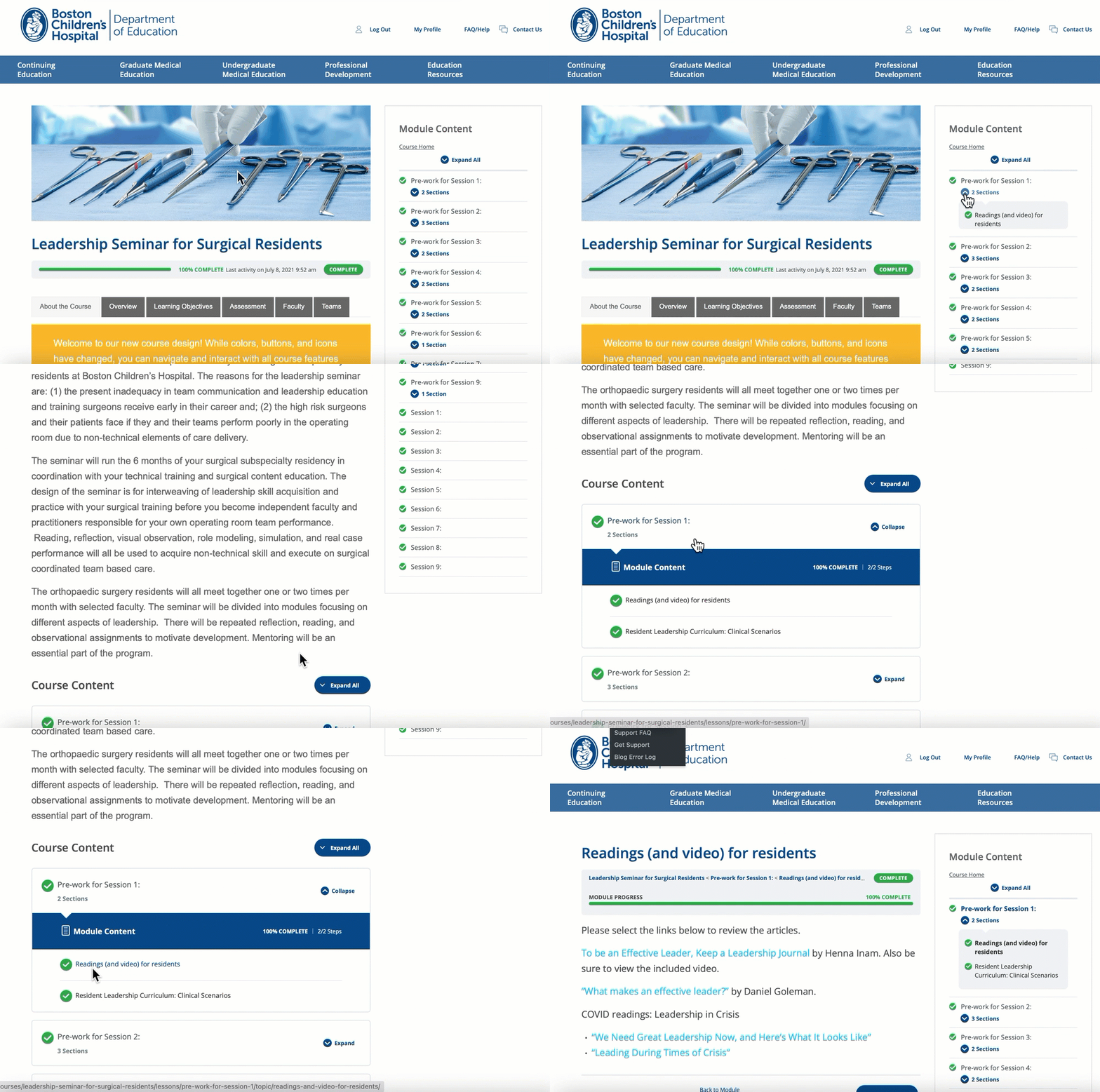
How do I navigate this course? There are two ways to access and navigate course content with the interactive table of contents: at the bottom of the main course page or in the sidebar on the right side of the page. Select the links in the table of contents to access the corresponding content. Depending on the course, access to content may be linear, in which case each content module or section can only be accessed if the prior ones are completed, or non-linear, in which case modules and sections can be accessed in any order. Use the breadcrumbs at the top of any course page to orient yourself within a course, or return to a previous course section or the main course page. How do I claim credit? If the course has been accredited, available credits will be displayed on the course home page. Select only those credits that apply to your profession, and click/tap “Apply Selection.” You may make your selection at any point while you are taking the course, or after you have completed it. How do I download a certificate? There are two ways to view/download your certificate: from within the course or from the course listing under your profile (select the document icon). In either case, you must have selected at least one available course credit type to generate a certificate. How do I view/print my transcript? You must be logged in to view your transcript. Select My Profile at the top of the page. If you do not see the transcript selector, be sure the Courses tab is selected. Select the type of credit and dates to include in your credit report. To include all credits from all time, leave the options blank. Select Download Transcript to view/download your transcript. Note each credit type in your transcripts starts a new page. How do I request a refund? Please email the CME Department to request a refund.How do navigate this course?
How do I claim credit for this course?
How do I download a certificate?
How do I view/print my transcript?
How do I request a refund?
Click Here to View Transcript
Katie Huth 00:04
Hello, and welcome to the Complex Care Journal Club Podcast! My name is Kathleen Huth, I am a pediatrician at Boston Children’s Hospital and your host for this episode. In this podcast series, we seek to discuss emerging evidence in the care of children with medical complexity and its implications for practice. This is a special episode, recorded at the Pediatric Academic Societies (or PAS) 2026 annual meeting in Boston, Massachusetts. PAS is a partnership of four pediatric organizations: the American Academy of Pediatrics, the Academic Pediatric Association, the Society for Pediatric Research, and the American Pediatric Society. The meeting has a track dedicated to Children with Chronic Conditions, and the APA hosts a Complex Care and Disability Special Interest Group that highlights presentations particularly relevant to the care of children with medical complexity and disability. Just ahead of PAS 2026, there was an event called Complex Care Conversations — a two-day gathering in Boston that brought together about 60 interprofessional care team members including home health care providers, family leaders, educators, researchers from programs across the country. They engaged in working sessions on what it takes to make home- and community-based care work for families, and on training in complex care. I sat down with members of the facilitation team to discuss what they think are the practicechanging takeaways. You’ll hear from them first. Emily Goodwin, Kristie Malik and I also circulated the poster and oral abstract sessions at PAS, interviewing presenters about their research. Topics include: Discrimination and care-seeking among Black caregivers of children with medical complexity ,peer navigation for Spanish-speaking caregivers of children with medical complexity, Adaptive transportation needs, Advancing disability-competent care: through education, screening, and accommodations, and artificial intelligence-assisted translation for pediatric discharge instructions. Let’s listen in.
Katie Huth 02:08
Hello everyone. I am here with Elaine Lin, Erin Ward and Meg Comeau, who are co-facilitators on Complex Care Conversations, an event that occurred prior to PAS this year. So I’m going to ask you, Elaine, if you can share a little bit about what this event was all about?
Elaine Lin 002:30
Thank you. I am Elaine Lin. I’m a complex care pediatrician at Boston Children’s Hospital, and we helped organize an event called Complex Care Conversations that was over two days prior to the PAS meeting. The first session was on supporting children with medical complexity in the home and the community. We asked registrants to give us their top topics of what they wanted to talk about, and the ones that rose to the top were workforce capacity and infrastructure, care coordination and system integration, and financing and health policy reform. So the participants broke into groups and really tried to focus on solutions, thinking about how we can give each other practical steps on how we can improve the system for families and children.
Katie Huth 03:13
Thanks, Elaine. The second session was on education and training in complex care, and we had a similar approach of asking people to share what they thought the most urgent training gaps were, prior to attending the session. And some of the gaps that rose to the top were things like understanding what life at home and family’s daily reality looks like, and considering ableism and the role that that plays in a child’s care, transition to adult care, things that we maybe don’t teach intentionally throughout training. And this was really a collaborative effort right? So can you describe the facilitation team, and then also who attended?
Elaine Lin 03:51
Yeah, so we brought together complex care programs throughout the region from different institutions all over New England. We also engaged our lived experience partners from different organizations, and really try to work on a, again, practical solution-based focus session where people could walk away with steps that they could take towards improving the system. And the participants were also very varied. It was a great audience of policy administrators, social workers, nurses, physicians, researchers, therapists. So I think really unique from the PAS conference itself, where we got to bring together such a great multidisciplinary group.
Katie Huth 04:28
So we have Meg and Erin here to speak, as members of the facilitation team, on what the most impactful takeaways were from this session and how you think we can move to practice change?
Meg Comeau 04:39
Thanks so much, and I appreciated the invitation to speak today on the podcast. Also was very, very honored to be part of the facilitation team. My name is Meg Comeau, and I’m with the Center for Innovation and Social Work and Health at Boston University, School of Social Work. I’m a child health policy researcher there, and, not coincidentally, I’m also a lived experience partner. I have a adult child who was born with a complex, medically and behaviorally complicated genetic syndrome. For home and community based services, I think one of the major themes that rose to the top, at least for me personally, was how incredibly challenging access to home and community-based services is currently, for both families and kids at home, but also for providers in helping to coordinate and get access to those services for kids and families. So in that context, one solution was to try to create a more formal infrastructure around advocacy, primarily through some sort of a coalition, either joining an existing coalition or creating our own new one that is focused specifically on pediatric complex care. Right now, there’s lots of different organizations that are doing work individually, in either their institutions or in their states, but what we really need is something that’s more nationally focused. And we need both a research agenda and an advocacy agenda attached to that coalition. We need the data through research to understand what the problems are, and then we need the advocacy agenda to help create policy change in order to address those gaps that the research identifies.
Katie Huth 06:16
Thank you, Erin, do you mind sharing about session two?
Erin Ward 06:19
Sure, thanks so much for inviting me to be part of the podcast. I’m Erin Ward, and I’m a lived experience partner. My son Will lived for 20 years with a very unique and complex neuromuscular condition, and his care really touched all points of the spectrum of care. Probably my favorite part of the session was focusing around tangible care moves. Like a point in care that you identify and you need to have some type of response or action to. We had time to think about how we would teach that care move. Some of the really tangible things people could walk away with was some of the trainees in the room talked about having a session where trainees actually build a go bag for emergencies. And really having that experiential opportunity to go through a go bag with a patient, but also giving them a task to you know, what if you were going out for an outing, what would you pack in that bag? Or another one that was highlighted was navigating the system and coming up with a playbook that could be widely disseminated. Other things like prioritizing communication. And one group thought that coming away with like a cue card that would highlight some ‘must do’s’ such as, tell me about your child, going in prepared, that they’ve done their homework, and also that compassionate curiosity about tell me more.
Katie Huth 07:48
Thank you so much to you all for speaking on the podcast and for engaging in this collaborative effort and this commitment to translate it into action.
Emily Goodwin 07:59
Hi my name is Emily Goodwin. I’m here with Ashley Nmoh, who is a medical student from Duke University who had a wonderful oral abstract yesterday, which also just won the 2026 award for trainee research abstract award for students. Congrats on your award.
Ashley Nmoh 08:14
Thank you so much. It’s such an honor.
Emily Goodwin 08:16
Do you mind telling us about your study and the clinical practice implications, specifically for members of the interprofessional care team and messages for patients and families?
Ashley Nmoh 08:26
Yes, of course. So for our study, we interviewed 30 black caregivers of kids with medical complexity to understand about their experiences with discrimination and racism in the healthcare system. And overall, they shared a lot of experiences of experiencing discrimination for multiple parts of their identity, including their race, their gender, as well as their child’s disability, and they share their experiences that are very powerful and prominent experiences. I think the biggest takeaway is that racism, discrimination that exists in the healthcare system is something we should all be aware of as providers, especially because bias is often unconscious. And so I really looking at that, and especially looking at how for a lot of caregivers, of course, caring for a child complex medical needs can be challenging navigating healthcare system, but also looking at disparities within that, and how for certain families, it could be even more challenging depending on their backgrounds and access to resources. I think that’s the biggest takeaway from this study.
Emily Goodwin 09:18
I’m curious, what do you think are the implications for practice, like, what can we do as clinicians to help mitigate bias. Can you comment a little bit about that?
Ashley Nmoh 09:27
Yeah, of course. I mean, I think as pediatric doctors or people in medicine, I think our goal is to really care for our patients. I don’t think anyone comes out or intends to say anything degrading or racist or discriminatory towards anyone, but I think a lot of it’s unconscious. And so I think a big thing is that we need more training about, you know, anti-bias training, and also about communication, how to communicate effectively with parents and, you know, really work with them and not against them in healthcare system. And so really just understanding, you know, anti-bias and how we can all carry our own biases, but it’s important to recognize that and address that. And also, how can we be better advocates with our caregivers and work with them and work on communication strategies to really be on a team with them?
Emily Goodwin 10:05
Are there any next steps from your work?
Ashley Nmoh 10:07
Now we are partnering with the same caregivers from our study this spring, we meet with them twice a month to really understand more about their needs and the resources they need to really support their child and how we can best partner with them develop interventions. So it’s amazing getting to know them more and learning how we can best meet their needs, and really giving them the power to create and co-design interventions to better support them, because I really think they have the answers they know how we can best support them.
Emily Goodwin 10:30
And is there any research areas that you’re hoping can be discussed or investigated by the complex care community in this coming year, or presentations you’ve seen here that you think will change practice?
Ashley Nmoh 10:40
I think even just doing my research and disparities within the complex care community, looking at race and gender and how different aspects of one’s identity can affect their overall experiences, in our study, we interviewed a lot of individuals in rural communities as well who talked about a lot of the disparities in resources available there. And so I think I would love more research around disparities in the CMC community especially. There was a talk that I listened to yesterday that talked about anticipatory guidance and how we can better guide our families and educate our families and really communicate with them better ahead of time about how to care for their child, ahead of when emergencies happen. So really working with families, really educate them and empower them with resources and help before emergencies happen. I think that would be amazing.
Emily Goodwin 11:21
Thank you so much for talking to me, and thank you to you and your study team for your contributions to the complex care community. Ashley Nmoh 11:26 Yes, of course, it’s been a pleasure. Thank you so much. Kristina Malik, MD 11:29 Hi this is Kristie. I’m here in the poster hall at PAS and I’m going to have a team here from UCLA tell us a little bit about their abstract.
Flor Arellano 11:39
Hi. My name is Flor. I am a clinical researcher at UCLA in the pediatrics department.
Jennifer Peralta 11:48
Hi, and I’m Jennifer Peralta. I’m an assistant clinical professor also at UCLA in pediatrics.
Kristina Malik, MD 11:53
All right, so can you tell me the name of your abstract and just a brief overview of what it covers?
Flor Arellano 12:01
The name of our abstract is Adapting an Online-Based, Family-Centered, Peer Navigator Intervention to Facilitate Cross-Sector System Navigation for Low Income, Spanish speaking Caregivers of Children with Medical Complexities. And we work with a platform named Undivided to learn what unique systemic barriers and care coordination challenges that span healthcare, education and social system for children with medical complexities. Our objective was to learn the perspectives and lived experience CMC caregivers and the peer navigators to inform the adaptation of Undivided to meet the needs of low income, Spanish-speaking caregivers of CMC, particularly those with lower levels of digital proficiency.
Kristina Malik, MD 12:49
And can you tell me, what are some of the conclusions of this phase of this study?
Flor Arellano 12:54
Some of the conclusions were that the CMC caregivers face tremendous systemic navigation burdens that demand innovative care, coordination guidance and psychosocial support. We learned about the navigators and all the different supports that they offer the members, everything from providing them the resources that they were looking for, emotional support, being able to have this person to offload their like mental burdens really help the participants. And when we’re dubbing the secret sauce of this is that the navigators, are actually parents of children with medical complexities themselves, so they navigated the system and have that lived experience, which allowed them to connect on a deeper level with the members, which we believe that allowed the members to be more vulnerable, to really share the challenges that they were facing.
Jennifer Peralta 13:51
And so I think to add to what Flor just shared was really looking at what components of a digital-based intervention, potentially that has this wonderful model of drawing on this lived experience that these peer navigators provide in a digital format. How do you adapt that? How do you expand this to other groups that don’t traditionally have the same access, or perhaps comfort level with navigating it, and what does that look like to help meet their needs based on where they are?
Kristina Malik, MD 14:18
What are the clinical takeaways from this intervention, and what’s your next steps with this?
Flor Arellano 14:23
Something that I found really surprising was that if, if you don’t have the right language, if you don’t have the right words to be able to ask for you know the Regional Center or Medicare, you’re not going to get the services that you need. And there’s additional barrier when there’s Spanish speaking or the language barrier, where folks don’t understand what they’re looking at and there isn’t anywhere they can find the translation unless they themselves, you know, go on Google Translate and try to, you know, translate those documents, but it’s not always the greatest, so you’re still going to miss some information. So I think really sharing that information, like, if you’re going to refer somebody like, make sure that they have the language that they need to get the resources that they desperately need.
Kristina Malik, MD 15:14
What do you recommend for interprofessional care teams when caring with families with language barriers?
Flor Arellano 15:20
It’s looking at their accessibility, not just the actual language, but also the devices that they can access, or if they have internet. Even the time, time is such a huge barrier. Parents don’t have the time to sit around and wait in the queue or, you know, again, go do all this research. So I think being able to provide resources directly, or make sure that it’s accurate, reliable information.
Kristina Malik, MD 15:54
It sounds like providing the families with keywords that might be like the key to getting access?
Jennifer Peralta 15:57
Yes, no, absolutely, 100% and I think, knowing that we’re in, continue to draw and incorporate even more of like these digital tools in our clinical practice. You know, care navigation experience, how intentional are we being in terms of the supports that families really need? Right? We kind of say here, send us an MyChart message or look at your results. But you know, not many families necessarily truly feel comfortable navigating that right? So how are we actually supporting them through that like, how are we walking them through that process, these amazing tools that exist, but not necessarily the same degree to everyone.
Kristina Malik, MD 16:30
We’re early here at PAS today. What is one presentation you’re excited to get to see during your time here?
Flor Arellano 16:35
Generative AI and Health Services Research, The Good, the Bad and the Ugly. I see a lot of potential for AI that can be beneficial, but I also see all the negatives that it can cause. So just to learn a little bit more about where AI is going in the medical research. Kristina Malik, MD 16:54 Jenn?
Jennifer Peralta 16:56
I am actually interested in, there was the financial viability of billable community health worker programs for addressing social drivers, really looking at, how do we actually get the financial supports for a lot of these, you know, invaluable care support, you know, people that are part of our interprofessional teams. How do we actually make sure that’s a sustainable thing? So I’m interested to see how that works.
Kristina Malik, MD 17:17
Well, thank you so much for talking to us, and we’re so excited to see the next phases of your trial.
Jennifer Peralta 17:23
Thank you.
Flor Arellano 17:24
Thank you.
Emily Goodwin 17:26
Hi. I’m here at the pediatric academic society with Dr Michelle Macy from Lurie Children’s Hospital, who’s going to tell us about our work on Child Passenger Restraint and System Use Patterns and Adaptive Transportation Needs in a National Cohort of Children with Complex Chronic Conditions. Thanks so much for joining me today.
Michelle Macy 17:43
Thanks, Emily. I’m really excited that you guys took interest in this work.
Emily Goodwin 17:47
Yeah, I wonder if you could tell us a little bit about your study and perhaps what are the implications for clinical practice.
Michelle Macy 17:54
Yeah, this was a really fun opportunity for me to connect in with Carolyn Foster, one of my colleagues at Lurie Children’s on shared interests that we have in design thinking and in kids with medical complexity. I’m a pediatric emergency physician, and so people are often like, why this? And then my primary research has really been over the last 16 years in Child Passenger Safety, so definitely upstream of emergency department clinical care. But want to make a difference so that families don’t need our services. So in the emergency department, we see a lot of families come in with G tubes that have been dislodged. And with that, I hear from a lot of families like, oh, we were getting into the car getting out of the car. And so I’ve done a couple little projects thinking about kids with medical complexity and some of the challenges that their families face with transportation. And this opportunity with Carolyn Foster as a collaborator for the Family Circle Project, that’s a cohort of families with kids who have complex chronic conditions, and they’re following them longitudinally with surveys. She was like, Hey, do you want to put some car seat questions into this survey. So we were able to get a series of car seat questions and really start to understand a little bit more about their experiences.
Emily Goodwin 19:14
Tell us a little bit about what you learned and what you think the messages are for the interprofessional care team?
Michelle Macy 19:20
Yeah. So we heard from a little over 500 families, most of them, most of the respondents, were moms and maternal caregivers and with their kids with medical complexity. I think some of the most important findings were that only a third of them remembered talking to their health care provider or health care team about how their child’s medical condition was going to impact transportation, and with that, families also reported that they didn’t always know where to turn with questions about transportation safety or how to access resources or benefits for transportation safety. And these findings were different when kids had a current need for medical devices and equipment, or if they never had a need, and those families who had a current need, more of them didn’t know where to turn, didn’t know where to get questions answered. And I think that that’s a really big opportunity for us in pediatrics, across every place that a kid is contacting the healthcare system to make sure we know at least enough about transportation safety to ask a question about whether or not families are feeling uncertain, and then be able to provide them with the resources on where they could go next. I know that car seats are complicated and technical, and so I don’t expect everybody to be able to know that information, but it’d be great if we knew that if they have adaptive needs, it might be their PT in their hospital who has some expertise or recognize that there’s a whole workforce of Child Passenger Safety technicians, about 40,000 of them across the country, and in that group, about 10% of them have completed training for children with special health care needs, so they’re not everywhere they need to be, but that’s another resource that we as pediatricians across all disciplines can be aware of, so that families know where to go.
Emily Goodwin 21:13
Yeah, absolutely. I love this work, and it’s really a great way to advocate proactively to make sure that children can be transported safely. Anything else you want to share or messages for patients and families specifically?
Michelle Macy 21:26
Yeah, one of the things that was interesting about this process of developing questions to field to the Family Circle cohort was families had input too, and it was just really striking that they were like, oh, wait a second nobody’s really ever asked us about transportation, but this is such a part of our day to day. You know, getting around is something that we all want to be able to do, and so I think they felt seen that people were asking those questions. And it’s a spot to shed light on the fact that this is a place where it doesn’t quite fit into health care, but it’s all about healthy children being able to be safe in their environments, and so it’s a cool opportunity to elevate that information.
Emily Goodwin 22:08
Absolutely. Yeah, it’s very critical overall, and does impact health.
Michelle Macy 22:12
There is another finding that we had that was interesting and alarming to me, was we saw a larger than national average proportion of kids who were unrestrained in the nine to 11 and 12 and older groups. So nationally, about 10% of kids aren’t using a restraint, but in our sample, about a quarter of kids who don’t have device dependence, but have complex chronic conditions, were traveling unrestrained, and so that says to me that there’s potentially some issues around how families have options for older kids and possibly kids who have autistic behaviors or other challenges with sensory or restraint system. So we really need to be thinking about that population, because if we can’t get kids buckled up in a seatbelt at that age, maybe a travel vest would be more comfortable for them. But being unrestrained is just such a dangerous behavior.
Emily Goodwin 23:16
Agree, yeah, there’s a lot of opportunities for advocacy in this space, policy change, financing, these, appropriate, safe passenger transportation options for all children.
Michelle Macy 23:27
Yeah, we had some free response questions, and I didn’t have room in the poster to present those findings, but hearing from families about the cost challenges with special needs seats, so I think it’s important for families to know that a lot of kids can fit into off-the-shelf seats for a fairly extended period of time, and there are going to be some families that are going to need the products that are really geared towards larger kids who have medical complexity, but really thinking about policy opportunities from an insurance, healthcare coverage standpoint and other social programming, because it’s unreasonable to expect families to be able to buy a several thousand dollar seat. The other thing that we heard a lot was the cost of adaptive vans for families who have kids in wheelchair seating, once they get out of the ability to get their kids around in strollers and they need to be in seats, they’re really facing a lot of challenges and barriers with that.
Emily Goodwin 24:32
Absolutely, really great work that you’re doing, thank you. I’m curious, is there a presentation or poster you’ve seen at PAS that you think will change your clinical practice?
Michelle Macy 24:41
Yeah, this morning, I went to a session that talked about bringing Design Thinking Research and Quality Improvement together, and those things kind of exist in silos at our own organization. So it’s given me a lot of ideas about ways to bring those streams of information together and start working together. And again, shout out to Carolyn Foster and her design thinking work and user-centered design workshops that she’s been bringing to our community at Lurie Children’s. So I think it’s just a good moment for us to bring these kinds of things together.
Emily Goodwin 25:13
Wonderful. Thank you so much for taking the time to talk to me, and thank you to you and your study team for contributing to the field of complex care.
Michelle Macy 25:21
Yeah, it’s a terrific group, and I’m excited that this work is getting noticed.
Katie Huth 25:29
I just went to a fantastic panel discussion on “Advancing Care for Children with Disabilities: Moving Policy into Practice”, and I’m here with a couple of the presenters. Can you tell us a little bit about what you shared today and what the implications are for practice.
Jennifer Arnold 25:44
So my name is Jennifer Arnold. I’m a neonatologist clinically, but also medical director in our skeletal health center caring for kids with medical complexity, specifically skeletal dysplasia. What was so I think great about this panel, was the fact that we got to talk about three different aspects of providing disability competent care, three aspects that, when they come together, I think, can really improve the care outcomes and experience of our patients and families with disabilities, and not just our patients with disabilities, but also the caregivers who have disabilities. I myself am an individual with a physical disability. I have two kids with a physical disability, and I’m also a physician and also a recipient of our healthcare delivery system, and to see all this work come together, even though we still recognize we have a long way to go, it’s just, for me, it’s been just so it fills my cup, is what I’m trying to say. The session today was really focused on the three initiatives which you’re going to hear from my colleagues about, so educating our clinicians and other non-clinical patient-facing employees about what disability competent care means and how to be more aware of ableism and how it can impact our patients and families, and how to also mitigate ableism is a key to changing culture. And then we also talked about screening for disability identity and status. If we don’t understand where our patients and families are with disabilities, how can we better serve them and their needs? And then third is screening for accommodation needs, because that is where we’re going to directly improve patient care outcomes and experience by being able to provide the accommodations needed so that we can mitigate all of the many structural barriers to access and to care that our patients and families experience. My part of the presentation was really focusing on just introducing these concepts. And I think what was great was the emphasis of nothing about us without us, and I think that’s what we’re trying to embody with the work that we’re delivering and partnering with our patients and families with lived experience, because lived experience is the expertise that is needed to make this happen and to make it done well. And so I’m going to turn it over to Nora, my colleague, to talk about the education.
Nora Renthal 27:57
Hi. I’m Nora Renthal. I’m a pediatric endocrinologist at Boston Children’s, and I also am Medical Director of the skeletal health center with Dr. Arnold. I had the privilege to work with people with lived experience of disability to craft a curriculum to teach people taking care of patients about ableism, about the negative impact to families and children with disabilities that ableism has in healthcare, and then to teach people practical skills for how they can respond to patient needs. What I took from this training session was actually just how engaged the audience was with this topic. We presented the work that Massachusetts prompted us to do, but this audience is national and international, and so not everybody has that same incentive structure in their state. So how do they implement it in their hospital? There’s a lot of motivation there. We had one mom who’s also a nurse come up and talk about how her daughter with Down syndrome receives such good care in that integrated care in their Down Syndrome clinic, but then when they go out of that complex care setting, or integrated care setting, she feels like it falls away. And that was so cool for me to hear like that’s a operational challenge, or that’s an educational, attitudinal challenge for us on the education side, like, how do we reach the care teams that aren’t necessarily already invested in these concepts.
Katie Huth 29:27
A lot of the conversation was around having a new lens to all of the work that we do that benefits all of the children that we care for. And I know the training piece is such an important facet of that work. And then John you spoke to another aspect, this is really a 360 of how we provide equitable care for people with disabilities and for all children. So do you mind sharing a little bit about the work that you were sharing?
John Greenwood 29:51
Sure. My name is John Greenwood. I’m the Executive Director for physical therapy occupational therapy, and I get to serve on the DCC TRICARE committee for looking at the accommodation needs specifically for our patients and their caregivers. Two elements that I think I took away from the work and the presentation today. One is engaging families early on in our process of understanding what accommodation needs might be needed at a specific visit. And I think the second is looking at not only the patient’s needs for accommodations, but the caregivers’ needs for accommodations. I can think vividly in my mind, when patient, a patient’s family, came in, and the mom was in a powered wheelchair, and the toddler was running around and really thinking about what those needs might be that are different for a parent with a disability. And so when we think of the accommodation screener that was done that’s being done at the visit level, so every visit, we should be asking patients and families what types of accommodations they need to make sure that that patient has a successful visit, and it’s going to look different if they’re going into a pediatrician’s office that the child’s familiar with, versus if they’re walking into an MRI or a radiology visit that’s very unfamiliar, could have different implications for that child, and the accommodations that might be needed.
Katie Huth 31:16
Really inspiring to see all the collective action that you are all generating. So thank you for your thoughtful work in advancing the field. Kristina Malik, MD 31:22 This is Kristie. I’m in the poster hall with Ryan, who has an abstract here, but also has a recent publication.
Ryan Brewster 31:30
Hi there. My name is Ryan Brewster. I’m a NICU Fellow at the Stanford University School of Medicine, and we’ll be giving an oral presentation today for a study we did called Real World Clinical Outcomes of Artificial Intelligence Based Translation for Patient Discharge Instructions.
Kristina Malik, MD 31:47
Yeah. And this was also recently published in hospital peds. Is that correct?
Ryan Brewster 31:52
That’s correct, yeah. And the study itself was looking at the use of artificial intelligence with post editing that is AI generated translations into different languages that are subsequently reviewed by a professional translator for discharge instructions during inpatient pediatric hospitalizations, we found that compared to fully manual translations, post edited translations cut down on the time required to complete the translations, and allowed families to leave much more frequently with their discharge instructions and translations in hand. We were also interested in whether post editing might impact clinical outcomes following discharge, but we found that they were actually comparable to those translations that were done fully manually.
Kristina Malik, MD 32:46
That’s awesome. What should providers take away from this? What are the clinical implications?
Ryan Brewster 32:51
So at this point in time, there’s still a lot of concerns around using fully automated tools for translation, given a lot of variability in languages, there are also many operational barriers to implementation, particularly if a clinician does not speak the language that they are translating into, and therefore unable to actually evaluate the performance. So post editing is a way to still benefit from the efficiency gains afforded by artificial intelligence while having maintaining the rigor of professional translators without suffering clinical consequences.
Kristina Malik, MD 33:35
And tell me a little bit about the patient population, while I know that it’s not directly published about children with medical complexity, there are some unique findings you had?
Ryan Brewster 33:44
Yeah. So a lot of the language access efforts at Boston Children’s, where the study was done has come from our complex care division, with our two senior authors being complex care inpatient doctors. So we actually had an over-representation of children with medical complexity who are receiving these post edited discharge instructions. I think this this population can uniquely benefit from these technologies to the extent that they oftentimes require highly customized instructions and education, and AI and then post editing, in the context of this study proved to be really helpful in streamlining the production and delivery of those materials.
Kristina Malik, MD 34:29
What is the best poster presentation you’ve seen at the conference so far?
Ryan Brewster 34:34
Ooh. So there’s a lot of really interesting work happening in the NICU with phototherapy and reimagining how we actually deliver that in a way that is safe for our premature babies. And I love when we start to revisit things that have been accepted as dogma and approach it with a new and innovative lens. So I’m slightly biased, but that’s some of the work I’m excited about.
Kristina Malik, MD 34:59
Well, great. Thank you so much.
Katie Huth 35:03
We’ve highlighted only a sample of the emerging research in complex care and disability shared at PAS. To summarize, presenters highlighted the importance of partnering with families — including people with lived experience of disability, racial discrimination, and language and systems navigation barriers, to truly understand what practice changes are needed. They called for advocacy coalitions and policy change to support home- and community-based care. Educational interventions to address ableism, tools to support families navigating systems across language and digital access barriers, and proactive conversations about transportation safety which all represent concrete opportunities for practice change. And across all of this work, the emphasis on co-designing solutions with families was a consistent theme. Emily, Kristie and I want to thank our speakers for their time during a busy conference and for advancing the field of complex care. And thank YOU, for listening to the Complex Care Journal Club Podcast. We aim to highlight research that has the potential to be practice-changing, that values patient/family engagement, is relevant across disciplines and diagnoses, and uses high-quality or novel research methods. We invite you to join the conversation by suggesting an article that you would like to see discussed in this podcast, using the form provided on the OPENPediatrics Youtube Channel. Thank you for joining us! ***Complex Care Conversations reflects the collective effort and partnership of many organizations dedicated to improving care for families of children with medical complexity, including Courageous Parents Network; the complex care programs at Boston Children’s Hospital, Boston Medical Center, Mass General Brigham For Children, and Dartmouth Health Children’s; Division for Children & Youth with Special Health Care Needs at Massachusetts Department of Health; and the Boston University School of Social Work Center for Innovation in Social Work & Health.
References
Brewster RC, Kats DJ, Elborki M, Chilukuri N, Ray M, Shaar N, Hron J, Khan A. Clinical Outcomes of Postedited Artificial Intelligence Translation for Discharge Instructions. Hosp Pediatr. 2026 Apr 10:e2025008986. doi: 10.1542/hpeds.2025-008986. Epub ahead of print. PMID: 41956490.
FamilyCIRCLE. University of Wisconsin–Madison, Department of Pediatrics. Accessed May 4, 2026. https://familycircle.pediatrics.wisc.edu/
Pediatric Academic Societies. Online program guide. Accessed May 4, 2026. https://2026.pasmeeting.org/ Pediatric Academic Societies. Who we are. Accessed May 4, 2026. https://www.pasmeeting.org/about/ Pediatric Academic Societies. Academic Pediatric
