


The Pink Team Effect: Reducing Postoperative Emergency Transfers in Complex Care – Complex Care Journal Club Podcast
Current Status
Price
Get Started
Course Credit
The following credits are available for this course:
| AMA PRA Category 1 Credits™ (MD, DO, NP, PA) | 0.5 hours |
| Contact Hours (Nurse) | 0.5 hours |
| American Academy of Physician Assistants (AAPA) Category 1 CME Credits | 0.5 hours |
| ASWB ACE Continuing Education Credits (Social Worker) | 0.5 hours |
| ABP Part II MOC (American Board of Pediatrics) Credits | 0.5 hours |
(Note: a course evaluation is required to receive credit for this course.)
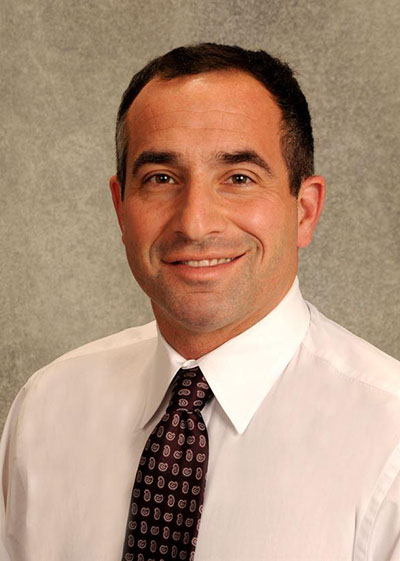
Jason Zamkoff, MD
Professor of Pediatrics, University of Colorado School of Medicine
Pediatric Hospitalist, Children’s Hospital Colorado
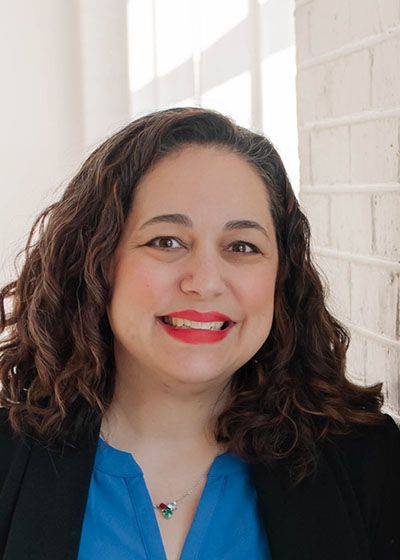
Moderator: Kilby Mann, MD
Associate Professor,
Director of Pediatric Rehabilitation
University of North Carolina School of Medicine
In this Complex Care Journal Club podcast episode, Dr. Jason Zamkoff discusses a quality improvement cohort study of a surgical hospitalist co-management program (Surgical Hospitalist Assisted Recovery/SHARe Team or “Pink Team”) for children with medical complexity at Children’s Hospital Colorado. They describe how patients are selected using an internal complexity score and the institutional trust-building needed to launch the program, resulting in fewer in post-operative emergency transfers to intensive care. Next steps include developing an externally validated complexity scoring tool and extending hospitalist involvement into the pre-operative period.
Learning Objectives:
At the conclusion of this educational program, learners will be able to:
- Discuss emerging evidence in the care of children with medical complexity.
- Describe methodological considerations for recent publications in complex care.
- Identify opportunities to translate research findings into clinical practice.

In support of improving patient care, Boston Children’s Hospital is jointly accredited by the Accreditation Council for Continuing Medical Education (ACCME), the Accreditation Council for Pharmacy Education (ACPE), and the American Nurses Credentialing Center (ANCC), to provide continuing education for the healthcare team.
Physician
Boston Children’s Hospital designates this live activity for a maximum of 0.5 AMA PRA Category 1 Credits ™. Physicians should claim only credit commensurate with the extent of their participation in this activity.
Nurse
Boston Children’s Hospital designates this activity for 0.5 contact hours for nurses. Nurses should only claim credit commensurate with the extent of their participation in the activity.
Physician Assistant
Boston Children’s Hospital has been authorized by the American Academy of PAs (AAPA) to award AAPA Category 1 CME credits for activities planned in accordance with AAPA CME Criteria. This activity is designated for 0.5 AAPA Category 1 CME credits. PAs should only claim credit commensurate with the extent of their participation.
Social Worker
As a Jointly Accredited Organization, Boston Children’s Hospital is approved to offer social work continuing education by the Association of Social Work Boards (ASWB) Approved Continuing Education (ACE) program. Organizations, not individual courses, are approved under this program. State and provincial regulatory boards have the final authority to determine whether an individual course may be accepted for continuing education credit. Boston Children’s Hospital maintains responsibility for this course. Social workers completing this course receive 0.5 ACE CE continuing education credits.
MOC II
Successful completion of this CME activity, which includes participation in the activity, with individual assessments of the participant and feedback to the participant, enables the participant to earn:
0.5 MOC points in the American Board of Pediatrics (ABP) Maintenance of Certification (MOC) program
Disclosures
Boston Children’s Hospital adheres to all ACCME Essential Areas, Standards, and Policies. It is Boston Children’s policy that those who have influenced the content of a CME activity (e.g. planners, faculty, authors, reviewers and others) disclose all relevant financial relationships with commercial entities so that Boston Children’s may identify and resolve any conflicts of interest prior to the activity. These disclosures will be provided in the activity materials along with disclosure of any commercial support received for the activity. Additionally, faculty members have been instructed to disclose any limitations of data and unlabeled or investigational uses of products during their presentations.
The following planners, speakers, and content reviewers, on behalf of themselves, have reported the following relevant financial relationships with any entity producing, marketing, reselling, or distributing health care goods or services consumed by, or used on patients:
Jason Zamkoff, MD
None
Kilby Mann, MD
None
Please see the FAQs below for common questions about how to work through a course. If you have a question or issue that is not addressed in the FAQ, please use this form to submit a help request, or if your issue is urgent, call the CME office at: 617-919-9908.
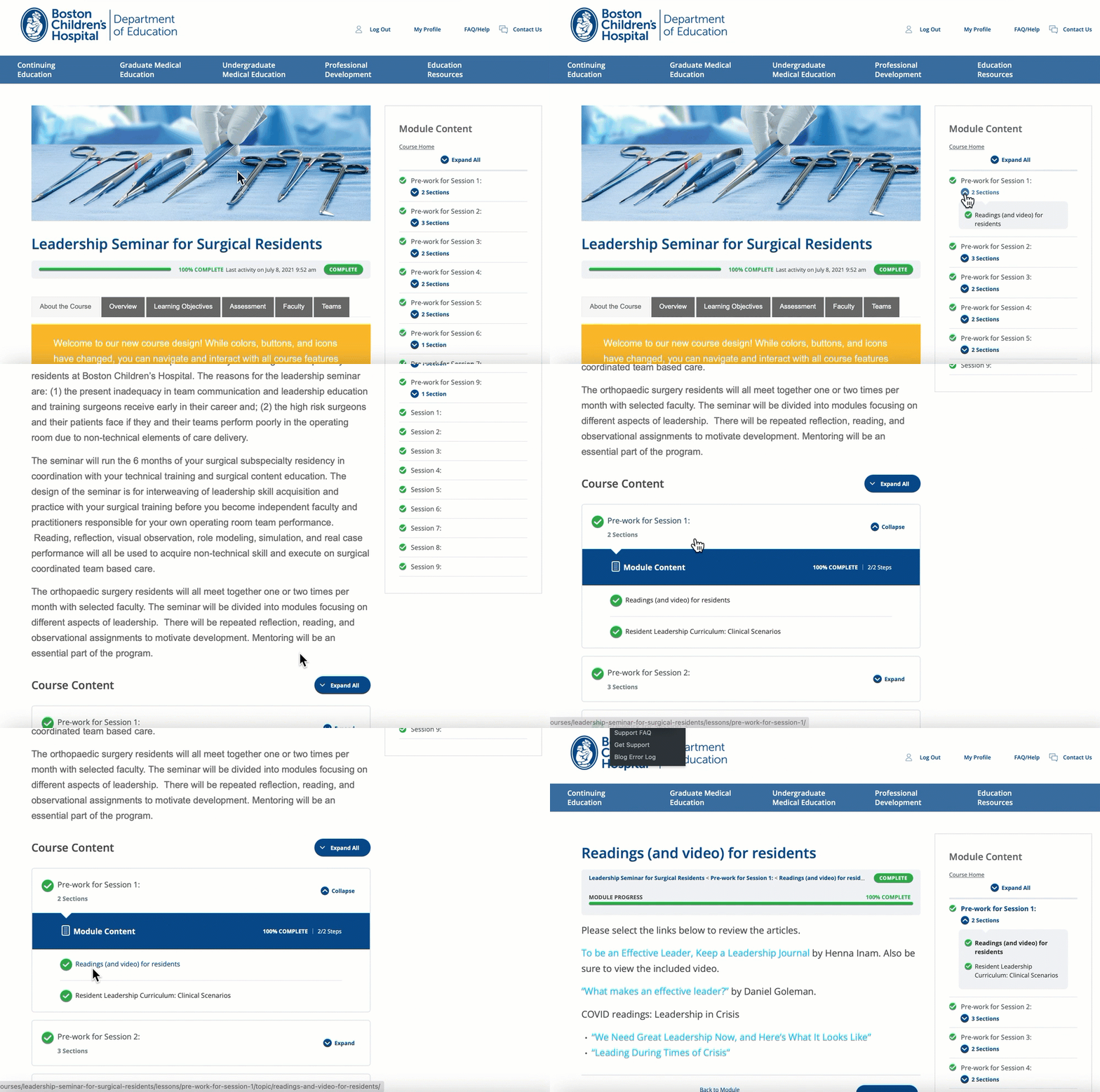
How do I navigate this course? There are two ways to access and navigate course content with the interactive table of contents: at the bottom of the main course page or in the sidebar on the right side of the page. Select the links in the table of contents to access the corresponding content. Depending on the course, access to content may be linear, in which case each content module or section can only be accessed if the prior ones are completed, or non-linear, in which case modules and sections can be accessed in any order. Use the breadcrumbs at the top of any course page to orient yourself within a course, or return to a previous course section or the main course page. How do I claim credit? If the course has been accredited, available credits will be displayed on the course home page. Select only those credits that apply to your profession, and click/tap “Apply Selection.” You may make your selection at any point while you are taking the course, or after you have completed it. How do I download a certificate? There are two ways to view/download your certificate: from within the course or from the course listing under your profile (select the document icon). In either case, you must have selected at least one available course credit type to generate a certificate. How do I view/print my transcript? You must be logged in to view your transcript. Select My Profile at the top of the page. If you do not see the transcript selector, be sure the Courses tab is selected. Select the type of credit and dates to include in your credit report. To include all credits from all time, leave the options blank. Select Download Transcript to view/download your transcript. Note each credit type in your transcripts starts a new page. How do I request a refund? Please email the CME Department to request a refund.How do navigate this course?
How do I claim credit for this course?
How do I download a certificate?
How do I view/print my transcript?
How do I request a refund?
Click Here to View Transcript
Kilby Mann 00:04
Hello and welcome to the Complex Care Journal Club Podcast. My name is Kilby Mann. I’m a pediatric physiatrist
at UNC and your host for this episode. In this podcast series, we seek to discuss emerging evidence in the care of
children with medical complexity and its implications for practice. I’m delighted to have Dr. Jason Zamkoff from
Children’s Hospital Colorado join me today. He is the lead author of the article “Surgical Hospitalist Assisted
Recovery: Preventing Postoperative Emergency Transfers”, published in Hospital Pediatrics in July of 2026.
Thank you so much for being here. I’ll have to say that JZ and I have shared many a patient, and I have been able
to benefit from this team that was created in Children’s Hospital Colorado before I moved to UNC this year. So JZ
and I are friends. You’ll hear me call him JZ during the recording. So thank you so much for joining us.
Jason Zamkoff 00:50
Kilby it’s great to see you and the only thing I’m upset about is that you’ve moved on to greener, if not bluer
pastures at North Carolina. We miss you at Children’s Hospital Colorado and it’s great to see your face.
Kilby Mann 01:02
Yeah, I miss everyone there too. It’s a great place to be, and I think one of the things that is so great about the
hospital there is this management team that y’all developed. So first, I’d just like to ask you to share a little bit
about your study, starting with the gap you identified in your research aims?
Jason Zamkoff 01:17
Sure, we’re taking a step back at Children’s Hospital Colorado. You know, we’re a very busy academic center. We
perform a lot of surgeries. We perform over 30,000 surgeries a year, and we have children with a lot of complexity
that get operated on at times. In 2020, we had some suboptimal results or outcomes of patients that were
admitted postoperatively to Children’s Hospital Colorado, and what was born from that was a notion to create a
separate surgical co-management team, primarily of patients with extreme medical complexity, that instead of
those children or patients getting operated on and then being admitted to a surgical service, they would be
admitted to a primary co-management team comprised of pediatric hospitalists. That team was rolled out in
September of 2022, so we’re coming up on the fourth anniversary as such, and I became the medical director. As
we all know, we need to have data and outcomes to support it, which is where this study was born. You know,
you can look at the success of this program in a lot of different ways. One of the major outcomes or ways one of
my bosses, Duncan Wilcox, who’s the surgeon in Chief at Children’s Hospital Colorado, who I think walks on
water, by the way, is he wanted to focus on really decreasing emergent and urgent transfers from the floors to our
ICU. An emergent transfer we defined as any child transferred to the PICU with life-sustaining interventions within
the first hour of being transferred to the PICU, and that includes inotropic support, intubation, or severe volume
resuscitation more than three normal saline boluses. So one of our goals was to try to prevent or at least reduce
those numbers. We used a numerator of about three to four years of data prior to the rollout of our surgical co-
management team, and we had data of about three to four years after. And what we showed in the study is we
had a certain rate of emergent transfers, and those went away after the creation of our team. I’d like to take full
credit for that. I certainly can’t. There’s a lot of other dependent variables, multiple that went through the decrease
in that number, but that that was the essence of the study. We’re proud of the results. We have a lot more work to
do, but that’s an overview of the study in a nutshell.
Kilby Mann 03:53
Yeah I think you know, in the past, there’s been a lot of data and literature about how can we like pre-identify
those patients with complexity. Like spinal surgery is one in particular where there’s you know data to look at from
different groups of people, and I feel like this is like the natural next step. Okay, like you identify this is going to be
complex. They have the surgery, and then how do we prove kind of this continuity of care for them? And so I think
it’s great results that you’re able to achieve. And I appreciate the definitions of emergent transfer and kind of how
you tier those responses to things that are happening.
Jason Zamkoff 04:23
You tee me up nicely for the next concept and how to select our surgical co-management team. First of all, is
called SHARE: Surgical Hospitalist Assisted Recovery Team. We have colors for teams at Children’s Hospital
Colorado, so you may hear me refer to the team as Pink Team.
Kilby Mann 04:41
As someone who has called a consult to the Pink Team. I was like, I’m not sure I knew that it was called SHARE.
Jason Zamkoff 04:46
My daughter wanted fuchsia, but no one could spell fuchsia. So I challenge anyone that listens to this podcast to
see if they can spell it. We put a lot of thought into pink team covers about 10% of all post-operative patients at
Children’s Hospital Colorado. We don’t have the bandwidth or the workforce to cover everybody, so we wanted to
get the biggest bang for our buck, so to speak. So we began with what’s called a patient complexity score. A
complexity score is an internal score one to four derived from our outpatient special care clinic that we usurped
and utilized for this. With one being a child of least complexity, four being the child with greatest complexity. That
combines things as you would consider medical complexity, DRG scores, but also psychosocial values. Does a
child have a medical home? Do they have a pharmacy? Do they have a car to get the outpatient visits? And it
computes and gives us a score for every child within our system. We decided a priori on our team that every child
with a known surgical diagnosis that’s going to get electively admitted postoperatively with a complexity score of
four will come to our service. The other two groups, briefly, are those surgical patients that don’t have a surgical
home in the hospital. So those services such as OB/GYN, vascular anomalies, IR, dental, and OMFS [Oral and
Maxillofacial Surgery] that they don’t have surgical APPs [Advanced Practice Providers] or housestaff, so they
come to our service. And then the final group is those surgeons of patients without always increased medical
complexity, who I love. Who in Italian restaurants, smoky Italian restaurants in the back, I made Don-like
agreements to say, you need our help. We’re here to serve. We’re happy to do it. So that incorporates our
surgical co-management team. We have a census of about 10 to 22 patients a day. We have two APPs and a
hospitalist, a physician as the daytime service, and we have a nocturnist at night. And we’re proud of what we’ve
done. For those trying to create a service like this, I think really putting some thought into which patient is the ideal
individual to be managed in this realm is a good thing to do.
Kilby Mann 07:15
As someone who worked there, I never hesitated to pick up the phone and call one of the surgeons if I needed to.
But when you’re talking about kind of like a whole different you know MO for how we manage these kids
postoperatively. Maybe you can tell me a little bit more about whether it was kind of leveraging your relationships
with your colleagues in the hospital, institutional support to kind of build this whole. You you lay out all of the kind
of QI work that you did and kind of the systematic work to gather the data to prove to prove this service would
work and did work. But I wonder if you can talk a little bit more about how you kind of got the right people at the
table?
Jason Zamkoff 07:48
Yeah, that leads into my story of surgical co-management in three and a half minutes or less. So I did my
pediatric residency many moons ago at UCSF, and there a lot of surgeons operated, and for a myriad of reasons,
they admitted their patients to medical service, where pediatric residents would be primary on the team. So I got
somewhat savvy and interested in surgical co-management. So when I came to Children’s Hospital Colorado 16
years ago, I asked my boss, “Well, why aren’t we doing a lot of surgical co-management, and she said, “I don’t
know.” So I looked into it. Flash forward to 2020, where we had some non-ideal outcomes, and in tandem that
year, David Partrick, a good friend of mine, who’s one of the head pediatric surgeons, came to me hat in hand,
saying, “Hey, we are we are down surgical house staff and APPs, we need some help managing some of our
more simple pediatric surgery patients. Those with postoperative from cholecystectomies, inguinal hernia repairs,
G tubes, etc. etc. During that time, I’m a big movie guy, so I don’t know, and maybe I’m dating myself with the
movie Braveheart, surgeons started coming out of the hills, and they heard of this guy Zamkoff that was willing to
offer very good care to patients. The nurses were happy with the communication. The surgeons were happy
because they could stay in their ORs and their clinics and do what they love to do. And it became a very symbiotic
system, and then over the course of about two years, I created 14 separate operational agreements with every
surgical subspecialty in the hospital. What I would say is to create a team like this, and let me just be very clear: it
was part my arrogance, part my naivety, and part my ignorance to say, if we’re going to do this, we are going to
be a primary service for these patients. Okay, and what separates us from a lot of other institutions with good
surgical co-management care, is that we are the primary providers on this team. Okay, what does that take?
Succinctly, one, it takes money to finance the hospitalist and the clinical FTE. So Kevin Carney, who’s the
associate chief medical officer, came to me when we were having issues and didn’t say you have this much
money. He said, “Build a program and we will pay for it. I almost vagaled. I went into SVT when I heard that,
which was great. But obviously, this concept went to the highest level in terms of importance for the institution. So
it takes money, it takes financial backup, but it also takes trust from the surgeons. And let me be very clear: just
as you alluded to, this took a lot of happy hours and a lot of communication and a lot of one-on-one face time to
get surgeons who are very good at what they do to establish the trust that their patients are going to get excellent
and ideal care after the surgery occurs. Okay, Rome was not built in a day, right? So this took days and weeks
and months and years, and we went through some challenges, et cetera, et cetera, and we got to the point now,
which I’m proud about. Duncan Wilcox, who I meet with monthly, said, “Jason, now the problem is not that you
need to earn the trust of the surgeons; is that every surgeon wants every patient on your service, and I cannot do
that bluntly. But that made me feel good internally. That shows that it’s a success. But going back to the study, we
need to show other metrics that this is a success now to disseminate this concept to others. So emergent
transfers, urgent transfers, length of stay, readmissions, percentage of patients admitted. Those are the things
that I suggest looking into at other institutions.
Kilby Mann 11:53
I know we’ve talked a little bit about kind of how this came to be, but are there any like specific opportunities or
challenges that you identified, or that were maybe stumbling blocks, or things that took a little bit more time than
expected as you were getting all these people together, making all those agreements and developing the
program?
Jason Zamkoff 12:10
Yeah, I mean, how much time do we have? Right, the podcast is only 20 minutes. I mean, first of all, as I
mentioned, we have operational agreements now with 16 different surgical subspecialties. So let’s say our
OB/GYN co-management, we may co-manage 12 patients a year, neurosurgery and general surgery: We make
co-manage two to 300 patients a year. So there’s figuring out first and foremost clinically how to give ideal care to
each patient. There’s the challenge of training our hospitalists and providers to get up to snuff, and then moving
forward, I’m no longer in the marketing phase of our team. We have a good census right now. It’s strategically
determining what are new good subsets of populations to co-manage. So, for example, we are now taking every
patient with type one diabetes who’s admitted because it works out better because that’s what we do. There’s a
new dystrophic epidermolysis bullosa population where we’re doing some very cool genetic skin grafting, and that
patient will be hospitalized postoperatively for many days. We can get very good at those specific niches. So I
would say getting our providers up to snuff clinically, navigating the myriad of administrative and clinical
differences between each surgical group, and then making sure based on outcomes that we are continuing to
show that we’re achieving what we want to achieve, which is to give ideal care to every patient that’s co-
managed.
Kilby Mann 13:59
And I think you you y’all gathered so many great metrics, and I think you you gathered indirectly what matters to
families that you like don’t get emergently transferred off, and you have great postoperative care, and also
directly, kind of what hospitals and business, kind of the business people want to see to justify the ongoing
expense. But I wonder if y’all ever thought about kind of like that parent or patient voice in this work, or kind of I’m
sure anecdotally in talking to families, kind of what that experience has been for y’all?
Jason Zamkoff 14:30
It’s been wonderful, and and I will say, look, we are continuing to review our data. Our papers show that we have
decreased emerging transfers, readmission rates, length of stay, urgent transfers, which is defined as life-
sustaining measures within 24 hours. We have not moved the needle to as much as we would like. First of all,
emergent transfers are so rare, and that’s one of the problems at looking at them, and so are urgent transfers.
The family data: some of the quotes from the families are really why I created this program and wanted to
continue to do it. The key, in my humble opinion, to good care, no matter what service you’re on, is
communication, and we have really increased the level of communication between families, nursing staff,
surgeons, and ancillary services. And the common theme that I hear from families is we’re so much more in the
loop with what’s going on. We co-round, and we’re all on the same page. And so, I really think the overwhelming
majority of families find benefit in this. We created a pamphlet to market this sometimes I hear friends of mine
saying, “I have a friend who requested pink team for their complex child going into the operating room.
Kilby Mann 15:51
I have definitely done my own consults there and been told, and we wish we were on the pink team, or we’re
happy we’re back on the pink team. So I think it has definitely gotten ingrained into these patients and their
families of kind of this level of care y’all are providing.
Jason Zamkoff 16:08
Thank you, I mean it. And so, what I would say is my suggestion to families who have children with complex care:
if you’re at Children’s Hospital Colorado, ask for this. And if you’re somewhere else in the ether, these programs
are coming. I think. We have literature, we have data to support what we’re doing. Ask for something like this
because it’s important. Now, let me be clear: my daughter is an elite soccer player. If she hurts her knee this
spring in high school soccer, she doesn’t need surgical co-management. Right? Again, it’s a subset of patients
that I think really derive benefit from such, and it’s the job of each institution to determine how much workforce
can you allot to a team like this, and what is the biggest bang for your buck. We’re using the complexity score of
Children’s Hospital Colorado. I would argue that every patient with a complexity score of four can derive benefit
from our services, but there’s a lot of threes and even some twos that can crop up that we’re missing, so to speak,
based on this algorithm. And so I’m working with Shannon Acker, who’s our director of trauma here, and also a
very good friend of mine. We’re trying to look into the data to say, because we want to create the Acker score or
the Zamkoff score to disseminate to every institution and say, here are the six things that determine what patient
is at risk for poor outcomes post-operatively, and what could derive benefit.
Kilby Mann 17:48
But starting to identify those things that we all kind of know, feel like there’s a lot we just know. But like, how do
we then get the data to support what we know and what we have seen in our practices?
Jason Zamkoff 17:59
That’s exactly right, and more importantly, then to be able to give you something or any institution to be able to
say here are the things you can easily extract that from your electronic health records. Go to surgical, go to co-
management for this patient.
Kilby Mann 18:15
Does that perfect scale exist, or how many scales do you need to use to define that population that needs that
extra layer of coordination and kind of wraparound services? And there, there isn’t a perfect one out there. how do
we how do we capture that that you can need so many specialists, but you’re doing great with all of them? And
you can need one or two and where things just aren’t going as smoothly as they need to be.
Jason Zamkoff 18:40
You’re exactly right, and that’s where the wiggle room comes in, right? So the fourth bucket, so it’s complexity
score four, those with no surgical homes, the don-like agreements, and then group four is if there is a child like
that, any time a surgeon wants to transfer a patient to our surgical co-management team, give me a call. We
always prefer to have to know about the patient preoperatively for a myriad of reasons. We can chart stock. We
can start getting the consults in. We can start making sure that the blood sugars and the ketogenic diets and the
seizure disorders are well managed, even preoperatively. And at the end of the day, we want to do what’s best for
the patient, and we try to make that happen. But you also are very insightful, and no system or algorithm is
perfect, right? So the goal is to make an algorithm as ideal as possible to capture the highest risk patients that
can derive the most benefit from surgical co-management.
Kilby Mann 19:39
Obviously I’ve benefited personally from the service and know of it, but when you’re kind of looking at it
academically and scholarly, you know how it also kind of aligns with outpatient models of care for kids with
medical complexity, and then you leverage your hospitalist knowledge and caring for these kids acutely, and so I
just think it’s a nice kind of like parallel growth and how we continue to provide the best care for these kids.
Jason Zamkoff Zamkoff 20:01
Couldn’t agree more. I think the era is over where you can’t just be blind to the child coming into a complex
surgery or a complex hospitalization. You have to start putting some forethought into the patient pre-operatively or
pre-admission to create better outcomes. Anesthesia owns our pre-operative clinic here. I think one of the things
for the future was to, was to be, to put some of our hospitalists into that preoperative clinic. Anesthesiologists-
they’re wonderful. They’re all my very good friends here, but they are focusing on the hemodynamic stability of the
patient in the perioperative period. We look at things a little differently. So again, to have that symbiotic
combination would be ideal state. Again, it goes back to money, though. Do you have the bandwidth, the census
to fund something like that? I’m working on it. So, if David Brumbaugh or Kevin Carney hears this podcast, he’s
our chief medical and associate. A plug to that. If you listen to this podcast, Dr. Brumbaugh and Dr. Carney.
Kilby Mann 21:11
Yeah, I think that’s a great kind of next step. Are there other next steps you think about that we can look forward
to?
Jason Zamkoff 21:19
I think the key thing is to continuing to try to hone in on the right patient population. Look, we can always get
better clinically, but we are in a nice, sweet zone, steady state in terms of management of these patients. We
have didactic sessions monthly. We have educational sessions for a hospitalist, where the surgeons come in,
they teach us what they want us to know, and vice versa. So I think that’s going well. It’s to really hone in better
on which is the biggest bang for the buck in terms of patient populations moving forward. And again, not to be
redundant for other programs and institutions wanting to start this, you need financial backing and and the trust
from the surgeons, and that takes time. And I’m happy to share any of my contact info, if anyone that listens to
this wants to just reach out to me, and I’m happy to have the discussion. In terms of data, you know, data
collection is challenging. In the study that you refer to, we decided to to utilize all patients admitted with surgeries
pre and post as our numerator and our denominator as our pre-intervention group and intervention group that
that’s bluntly, it’s a good study, but it’s not ideal, right? Because remember, Pink Team only touches 10% of the
patients at Children’s. So the other moving forward from a research or a QI standpoint is to try to better get to the
crux of pink teams. You would be only look if again if we only look at pink team, what is our numerator, right?
Because we’ve been doing surgical co-management for a long time. We just didn’t call it pink team. The ideal
state would be to compare patients that were admitted postoperatively to surgical services versus that same
population that is now admitted to Pink Team, and we tried that. And a word of caution: it was very hard to extract
that data.
Kilby Mann 23:22
I have also tried to extract data from that hospital system’s EMR, and it is really hard. It makes me a lot more
cognizant moving forward with any projects that I ever run want to run about how we either document what we do
or collect what we do in a way that can be pulled easily. That’s probably a whole other conversation we could talk
about.
Jason Zamkoff 23:43
Right, when you’re trying to set up a program like this, it really behooves you to try to think how you’re going to
study the metrics. The analogy I would use is, if you’re trying to update your for promotion, if you can, it’s painful.
But in parallel, if you’re updating your CV versus five years from now, and then you’re trying to remember all the
stuff you do, it’s so much better to go through it in parallel, and that would be my suggestion when you’re creating
a service like this.
Kilby Mann 24:10
What do you think are the messages for patients and families from your study? I know for, within the hospital
system in Colorado, these patients and families are already asking for this service and to be admitted for this
service. But for our patients and their family members that might be listening, what do you think they can take
from this?
Jason Zamkoff 24:25
You’re going to go to a center where there’s good surgeons, but I think you have every right to have good
communication during in in the post-operative period, right? So you have you can ask for that. Make sure that
there’s co-rounding. Make sure that there’s collaboration of care. I think a service like mine facilitates such, but
you have every right to ask your questions to get the best care. I think programs like this regionally with the
surgical volumes are going to start happening with primary co-management services, and my suggestion to
families that have children with extreme complexity that need to get operated on is ask for programs like this.
Kilby Mann 25:13
Yeah, I think that’s great, and I think it’s great that y’all published all, all of kind of the details of the QI work to get
this done, and that’s how we can kind of expand programs like this to more places.
Jason Zamkoff 25:25
A group of us published a whole chapter on surgical co-management in patients with medical complexity. So, for
those academics, go to that as a resource. And for patients and families across the country, look me up. I’m
happy to chat with you.
Kilby Mann 25:40
I think it’s great that we’re all trying to highlight what is unique and what we can do better for these kids. Is there
anything else you wanted to make sure to mention?
Jason Zamkoff 25:50
I just like to add one more thing regarding our surgical co-management program as it relates to surgeons and the
relationships we formed. The goal of our team is not to take or steal patients away from surgeons, the goal of our
team is to collaborate to work with surgeons to give ideal care for every patient. Surgeons have skill sets and
expertise. We have skill sets and expertise as hospitalists, and the goal is to work together to give great care, and
I will just add, you know, at Children’s Hospital Colorado, we have wonderful surgeons, and I would say the
majority of complications after a surgery are not related to the surgery itself. The majority of issues after a surgery
are related to the medical complexity of a patient that’s had surgery, and that’s a very important and fundamental
concept to understand.
Kilby Mann 26:54
Thank you so much for your time, JZ, and thank you to you and your team for advancing the field of complex
care.
Jason Zamkoff 26:59
I just want to thank you for this opportunity. I would say the majority of my academic work has gone into surgical
co-management. I am a surgeon now in a pediatric exoskeleton, and I’ve truly enjoyed doing the work. And as
you alluded to, the my enjoyment comes from how happy and satisfied families seem to be with our team, and
that’s why I continue to do this. And before we finish, while there’s a million people I’d like to thank for the success
of Pink Team, I would like to give specific shout outs to Justin Lockwood, our section’s Medical Director, Jessica
Thysens, our lead APP on Pink Team, and Jacquelyn Scarberry, a nursing leader. They have all been crucial to
the success of the Pink Team. I appreciate all of them.
Kilby Mann 27:47
Thanks for listening to the Complex Care Journal Club podcast. We aim to highlight research that has the
potential to be practice-changing, that values patient, family engagement, is relevant across disciplines and
diagnoses, and uses high quality or novel research methods. We invite you to join the conversation by suggesting
an article that you would like to see discussed in this podcast using the form provided on the OPENPediatrics
YouTube channel. Thank you for joining us.
Journal Club Article
Zamkoff J, Acker SN, Martin A, Anderson L, Bennett H, Thysens J, Thomas JJ, Conant M, Kurtz M, Gupta R, Scarberry J, Burke M, Koehler R, Rolison E, Whitney G, Ziniel SI, Carney KP, Wilcox D, Lockwood JM. Surgical Hospitalist Assisted REcovery (SHARe): Preventing Post-Operative Emergency Transfers. Hosp Pediatr. 2026 Jul 21:e2025008778. doi: 10.1542/hpeds.2025-008778. Epub ahead of print. PMID: 42476571.
Other References
Martin A, Acker S, Hankinson TC, Zamkoff J. Perspectives on Interdisciplinary Perioperative Care for Children with Medical Complexity. Pediatr Clin North Am. 2026 Apr;73(2):513-524. doi: 10.1016/j.pcl.2025.12.003. Epub 2026 Feb 26. PMID: 42020046.