

Measuring the Value of Complex Care Programs to Families, With Families – Complex Care Journal Club Podcast
Current Status
Price
Get Started
Course Credit
The following credits are available for this course:
| AMA PRA Category 1 Credits™ (MD, DO, NP, PA) | 0.5 hours |
| Contact Hours (Nurse) | 0.5 hours |
| American Academy of Physician Assistants (AAPA) Category 1 CME Credits | 0.5 hours |
| ASWB ACE Continuing Education Credits (Social Worker) | 0.5 hours |
| ABP Part II MOC (American Board of Pediatrics) Credits | 0.5 hours |
(Note: a course evaluation is required to receive credit for this course.)
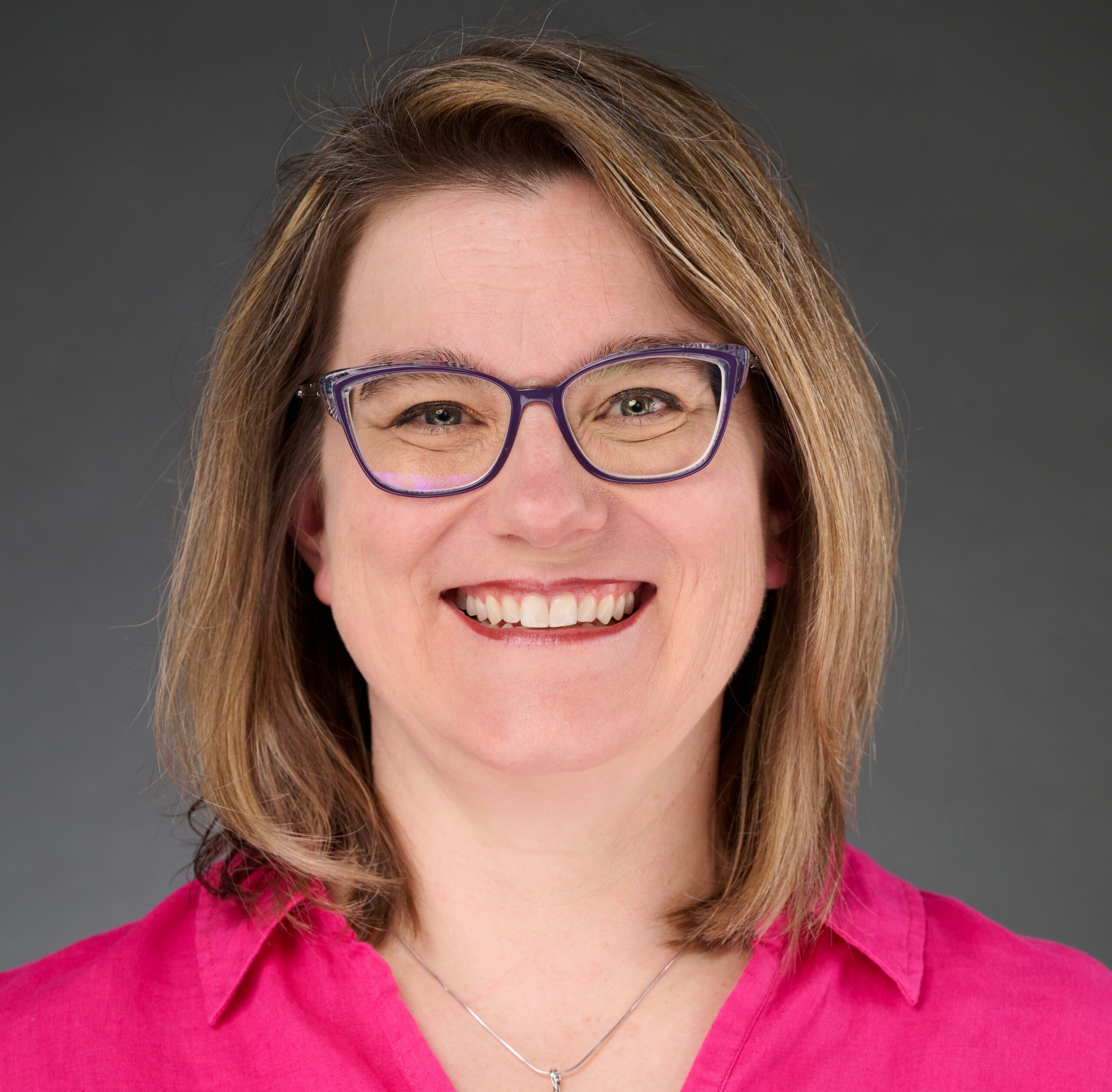
Astrida Kaugars, PhD
Professor of Psychology
Marquette University
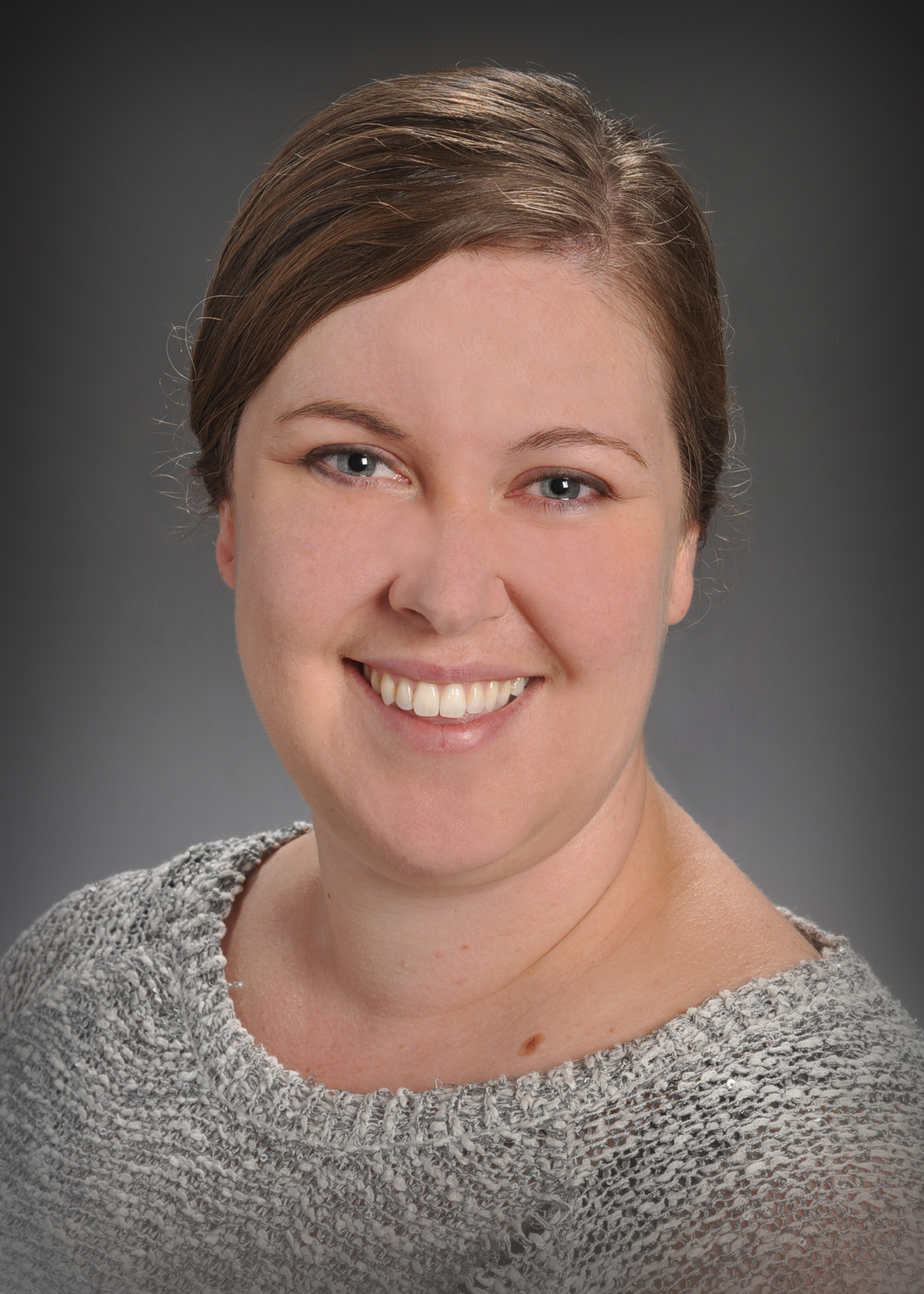
Jessica L. Schnell, MD, MPH
Associate Professor of Pediatrics, Complex Care
Medical College of Wisconsin
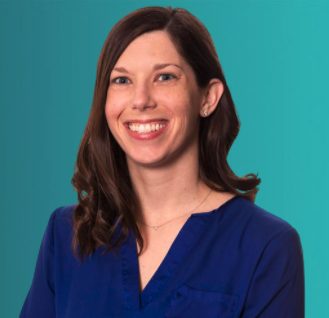
Host: Emily J. Goodwin, MD
Clinical Associate Professor of Pediatrics, University of Missouri Kansas City School of Medicine
Pediatrician, General Academic Pediatrics Beacon Program, Children’s Mercy Kansas City
In this Complex Care Journal Club podcast episode, Drs. Astrida Kaugars and Jessica Schnell discuss a measure development and preliminary validation study of a Complex Care Program Family Impact Questionnaire. They describe the importance of capturing the value of complex care programs, the four domains of program impact that were identified (general satisfaction, caregiver well-being, family well-being, and medical care empowerment), and next steps from this work.
Learning Objectives:
At the conclusion of this educational program, learners will be able to:
- Discuss emerging evidence in the care of children with medical complexity.
- Describe methodological considerations for recent publications in complex care
- Identify opportunities to translate research findings into clinical practice.

In support of improving patient care, Boston Children’s Hospital is jointly accredited by the Accreditation Council for Continuing Medical Education (ACCME), the Accreditation Council for Pharmacy Education (ACPE), and the American Nurses Credentialing Center (ANCC), to provide continuing education for the healthcare team.
Physician
Boston Children’s Hospital designates this live activity for a maximum of 0.5 AMA PRA Category 1 Credits ™. Physicians should claim only credit commensurate with the extent of their participation in this activity.
Nurse
Boston Children’s Hospital designates this activity for 0.5 contact hours for nurses. Nurses should only claim credit commensurate with the extent of their participation in the activity.
Physician Assistant
Boston Children’s Hospital has been authorized by the American Academy of PAs (AAPA) to award AAPA Category 1 CME credits for activities planned in accordance with AAPA CME Criteria. This activity is designated for 0.5 AAPA Category 1 CME credits. PAs should only claim credit commensurate with the extent of their participation.
Social Worker
As a Jointly Accredited Organization, Boston Children’s Hospital is approved to offer social work continuing education by the Association of Social Work Boards (ASWB) Approved Continuing Education (ACE) program. Organizations, not individual courses, are approved under this program. State and provincial regulatory boards have the final authority to determine whether an individual course may be accepted for continuing education credit. Boston Children’s Hospital maintains responsibility for this course. Social workers completing this course receive 0.5 ACE CE continuing education credits.
MOC Part II
Successful completion of this CME activity, which includes participation in the activity, with individual assessments of the participant and feedback to the participant, enables the participant to earn: 0.5 MOC points in the American Board of Pediatrics (ABP) Maintenance of Certification (MOC) program.
Disclosures
Boston Children’s Hospital adheres to all ACCME Essential Areas, Standards, and Policies. It is Boston Children’s policy that those who have influenced the content of a CME activity (e.g. planners, faculty, authors, reviewers and others) disclose all relevant financial relationships with commercial entities so that Boston Children’s may identify and resolve any conflicts of interest prior to the activity. These disclosures will be provided in the activity materials along with disclosure of any commercial support received for the activity. Additionally, faculty members have been instructed to disclose any limitations of data and unlabeled or investigational uses of products during their presentations.
The following planners, speakers, and content reviewers, on behalf of themselves, have reported the following relevant financial relationships with any entity producing, marketing, reselling, or distributing health care goods or services consumed by, or used on patients:
Astrida Kaugars, PhD
None
Jessica L. Schnell, MD, MPH
None
Emily Goodwin, MD
None
Please see the FAQs below for common questions about how to work through a course. If you have a question or issue that is not addressed in the FAQ, please use this form to submit a help request, or if your issue is urgent, call the CME office at: 617-919-9908.
How do I navigate this course? There are two ways to access and navigate course content with the interactive table of contents: at the bottom of the main course page or in the sidebar on the right side of the page. Select the links in the table of contents to access the corresponding content. Depending on the course, access to content may be linear, in which case each content module or section can only be accessed if the prior ones are completed, or non-linear, in which case modules and sections can be accessed in any order. Use the breadcrumbs at the top of any course page to orient yourself within a course, or return to a previous course section or the main course page. How do I claim credit? If the course has been accredited, available credits will be displayed on the course home page. Select only those credits that apply to your profession, and click/tap “Apply Selection.” You may make your selection at any point while you are taking the course, or after you have completed it. How do I download a certificate? There are two ways to view/download your certificate: from within the course or from the course listing under your profile (select the document icon). In either case, you must have selected at least one available course credit type to generate a certificate. How do I view/print my transcript? You must be logged in to view your transcript. Select My Profile at the top of the page. If you do not see the transcript selector, be sure the Courses tab is selected. Select the type of credit and dates to include in your credit report. To include all credits from all time, leave the options blank. Select Download Transcript to view/download your transcript. Note each credit type in your transcripts starts a new page. How do I request a refund? Please email the CME Department to request a refund.How do navigate this course?
How do I claim credit for this course?
How do I download a certificate?
How do I view/print my transcript?
How do I request a refund?
Click Here to View Transcript
Emily Goodwin 00:00 Hello and welcome to the Complex Care Journal Club podcast. My name is Emily Goodwin. I’m a pediatrician in complex care at the Beacon Program at Children’s Mercy Kansas City and your host for this episode. In this podcast series, we seek to discuss emerging evidence in the care of children with medical complexity and its implications for practice. I am delighted to have Dr. Astrida Kaugars from Marquette University and Dr. Jessica Schnell from Children’s Wisconsin joining me today. They are the first and senior authors of the article “Capturing Caregivers’ and Families’ Experience in a Complex Care Program: Development of the Complex Care ProgramFamily Impact Questionnaire” published in November 2025 in the Journal of Pediatric Psychology. Astrida and Jessica, thank you so much for being here. Astrīda Kaugars 00:46 Thank you for having us. Emily Goodwin 00:48 If you could share a little bit about your study, starting with the gap you identified and your research aims? Jessica L. Schnell 00:54 Sure, so Emily, as I’m sure you are aware, there is a big gap in the literature and overall, in the ability of complex care programs to prove that we are valuable to families. So, there is a lot of early cost savings data showing reduced lengths of stay and benefits for payers and for hospital systems from a utilization standpoint. But anyone that works in complex care also knows that the families that we take care of love being in a complex care program. They love what we’re able to do for their child and their family, and there’s been a lot of studies trying to kind of get at what exactly that value is or characterize it better. And unfortunately, a lot of the existing measures that we hoped would do that really haven’t borne out those results. So, this is a long measure development project that started back in 2018 with our research team that has really set to bridge that gap, see if we can find out exactly how we can characterize our value to families. Emily Goodwin 02:10 Great. And do you mind telling us a little bit about the methods that you chose and your key findings? Astrīda Kaugars 02:16 Sure, so as Jessi mentioned, we’ve been working on this for a long time. And the first phase of our study was looking at families’ responses about what they valued and what they benefited from, with regards to the complex care program. And so, we published those results, initially, those qualitative results, and then the next step was what we described in this paper, where we developed items that we thought would represent these different domains of how the complex care programs impacted families. And then we generate a long list of items. And then to help narrow that down, we used interviews with caregivers to see how relevant the items were, what or how appropriate our wording was, was it understandable to families? And then we narrowed that list down to a smaller number that we incorporated in the measure. Then we conducted a survey design study where we asked caregivers from our program here at Children’s Wisconsin to participate, and they completed our survey. They also completed two additional measures, assessing caregiver well-being and assessing communication and impact of complex care programs. And then we were able to look at their responses to the items, and we found that the items really clustered in four different domains, so general satisfaction, caregiver well-being, family wellbeing and medical care empowerment. And we were happy with those clusters. They seem to adequately define and describe what our team had noticed about families’ experiences. And then we were also looking to see how our scores on those different domains related to those other two existing measures. So we found that higher scores on all of our four scales, general satisfaction, caregiver well-being, family well-being and medical care empowerment were associated with higher scores on the PICS [Pediatric Integrated Care Survey] family impact scale and higher communication with caregiver providers on the PICS was also associated with those four domains, and then caregivers who reported higher perceived stress reported lower scores on caregiver well-being and family well-being, so that was also consistent with what we expected. So, we were very happy with this preliminary evidence of reliability and validity for our measure. Emily Goodwin 04:52 Fantastic. I wonder if you could share any opportunities or challenges you identified while developing and conducting your study? Jessica L. Schnell 05:00 Yeah, I think the one of the biggest opportunities that we realized through this process was just how excited families were to participate in the study, to share their experiences, to know that a measure was being developed that was about the way that complex care has changed their family and their own well-being. We had way more people say yes to completing the cognitive interviews than we needed, which was very encouraging to us. There were some parents that we had to cut off after an hour interview because they just wanted to keep talking about the questions and their experiences. So that was great, and I think hopefully encouraging to other complex care programs, wanting to talk to families, because they really care about our work. They care about making complex care programs sustainable. Astrīda Kaugars 05:53 Yeah, and then some challenges, so perhaps similar to research groups at other institutions. Our institutional review board process took longer than we expected and anticipated, so we encountered some delays as we waited for those amendments to be reviewed, we didn’t collect as much demographic information as we maybe could have for the caregivers, and we also didn’t obtain specific information about the children of the caregivers. So, we were really primarily focused on caregivers’ experiences, but consequently we couldn’t describe, we just we didn’t ask enough information to describe their children. We also made a decision to not review the medical records for the patient’s information, because we really wanted our team to not know who did and didn’t participate in the study, and because it was only from our site, we wanted to maintain that anonymity of participants. And so that was a challenge, as we needed to describe the participants and describe the population, we could do so for the larger program population, but not as specifically as maybe we would in the next study with regard to the caregivers and their children. Jessica L. Schnell 07:12 Yeah, I think we talked a lot as a team about whether the intent for the measure was going to be for program evaluation improvement or for sort of individualized caregiver interventions. And so that informed our decision to not to look into charts and to keep it anonymous because the intent of the measure we decided we really did want to be more for program evaluation, and it shouldn’t be used for therapeutic interventions for families, but really can be looked at in a more, much larger scale to see what areas programs might have opportunities to improve in. So that did play into the decision, but that was a challenging conversation for us as a research team and trying to define exactly what we wanted the measure to be. Emily Goodwin 08:01 Yeah, and certainly all of the caregivers that participated already had a child that was identified as qualifying for that type of program. Certainly, every program is a little bit different, but this seems like a measure that could be customized a bit to use and as a needs assessment for each program. I noticed too that some of the kids maybe didn’t have a sibling or didn’t have some of the some of the questions may not have applied. I don’t know if you want to talk a little bit about that? Astrīda Kaugars 08:28 Yeah, we debated this too, both in the item development phase, and then after we got our results back, that we had two questions, specifically, if your child is 12 years or older, a question about that, about their care, kind of transition care later in life, and then if they had a sibling or not. And right, we included them because we wanted to understand those experiences for families, but not everybody could answer that question, so we couldn’t officially include it in our factor analysis and in those subscales. But we do plan, we do recommend, I think it certainly could be asked in the future, and the responses to those items could be evaluated on their own. Emily Goodwin 09:11 I also really appreciated that you had a parent of a child with medical complexity involved in your study team. And I appreciated getting to see in Table 1 how the language was changed as a result of the cognitive interviewing. I thought that was a really nice way of showing the various phases and iterations of how that evolved. I wonder if you could tell us a little bit, what do you think are the implications for clinical practice, specifically, what do you recommend for members of the interprofessional care team based on your findings? Jessica L. Schnell 09:44 So, I do think, as I kind of mentioned earlier, that the ability to prove complex care value using only utilization is somewhat time limited. Those effects go away over time as the rest of our healthcare system gets better at taking care of CMC [children with medical complexity]. And so, I do think that as a field, we should push more in the direction of looking at other ways that complex care programs are valuable. And I’m proud that this study and this measure might be a first step towards that. I do think you know, as we intended it to be more for formal program evaluation, that other programs should consider it that way too, and be careful looking at individual responses as it might just over-generalize one parent experience. I also think one thing is just the importance of having an interprofessional care team in the study design, especially for studies when we’re talking about family experiences, just because every member of the team kind of sees a different side of a family’s experience and implements different parts of the program. And so it was so important to have not only parent caregiver, like you mentioned, but also we had a nurse case manager, a care coordinator, Astrida, the psychologist, who sort of has this outsider looking in view on our program and its value and all of them really added something unique and important to the item development process and refinement process. So, I would definitely recommend you know as much of an interprofessional team as you can have especially in doing studies about families and about the caregiving experience. It added a lot. Astrīda Kaugars 11:36 Yeah, and I can add to that too, one of the scales that came up, was medical care empowerment. And we were very happy to see this. And as we discussed it, we realized that this is an area that the team contributes to, and that families really benefit from, but it may not be as explicitly discussed, but what seems to be unique about complex care programs is the quality of time they spend with families and the focus on the psychosocial elements and supporting families in feeling more empowered in their care and assessing that is something that seems to be missing from the current literature, and is really an important area to underscore and to support. Emily Goodwin 12:23 Yeah, for sure, I think these are metrics that matter. Probably why you had so many families wanting to participate and continue talking, you know, about it. So, it seems like we’re hopefully on the right track with what you’re doing. I’m excited to hear more about important next steps from your work, as well as what you think messages are for patients and families from your study. Jessica L. Schnell 12:44 So I think my main message to families is just that they are able to drive the care that the complex care programs provide for their families. They should be willing to give their feedback, and should know that their feedback and how they feel about their complex care team really matters for the existence of the field and for their individual programs, especially in places where we were relying on other funding sources or need to constantly justify our value to the hospital. And families should never be afraid to share positive experiences that they’ve had. I do think that you know they should know that it is our goal to improve their lives, to improve caregiver well-being, and to improve family well-being and how they feel about their other medical interactions. I also think that it communicates that health isn’t just biological, but that a caregiver’s psychosocial needs and states do have a direct impact on the care of their child and on their child’s health, and that relationships with their care team is really important, and that trust really can’t be underestimated. Astrīda Kaugars 13:55 Jessi said it all well. Emily Goodwin 13:59 Any other important next steps or advice, or even lessons learned, to share with other researchers in this field? Astrīda Kaugars 14:06 One goal that we have is to share this measure with other programs, and so we are in our next study right now is with two programs in Wisconsin, but we certainly would like to extend the measures used to other programs around the country, because we recognize that every complex care program is different, and we really want to see if the measure is true in different programs, both geographically, also the knowing that complex care programs are structured in different ways, we really want to see how, how well the measure holds up. So, we are looking to further validate the measure, and we’re looking for partners to collaborate with, for funders to help support this work. Jessica L. Schnell 14:52 Yeah, so any complex care programs out there whose model is maybe a little bit different than the one at Children’s Wisconsin, we would love to have your partnership in this next phase, and we are still looking for funding sources. And so, very open to anyone that has any suggestions about that, feel free to reach out to our team. And then, I think the only other thing that we didn’t talk too much about, but was really important to the study design and then to kind of all stages, is that we have a Family Advisory Board in our program, and we came to them several times throughout this very long process to sort of just check our own motivations, check what we were thinking was the right next step, and get that feedback from them on whether it was something that they were still interested in, whether it’s something that made sense as a direction for our program to go. And I’m so glad that we did that. I think again, I learned a lot, our psychology student that got to talk to them and present to them, learned a lot just about how important family input is at every stage. So would not, couldn’t underscore more the benefit of that to our study and to us thinking about next steps. Astrīda Kaugars 16:12 Yeah, I can add an anecdote to that. My current graduate student is collecting data on another project with families from complex care programs, and she had a parent caregiver reach out to her and ask, have, do you have any caregivers that consulted on this study? And we were able to say yes, we have, yes we did. And that we did run her study also by the Family Advisory Board. So, I think it’s very reassuring for caregivers to know that their voice has been incorporated in the research design process. Emily Goodwin 16:45 Wonderful. Anything else that you’d like to share that I didn’t ask you about? Astrīda Kaugars 16:49 Well, I guess we could reiterate the importance of caregiver well-being, and how, as a pediatric psychology community, we are still looking for new ways to help develop assessment measures and interventions to support caregivers from for a variety of pediatric populations. And as Jessi mentioned, although this measure isn’t meant to be used on an individual basis, it can still help provide programs with information to help them justify and advocate for more psychosocial services for their programs. Emily Goodwin 17:25 Yeah, I can see this being a useful tool for a needs assessment, but also ongoing improvement work within a complex care program and seeing how we’re doing. So, it seems like a very useful tool, and I really enjoyed learning about it. Well, thank you both so much for joining us on the podcast today and telling us about your work, and thank you to you and your team and the families that worked with you for advancing the field of complex care. Astrīda Kaugars 17:50 Thank you. Emily Goodwin 17:51 And thank you for listening to the Complex Care Journal Club Podcast. We aim to highlight research that has the potential to be practice-changing, that values patient and family engagement, is relevant across disciplines and diagnoses and uses high-quality or novel research methods. We invite you to join the conversation by suggesting an article that you would like to see discussed on this podcast using the form provided on the OPENPediatrics YouTube channel. Thank you for joining us. Journal Club Article Kaugars AS, Bungert N, Lee KJ, Michlig J, Oswald DL, Paul MK, Quates SK, Schnell JL. Capturing caregivers’ and families’ experiences in a Complex Care Program: development of the Complex Care Program-Family Impact Questionnaire (CCP-FIQ). J Pediatr Psychol. 2025 Nov 16:jsaf096. doi: 10.1093/jpepsy/jsaf096. Epub ahead of print. PMID: 41241776; PMCID: PMC12826604. Other References Schnell JL, Kaugars AS, Johaningsmeir S, Quates SK, Lee KJ. Listening to families: qualitative analysis of family perspectives on the impact of participating in a complex care program. Child Health Care. 2025;54(3):350-361. doi:10.1080/02739615.2024.2433963