
Practice-Changing Research in Complex Care at the AACPDM Annual Meeting 2026 -Complex Journal Club Podcast
Current Status
Price
Get Started
Course Credit
The following credits are available for this course:
| AMA PRA Category 1 Credits™ (MD, DO, NP, PA) | 0.5 hours |
| Contact Hours (Nurse) | 0.5 hours |
| American Academy of Physician Assistants (AAPA) Category 1 CME Credits | 0.5 hours |
| ASWB ACE Continuing Education Credits (Social Worker) | 0.5 hours |
| ABP Part II MOC (American Board of Pediatrics) Credits | 0.5 hours |
(Note: a course evaluation is required to receive credit for this course.)

Eilig Dynai, MD, MPA
Orthophedic Surgeon, Clinical Associate, University of British Columbia Clinical Assistant Professor, British Columbia Children’s Hospital
Lauren Fetsko, DO
Assistant Professor of Pediatrics, University of Wisconsin
Catherine Jones, BSc
Dietitian, British Columbia Children’s Hospital
Esther Lee, MD
Clinical Assistant Professor, University of British Columbia
Sara Liegel, MD
Assistant Professor of Pediatrics, University of Wisconsin
Jordan Sheriko, MD
Assistant Professor of Pediatrics, Medical Director of Pediatric Rehabilitation, Dalhousie University,
Melissa Villegas, MD
Assistant Professor of Pediatrics, University of Wisconsin
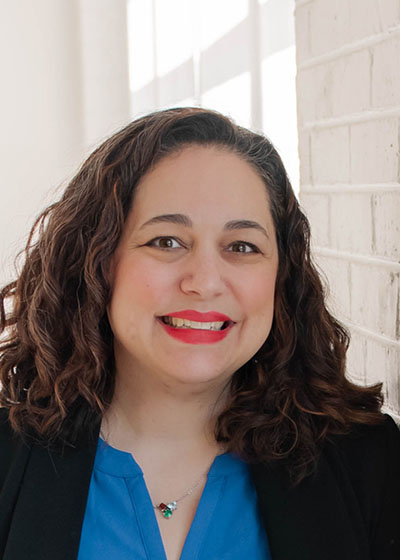
Moderator: Kilby Mann, MD
Assistant Professor, Director of Pediatric Rehabilitation, University of North Carolina School of Medicine
In this special Complex Care Journal Club podcast episode, host Dr. Kilby Mann interviews presenters of posters and educational sessions relevant to the care of children with medical complexity at the American Academy for Cerebral Palsy and Developmental Medicine (AACPDM) 80th Annual Meeting, September 27-30, 2026, in Philadelphia, Pennsylvania. Speakers describe their key lessons learned and the value of partnering with people with lived experience in training and program design.
Learning Objectives:
At the conclusion of this educational program, learners will be able to:
- Discuss emerging evidence in the care of children with medical complexity.
- Describe methodologic considerations for recent publications in complex care.
- Identify opportunities to translate research findings into clinical practice.
In support of improving patient care, Boston Children’s Hospital is jointly accredited by the Accreditation Council for Continuing Medical Education (ACCME), the Accreditation Council for Pharmacy Education (ACPE), and the American Nurses Credentialing Center (ANCC), to provide continuing education for the healthcare team.
Physician
Boston Children’s Hospital designates this live activity for a maximum of .5 AMA PRA Category 1 Credits ™. Physicians should claim only credit commensurate with the extent of their participation in this activity.
Nurse
Boston Children’s Hospital designates this activity for .5 contact hours for nurses. Nurses should only claim credit commensurate with the extent of their participation in the activity.
Physician Assistant
Boston Children’s Hospital has been authorized by the American Academy of PAs (AAPA) to award AAPA Category 1 CME credits for activities planned in accordance with AAPA CME Criteria. This activity is designated for .5 AAPA Category 1 CME credits. PAs should only claim credit commensurate with the extent of their participation.
Social Worker
As a Jointly Accredited Organization, Boston Children’s Hospital is approved to offer social work continuing education by the Association of Social Work Boards (ASWB) Approved Continuing Education (ACE) program. Organizations, not individual courses, are approved under this program. State and provincial regulatory boards have the final authority to determine whether an individual course may be accepted for continuing education credit. Boston Children’s Hospital maintains responsibility for this course. Social workers completing this course receive .5 ACE CE continuing education credits.
MOC II
Successful completion of this CME activity, which includes participation in the activity, with individual assessments of the participant and feedback to the participant, enables the participant to earn:
0.5 MOC points in the American Board of Pediatrics (ABP) Maintenance of Certification (MOC) program
Disclosures
Boston Children’s Hospital adheres to all ACCME Essential Areas, Standards, and Policies. It is Boston Children’s policy that those who have influenced the content of a CME activity (e.g. planners, faculty, authors, reviewers and others) disclose all relevant financial relationships with commercial entities so that Boston Children’s may identify and resolve any conflicts of interest prior to the activity. These disclosures will be provided in the activity materials along with disclosure of any commercial support received for the activity. Additionally, faculty members have been instructed to disclose any limitations of data and unlabeled or investigational uses of products during their presentations.
The following planners, speakers, and content reviewers, on behalf of themselves, have reported the following relevant financial relationships with any entity producing, marketing, reselling, or distributing health care goods or services consumed by, or used on patients:
Eilig Dynai, MD, MPA
None
Lauren Fetsko, DO
Honorium for CME Review for EPIC Systems
Catherine Jones, BSc
None
Esther Lee, MD
None
Sara Liegel, MD
None
Jordan Sheriko, MD
Consulting: Ipsen, Biogen, Novartis, Roche, ltalfanaco
Melissa Villegas, MD
None
Please see the FAQs below for common questions about how to work through a course. If you have a question or issue that is not addressed in the FAQ, please use this form to submit a help request, or if your issue is urgent, call the CME office at: 617-919-9908.
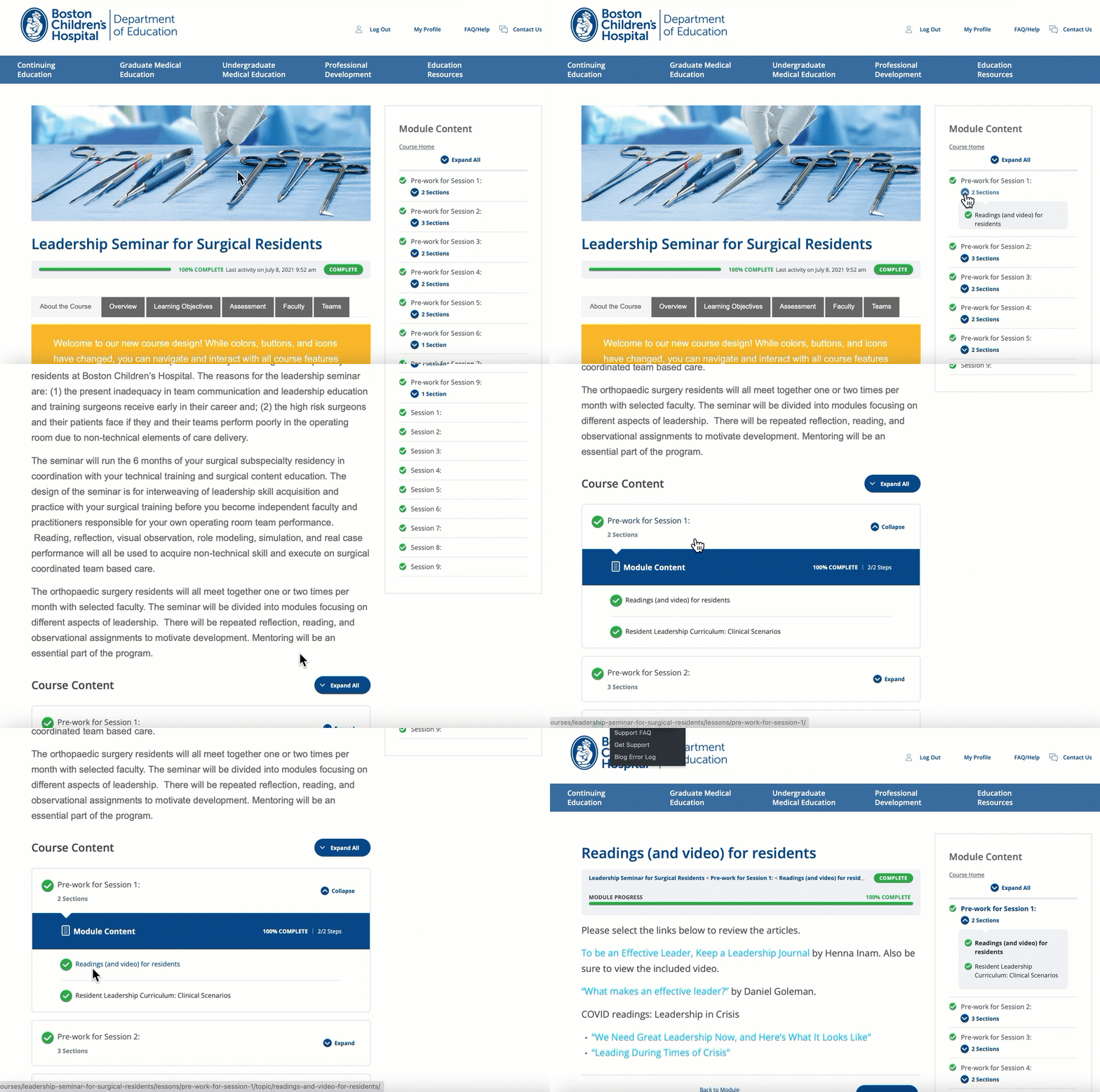
How do I navigate this course? There are two ways to access and navigate course content with the interactive table of contents: at the bottom of the main course page or in the sidebar on the right side of the page. Select the links in the table of contents to access the corresponding content. Depending on the course, access to content may be linear, in which case each content module or section can only be accessed if the prior ones are completed, or non-linear, in which case modules and sections can be accessed in any order. Use the breadcrumbs at the top of any course page to orient yourself within a course, or return to a previous course section or the main course page. How do I claim credit? If the course has been accredited, available credits will be displayed on the course home page. Select only those credits that apply to your profession, and click/tap “Apply Selection.” You may make your selection at any point while you are taking the course, or after you have completed it. How do I download a certificate? There are two ways to view/download your certificate: from within the course or from the course listing under your profile (select the document icon). In either case, you must have selected at least one available course credit type to generate a certificate. How do I view/print my transcript? You must be logged in to view your transcript. Select My Profile at the top of the page. If you do not see the transcript selector, be sure the Courses tab is selected. Select the type of credit and dates to include in your credit report. To include all credits from all time, leave the options blank. Select Download Transcript to view/download your transcript. Note each credit type in your transcripts starts a new page. How do I request a refund? Please email the CME Department to request a refund.How do navigate this course?
How do I claim credit for this course?
How do I download a certificate?
How do I view/print my transcript?
How do I request a refund?
Click Here to View Transcript
Kilby Mann 00:04
Hello and welcome to the Complex Care Journal Club podcast. My name is Kilby Mann. I’m a pediatric
rehabilitation medicine physician at the University of North Carolina in Chapel Hill, and your host for this episode.
In this podcast series, we seek to discuss emerging evidence in the care of children with medical complexity and
its implications for practice. I recorded this episode at the annual meeting of the American Academy for Cerebral
Palsy and Developmental Medicine, or AACPDM, in Philadelphia, Pennsylvania. AACPDM is a multidisciplinary
community of physicians, therapists, nurses, dietitians, psychologists, researchers, and people with lived
experience. They share a focus on children and adults with cerebral palsy and other childhood-onset disabilities. I
talked with three groups of presenters. First, Dr. Esther Lee describes a communication workshop for pediatric
residents that was co-designed and co-led with family partners. Next, a team from British Columbia and Nova
Scotia in Canada talk about prehabilitation. Prehabilitation, or “prehab,” means getting a child ready before a
major surgery, including optimizing medical issues like nutrition, meeting functional and equipment needs, and
supporting psychosocial readiness. The team created a toolkit to help clinicians screen for and plan to meet these
needs. Finally, a team from the University of Wisconsin talks about microaggressions. These are everyday
actions that communicate bias, often unintentionally, including ableism. They share a curriculum that teaches
residents to recognize and interrupt microaggressions, and they explain why practicing clinicians need the same
training.
I’m here with Dr. Esther Lee, who’s going to talk about her poster presentation, Building Connections: Caregivers
of Children with Medical Complexity, Co-designing, Co-leading, and Co-delivering Communication Training with
Pediatric Residents. Thank you so much for taking the time to talk with me.
Esther Lee 01:42
Oh, you’re welcome.
Kilby Mann 01:44
So, tell me a little bit more about how you developed this curriculum?
Esther Lee 01:48
Yeah. So, since 2016, I have been teaching medical students, and part of my lecture, I invited a parent to share
their story about their journey with a child with medical complexity. And I was doing that every year, and having
more and more family partners join by doing small groups. And one consistent feedback from parents that I got
was that they wanted reassurance that sharing their story was worth it, and that it was helping students be better
doctors. So my latest endeavor was to take that further and do this project, where we co-designed, co-led, and
co-delivered with the parents, who I will call family partners, in creating a workshop for pediatric residents. This
project was led by pediatric resident Judy So, and I had my long-term family partner colleague Cynthia Vallance
lead as well. She is a person with lived experience as a mother with a young woman with medical complexity, so
she co-led with us and supported the six family partners we recruited. And we started with a question: What do
you think is most important for future pediatricians to learn when it comes to caring for children with medical
complexity and their families? Through many virtual meetings, lots of wonderful discussions, we narrowed down
the focus of the workshop to two themes: building partnerships and strength-based communications. So, for the
workshop, which was for first and second-year pediatric residents, we watched videos of the family partners that
they had already recorded, and then had small group discussions. We did a pre-survey and post-survey, where
the pre survey of the residents showed that only 50% were satisfied with the training on complex care, and by
using self-entrustment scores around specific communication topics, the post-survey results showed that their
confidence increased in eight out of nine topics, and 91% felt more confident in caring for children with medical
complexity and their families, and they mainly valued the patient and family voices that they got to hear directly.
Kilby Mann 03:59
Yeah, I think it’s been really nice over the years to see more and more the value of that person with lived
experience voice, and that we’re bringing them in, not just as in that, like you said, that power differential in the
clinic, but just like teach me so I can do better.
Esther Lee 04:12
Yes, yeah. And you know I think one of the cool things that also came out of this because we had such rich
discussions with the family partners, and because we focused on communication, we also wound up creating a
language guide. We were already aware of a wonderful language guide created by medical students called “Am I
Ableist?” So we used a similar format with all the things that we learned during the meetings preparing for the
workshop, and created a preferred language guide as well, which has two sections. One is how do you use
language with families and patients, and then how do you also use language with health professionals in having
suggestions, like instead of saying somebody’s suffering with something, saying the person has that diagnosis,
right? And the key point was that there’s actually no one right way, and that if you’re not sure, you need to ask.
Really giving that permission to residents, saying we know you don’t know everything. Actually, nobody knows
everything about my child, right? And that if you don’t know, just ask, right? And I think it just gives that permission
to residents who I think are under extreme pressure to be perfect and not make mistakes and not be offensive.
Our hope for how it would apply for clinical practice is that pediatrics residents would have more confidence in
interacting and supporting children with medical complexity and their families,
Kilby Mann 05:44
You said you built the communication guide. Is that something that you envision sharing more broadly, or your
curriculum? For those of us that might want to do something similar.
Esther Lee 05:53
Yeah. So we have put the language guide on my research website, and so we’ve already put that out, and that
was shared with the residents prior to the session, and now I share with every kind of teaching interaction that I
have. And we ask for feedback, and everybody’s welcome to give feedback, and we want to keep updating it, and
recognizing that there’s actually many groups who have language guides, so we kind of compiled resources at the
back as well.
Kilby Mann 06:22
Oh, that’s awesome! Well, I will look forward to reading that. What were some of the challenges you encountered
as you were working through building this program?
Esther Lee 06:30
I think initially, you know, we had these rich discussions with the family partners. We realized, okay, we can’t
teach everything, we can’t do everything, right? There’s just so much to teach, but we we do have to focus. And
the other part was that we applied for grants and such so that we can provide compensation for the family
partner’s time. So we were actually applying for grants, not knowing what the actual topic was, right? So often
grants ask you like you know what’s your structure of the workshop and all of that. We didn’t want to put that in
because we wanted to design that with a with a family partner. So I think that’s a bit of that challenge because
often the grants expect you to have already set out, but we didn’t want to actually do that until we have the family
partner. So we had them actually really volunteer without a guarantee of compensation, but thankfully we had
many grants and we were able to compensate.
Kilby Mann 07:26
Oh nice. We’re here at the AACPDM annual meeting. I wonder if there’s one session that you’ve really enjoyed
that you just want to talk about a little bit? Or we are currently recording at the end of the meetings. There might
be a not not be there might not be another session you’re looking forward to, but I wonder if there’s one that was
really impactful for you this year?
Esther Lee 07:44
Yeah, I had the pleasure of presenting with my team around prehabilitation, pre-optimization prior to major
orthopedic surgery. What my main goal for this conference was to go listen to Juliana Mariani in her experience
with her team in Boston Children’s, where they shared their experience in doing the pre-operative assessment. It
was amazing to kind of see what their preliminary results were and how they went through the process with such
a ethical and shared decision-making model, and made me kind of reflect that you know, as with all kind of
complex care and palliative care programs across the world, we’re all at different stages, and we have so much to
learn from each other.
Kilby Mann 08:33
Those connections here are just so important. Again, thank you so much for taking the time to chat with me. That
was really interesting to learn about.
Alright, I’m here with a group of people who presented one of the educational sessions here at the AACPDM
annual meeting, “Preoperative Optimization for Pediatric Orthopedic Patients with Medical Complexity: A
Multicenter Experience and the Future of Pediatric Orthopedic Prehabilitation Practice”. So, I wonder if you want
to each introduce yourselves and then talk a little bit about why this work is important and the toolkit you’re able to
share from this work?
Jordan Sheriko 09:06
I’m Dr. Jordan Sheriko, I’m a pediatric rehab medicine specialist at IWK Health, which is Children’s Hospital in
Halifax, Nova Scotia, Canada, and assistant professor of pediatrics and medicine at Dalhousie University.
Dynai Eilig 09:20
And I’m Dr. Eilig Dynai, orthopedic surgeon, clinical associate with the pediatric orthopedic department at BC
Children’s in Vancouver, British Columbia. Clinical assistant professor at UBC, and the medical lead of our
prehabilitation project program.
Catherine Jones 09:41
Hi, I’m Catherine. I’m a dietitian at BC Children’s Hospital in the Orthopedic Surgery Department, co-lead with Dr.
Eilig on our prehabilitation project.
Kilby Mann 09:53
One of the really interesting parts of your session was kind of taking there’s three different centers represented
and kind of how you all came together, kind of seeing a similar problem and coming up with a solution. So I don’t
know if anyone wants to talk a little bit about kind of how that grew and how you got to the point of having this like
final product that we’ll have the link to as we send out this recording.
Catherine Jones 10:13
Yeah, I mean, I guess from my perspective, so before I worked in orthopedic surgery, I worked on our inpatient
surgical floor, so I was seeing a lot of these patients after their surgery, and seeing kind of the issues that cropped
up, that delayed discharges for things that that could have been prevented. And then I was the first dietitian with
orthopedic surgery, so they hired me specifically to help nutritionally optimize these patients prior to going to
surgery because that was a problem that was recognized with the surgeons as well, but I very quickly figured out
that you know nutrition doesn’t work in isolation if you don’t have all the other parts as well. And so I was very
lucky also to have Dr. Eilig join around the similar time that I was thinking about this, and I think we had similar
ideas around the multidisciplinary approach to prehabilitation. That’s kind of how it all got started. And then, I
guess you know, initially we started with trying to build the clinic. Then quickly realized, oh, we don’t really have a
lot to go on, you know. So we were looking in the literature, and that’s you know when we decided to start trying to
to build this toolkit, which was sort of a mix of the expert opinion as well as the literature review, Dr. Eilig can
speak more to that part of it.
Kilby Mann 11:32
Yeah, I think it’s so great to have a dietitian embedded in orthopedics. It’s like such an interesting model that I
don’t think I have seen before.
Dynai Eilig 11:39
If you look across the board with prehabilitation services. I think there’s a key emphasis on the multidisciplinary
team and the value they bring to the whole holistic approach to the patient. And to add to what Catherine said, so
interestingly enough, my background before coming into Peds was adults, and in the adult domain, the number of
services and funding and programs and conferences around prehabilitation, the whole concept of prehabilitation
is very well developed and very well accepted. As you move into the pediatric domain, you find significant scarcity
in the development of of this field. This is something lacking, especially that some of my practice is managing kids
with cerebral palsy.
Kilby Mann 12:35
Yeah, and I think that’s such an important part of what we’re doing, trying to improve care, improve clinical
workflows, is like we’ve got to share what we’re doing because we don’t all need to like reinvent the wheel. But
also, you’ve got to incorporate that we’re all practicing in different locations and we all have different resources. I
don’t know if Jordan from you talk a little bit about kind of your setting and how it’s working for you.
Jordan Sheriko 12:54
Just the idea of needing to think about your local context and what might be unique about your catchment area,
the population that you serve, and how do you take those ideas of prehabilitation and apply that in in your specific
context is important to understand. While we share the important pillars and values and aspects that go into
prehabilitation, one of the things for us that we’ve learned in our journey over the last nearly 10 years of thinking
about prehab and going through our iterations, where we first started with more high burden interventions like
SEMLs [single-event multilevel surgeries] and Selective Dorsal Rhizotomy, and really focusing our efforts on
preparing children and family really well for those interventions, was also recognizing that there is great value in
thinking through a lot of the similar steps for even low burden interventions, and really being purposeful in that
journey. A child and family maybe going for what we consider something a relatively simple surgery, but to them,
surgery is a big deal. And sometimes we can have the poorest outcomes in those more low burden to us low
stakes surgeries, but not so for the families. So, really understanding the family context, and all the pieces of
medical rehab, psychosocial optimization that we can do. I’ve certainly been fortunate at our institution to have a
really robust interdisciplinary team, including a wide variety of our allied health partners and and the piece that we
we think that was somewhat unique that we have really focused on being the psychosocial prehab and so
leveraging our clinical rehab psychologists and social workers to dive into the unique aspects of the child but also
their family where are they at, what are the ways that we can support them in getting ready, foster that
engagement, understanding, readiness for an intervention in a rehab journey.
Kilby Mann 14:47
I think this toolkit you’ve created is a nice way to organize thoughts. So I don’t know if each of you want to talk a
little bit more about the toolkit and kind of how that can impact practice for others?
Dynai Eilig 14:59
I think the toolkit for us, at least, came from the place that we were seeking knowledge. Basically, we were set out
to start our own service, but basically, we wanted to see what other places have been doing, what the literature
has been showing, collect the data, and really build it the right way. And quite frankly, the more we kind of
researched and looked at other services and into the literature, we found that there’s more missing than actually
knowing out there. And so we felt, okay, some standardization is in order. And we felt this is a gap we can step
into. So we started with massive lit review led by a clinical librarian. So we collected a large team of
multidisciplinary professionals, physicians in allied health patient and family partners, indigenous consultant, and
then we took it wider to across Canada, and we identified key pillars we really want to focus on. And basically, the
toolkit is a screening tool, and then provides an algorithm for the provider, mostly the community provider, but
basically we use it as a scaffold for our program to build in a standardized way to really get basically the
knowledge and output on what to do, especially patients with significant medical complexity going into major
surgery.
Catherine Jones 16:38
One thing I really want to shout out with this toolkit that I think is unique is the multidisciplinary aspect of it. There
is an adult surgical toolkit that also existed within our province, and I know that the first version was basically
written by anesthesiologists, but I think we were really fortunate to have, you know, the participation of you know
PT, OT, social work, multiple different specialties like cardiology, respiratory, the whole package. I just wanted to
point that out. I was thinking about, you know, what I was talking about earlier with the multidisciplinary prehab
approach, this is a situation that comes up often. For example, where you have a kid who is malnourished, but
their parents can’t lift them, yeah, and they don’t want them to gain weight because then they won’t be able to lift
them anymore. so I can improve the nutrition, but I can’t improve that part. So you might probably also need the
participation of PT and OT to help with the equipment they need, and then you need the participation of social
work to help with the funding. You really need that whole team. And I think that’s what the toolkit really
emphasizes: is all the different pieces that go together to help that child be in the best state that they can be, and I
also just wanted to point out, you know, that we had the participation of patient family partner who had two
medically complex children that had gone through the system in this toolkit, as well as our indigenous consultant,
and I think they really added an important piece to that because it’s very easy to think about things from a clinical
lens. But having that perspective, I think, adds a lot of value to that toolkit as well.
Dynai Eilig 18:13
I must say that having the patient’s perspective while writing this a bit changed the way we kind of looked at
things, changed a lot of things in what we wrote, and even changed the format of what we wrote or what the
structure of it. Cause we eventually, what we end up doing is first of all give the patient safety and the patient
perspective its own pillar, which they didn’t have first, and we put it the first. So everybody goes through the
toolkit. Basically, has to go through this section, not because we’re trying to educate people about the patient’s
experience. That’s not the the purpose of it. Just to keep it in mind. Doesn’t matter what we do, whether it’s
academic or clinical.
Kilby Mann 18:57
I think one of the awesome things for those of you listening is please click on the link to open the toolkit and
explore it. I know when they presented it yesterday, they also had a feedback link, and so use it, provide that
feedback so that this can continue to improve and improve care for our patients. Well, thank you so much for
chatting with me. I wonder if you can each kind of talk about either a session you’ve been to that you really
enjoyed, or a session yet to come at this meeting?
Dynai Eilig 19:25
One big shout out, and something I super enjoyed it’s the SIG. It’s for the adaptive sports. I think the dedication
and experience that people bring in is inspiring.
Kilby Mann 19:37
Yeah, awesome.
Catherine Jones 19:39
I think the plenary lecture yesterday about the growth and nutrition in CP. I have a lot to think about going back
home with that because we go back and forth on whether or not to use the CP [Cerebral Palsy] growth charts.
The other one that I went to yesterday was the bioethics presentation in regards to you know, decision making in
in patients with CP, and I think it gave again, you know, giving more of the lived experience perspective and how
we how we talk about people with with disability and the words that we use, and it definitely gives me some time
to reflect on how I approach things.
Jordan Sheriko 20:19
Coming to the academy meeting every year for me is really about reconnecting with all of the people that come to
the academy, the connections that you make, and for me, living in a place where I have been this whole sort of
rehab physician provider really nice to be able to make those connections and then be able to reach out
throughout the year and say what do you think about this. So I value the community in the academy. That’s what I
look forward to most. And hearing from all the people and their updates and fostering those connections.
Kilby Mann 20:56
Yeah, you’re you’re preaching to the choir with us. This podcast exists because we were all part of the complex
care committee at AACPDM, and then had this opportunity to work together more. And so, agree for anyone
listening who’s kind of think about where their academic home might be, or scholarly home. I should say, this is a
great, great academy to be part of. Well, thank you so much.
Catherine Jones 21:17
Thank you.
Kilby Mann 21:20
Alright, I’m here now with the three presenters for a session on microaggressions and how we can all feel more
empowered and have the right skills to interrupt those and address them. So I’m going to give these three
speakers a chance to introduce themselves.
Lauren Fetsko 21:35
I’m Lauren Fetsko. I’m a pediatric physical medicine and rehabilitation physician at the University of Wisconsin in
Madison, Wisconsin.
Melissa Villegas 21:47
I am Melissa Villegas. I am also pediatric rehabilitation medicine physician at the University of Wisconsin and
assistant professor of pediatrics.
Sara Liegel 21:55
And I’m Sara Liegel. I’m also in the Department of Pediatrics at the University of Wisconsin and pediatric rehab
medicine physician.
Kilby Mann 22:04
Well, thank all of you for taking some time to sit down and talk with me. I thought this was a really interesting
session, and I really appreciated coming back with some tools. But maybe just talk a little bit about kind of why
you presented this work.
Sara Liegel 22:16
In our Department of Pediatrics there is a curriculum for the pediatric residents on interrupting microaggressions,
and we were able to help debrief these simulation sessions, and found that was a really wonderful learning
experience. And we wanted to bring that to the rehab residents that we work with, and so we adapted the
curriculum, and kind of made the situations in the simulations to be a little more applicable to the rehab
population. Added in a little more ableism touch that we often see. We realize even in our own training, we didn’t
get a lot of direct training in medical school or in residency in interrupting microaggressions or even
acknowledging microaggressions. And so we wanted to bring that forward because we spend a lot of time
learning about how do we give the best medical care, the best treatment to our patients, but then we don’t really
think about the social side of it and all the implications. And so we wanted to give a curriculum to empower our
residents to address this head on.
Melissa Villegas 23:11
And I think we wanted to then bring it to the session here because we’d also done various iterations of this at our
institution, and so we were hoping to then be able to bring this to a wider audience.
Lauren Fetsko 23:26
I think at the core of microaggressions, I really think about like what are the situations that I’ve dealt with that felt
uncomfortable, and how can I kind of take those to make sure that I’m supporting myself, the staff that I work with,
the learners that I work with, and the individuals that we care for, kind of on a daily basis. To make sure that the
interactions everybody have on a day-to-day basis are welcoming as possible. We’re trying to adapt the program
so that we’re providing the residents with that simulation center practice to kind of really act those out in a safe
environment where we’re setting the example that we’re all learning and that this is a safe space to kind of learn
these skills and we’re all trying to kind of make things better. And then we’re then as a second part. Taking that to
the actual department itself and doing grand rounds to kind of focus on that as well, so that they have a better
understanding of what the residents have gone through, and then hopefully can have a little bit more
acknowledgement because it wasn’t part of our training.
Melissa Villegas 24:27
I think the curriculum is nice, and I feel like I saw this especially as I’ve debriefed kind of multiple sessions with the
pediatric residents, and actually got to debrief a session with the surgical team as well. That you can kind of enter
it from various like places of knowledge and still get something out of it, and the goal isn’t necessarily to move
everyone to the same endpoint, but just to move them forward, because I think sometimes it might be just that
they understand and recognize the microaggressions more than they maybe did if it wasn’t something they had
necessarily heard about before or really recognized was happening to the frequency that maybe it was.
Sara Liegel 25:09
I think the challenge that we noticed pretty quickly was we were teaching the residents what to do with
microaggressions, how to interrupt them, and they felt comfortable interrupting microaggressions. But then they
came back and said, “Well, this isn’t real life because if this happened and I was with an attending or a superior, I
would never say this. I would never interrupt. So we really quickly realized we need to also train the people that
are supervising them so they feel comfortable doing this in their daily life. And so we realize we need to bring this
show on the road. We need to tell other supervisors, attendings, other physicians that maybe are in, you know,
that perceived place of power in a way that you can also be one to set an example and to interrupt the
microaggressions so that other people also feel comfortable doing it.
Lauren Fetsko 25:58
We’re taking a three pronged approach. So we’ve done a kind of didactic session with the residents where we cofacilitated
some cases, just you know with trainees and an attending kind of facilitating. We’re gonna do the
simulation center, so they’ll do four cases in a simulation center with varying kind of focuses, and then, we realize
that that’s obviously a heavy lift. Like not every place might have a sim center, so we’re trying to delineate like
which one of these interventions may be the most effective, and then, I think our goal is to hopefully bring that just
to the groups that we’re involved with, and see if this is something that could be incorporated into other trainings.
Kilby Mann 26:40
Well, thank you so much for talking with me. I wonder if y’all could share a session you’ve been to that was really
great, or sessions that you’re really looking forward to?
Melissa Villegas 26:40
There was a session yesterday that I thought was awesome and engaging. It was on CVI [cortical visual
impairment], intellectual disability, and autism, and trying to discuss some of the challenges with those diagnoses
when they converge, and the ways that they’re different. It was just nice to have a conversation because I think
it’s something clinically that I have a challenge with.
Sara Liegel 27:06
One session was about inpatient rehabilitation for patients with progressive neurologic disorders, and I found that
very interesting. Just to think about all that we can add, even when this might be something is much more
progressive. It’s not the traditional type of inpatient rehab that we’re thinking about. For me, it’s pertinent. I do a lot
of work in inpatient rehab, so it was interesting to kind of get the perspective from other institutions on what
they’re doing for some of these patients that you know have a lot of changes that are happening rapidly.
Kilby Mann 27:37
Yeah, that’s great. I think I was intrigued in all of the sessions, and ultimately shows something different because
there’s so many great offers during every session. Okay, thank you all.
Sara Liegel 27:47
Thank you.
Kilby Mann 27:50
Thank you for listening to the Complex Care Journal Club Podcast. We aim to highlight research that has the
potential to be practice-changing, that values patient and family engagement, is relevant across disciplines and
diagnoses, and uses high quality or novel research methods. We invite you to join the conversation by suggesting
an article that you would like to see discussed in the podcast using the form provided on the OPENPediatrics
YouTube channel. Thank you for joining us.
