

Practice-Changing Research in Complex Care at the American Academy of Pediatrics Conference 2026 – Complex Care Journal Club Podcast
Current Status
Price
Get Started
Course Credit
The following credits are available for this course:
| AMA PRA Category 1 Credits™ (MD, DO, NP, PA) | 0.5 hours |
| Contact Hours (Nurse) | 0.5 hours |
| American Academy of Physician Assistants (AAPA) Category 1 CME Credits | 0.5 hours |
| ASWB ACE Continuing Education Credits (Social Worker) | 0.5 hours |
| ABP Part II MOC (American Board of Pediatrics) Credits | 0.5 hours |
(Note: a course evaluation is required to receive credit for this course.)

Esther Chung, BA
Medical Student
Albert Einstein College of Medicine

Lynn Davidson, MD
Associate Professor
Children’s Hospital at Montefiore
The Pediatric Hospital for Albert Einstein College of Medicine
Madison Harland, MD
Pediatrics Resident
University of Oklahoma
Molly Khoury, MD
Pediatrician,
Oklahoma Children’s Hospital at OU Health
Amanda Page, MD
Complex Care Pediatrician,
Medical Director of Pediatric Complex Care Team
Oklahoma Children’s Hospital
University of Oklahoma
Mason Rostollan, MD, MA
Fellow, Developmental-Behavioral Pediatrics
University of Arkansas for Medical Sciences
Casey Youk, BS
Recent Graduate
University of Pittsburgh
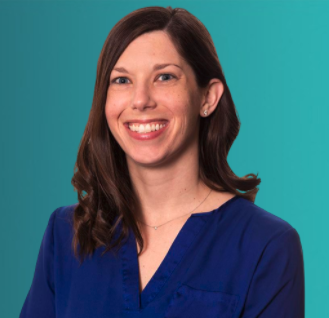
Co-Host: Emily Goodwin, MD
Clinical Associate Professor of Pediatrics,
University of Missouri Kansas City School of Medicine
Pediatrician, General Academic Pediatrics Beacon Program,
Children’s Mercy Kansas City
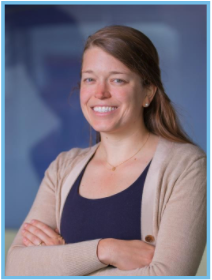
Co-Host: Kristina Malik, MD
Assistant Professor of Pediatrics,
University of Colorado School of Medicine
Medical Director, KidStreet
Pediatrician, Special Care Clinic,
Children’s Hospital Colorado
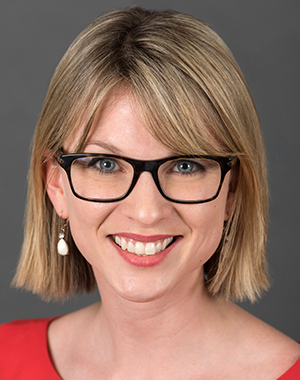
Co-Host: Kathleen Huth, MD, MMSc
Pediatrician, Complex Care Service, Division of General Pediatrics,
Boston Children’s Hospital
Assistant Professor of Pediatrics,
Harvard Medical School
In this special Complex Care Journal Club podcast episode, co-hosts Drs. Emily Goodwin, Kristie Malik, and Kathleen Huth interview presenters of posters and abstracts relevant to the care of children with medical complexity at the American Academy of Pediatrics 2026 National Conference & Exhibition. Presenters at the Council on Children with Disabilities and Section on Home Care sessions describe their study findings and implications for practice. Topics include sensory-friendly office visits for children with autism, outpatient pressure injuries, anticholinergic medication burden, gaps in private duty nursing, and legislative advocacy for paid family caregiving.
Learning Objectives:
At the conclusion of this educational program, learners will be able to:
- Discuss emerging evidence in the care of children with medical complexity.
- Describe methodological considerations for recent publications in complex care
- Identify opportunities to translate research findings into clinical practice.

In support of improving patient care, Boston Children’s Hospital is jointly accredited by the Accreditation Council for Continuing Medical Education (ACCME), the Accreditation Council for Pharmacy Education (ACPE), and the American Nurses Credentialing Center (ANCC), to provide continuing education for the healthcare team.
Physician
Boston Children’s Hospital designates this live activity for a maximum of .5 AMA PRA Category 1 Credits ™. Physicians should claim only credit commensurate with the extent of their participation in this activity.
Nurse
Boston Children’s Hospital designates this activity for .5 contact hours for nurses. Nurses should only claim credit commensurate with the extent of their participation in the activity.
Physician Assistant
Boston Children’s Hospital has been authorized by the American Academy of PAs (AAPA) to award AAPA Category 1 CME credits for activities planned in accordance with AAPA CME Criteria. This activity is designated for .5 AAPA Category 1 CME credits. PAs should only claim credit commensurate with the extent of their participation.
Social Worker
As a Jointly Accredited Organization, Boston Children’s Hospital is approved to offer social work continuing education by the Association of Social Work Boards (ASWB) Approved Continuing Education (ACE) program. Organizations, not individual courses, are approved under this program. State and provincial regulatory boards have the final authority to determine whether an individual course may be accepted for continuing education credit. Boston Children’s Hospital maintains responsibility for this course. Social workers completing this course receive .5 ACE CE continuing education credits.
MOC II
Successful completion of this CME activity, which includes participation in the activity, with individual assessments of the participant and feedback to the participant, enables the participant to earn:
0.5 MOC points in the American Board of Pediatrics (ABP) Maintenance of Certification (MOC) program
Disclosures
Boston Children’s Hospital adheres to all ACCME Essential Areas, Standards, and Policies. It is Boston Children’s policy that those who have influenced the content of a CME activity (e.g. planners, faculty, authors, reviewers and others) disclose all relevant financial relationships with commercial entities so that Boston Children’s may identify and resolve any conflicts of interest prior to the activity. These disclosures will be provided in the activity materials along with disclosure of any commercial support received for the activity. Additionally, faculty members have been instructed to disclose any limitations of data and unlabeled or investigational uses of products during their presentations.
The following planners, speakers, and content reviewers, on behalf of themselves, have reported the following relevant financial relationships with any entity producing, marketing, reselling, or distributing health care goods or services consumed by, or used on patients:
Esther Chung, BA
None
Lynn Davidson, MD
None
Madison Harland, MD
None
Molly Khoury, MD
Amanda Page, MD
Mason Rostollan, MD, MA
Casey Youk, BS
None
None
None
None
Emily Goodwin, MD
Kristina Malik, MD
Kathleen Huth, MD, MMSc
None
None
None
Please see the FAQs below for common questions about how to work through a course. If you have a question or issue that is not addressed in the FAQ, please use this form to submit a help request, or if your issue is urgent, call the CME office at: 617-919-9908.
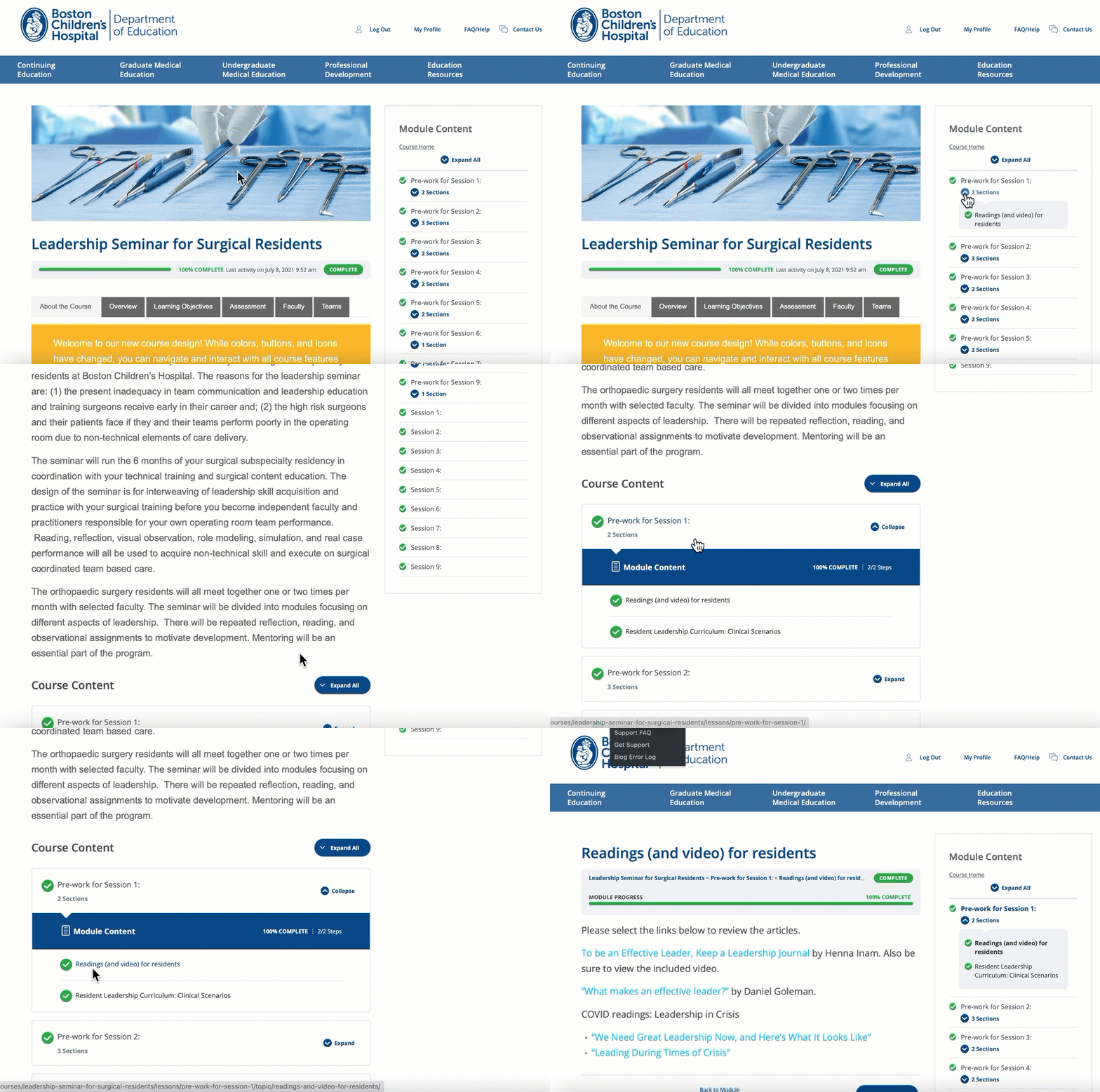
How do I navigate this course? There are two ways to access and navigate course content with the interactive table of contents: at the bottom of the main course page or in the sidebar on the right side of the page. Select the links in the table of contents to access the corresponding content. Depending on the course, access to content may be linear, in which case each content module or section can only be accessed if the prior ones are completed, or non-linear, in which case modules and sections can be accessed in any order. Use the breadcrumbs at the top of any course page to orient yourself within a course, or return to a previous course section or the main course page. How do I claim credit? If the course has been accredited, available credits will be displayed on the course home page. Select only those credits that apply to your profession, and click/tap “Apply Selection.” You may make your selection at any point while you are taking the course, or after you have completed it. How do I download a certificate? There are two ways to view/download your certificate: from within the course or from the course listing under your profile (select the document icon). In either case, you must have selected at least one available course credit type to generate a certificate. How do I view/print my transcript? You must be logged in to view your transcript. Select My Profile at the top of the page. If you do not see the transcript selector, be sure the Courses tab is selected. Select the type of credit and dates to include in your credit report. To include all credits from all time, leave the options blank. Select Download Transcript to view/download your transcript. Note each credit type in your transcripts starts a new page. How do I request a refund? Please email the CME Department to request a refund.How do navigate this course?
How do I claim credit for this course?
How do I download a certificate?
How do I view/print my transcript?
How do I request a refund?
Click Here to View Transcript
Emily Goodwin 00:04
Hello, and welcome to the Complex Care Journal Club Podcast! My name is Emily Goodwin. I’m a pediatrician at Children’s Mercy Kansas City, and I’m your host for this episode. In this podcast series, we discuss emerging evidence in the care of children with medical complexity and its implications for practice. This is a special episode, recorded at the American Academy of Pediatrics (AAP) 2026 National Conference and Exhibition (NCE) in San Diego, California. Most of the attendees at the conference are general pediatricians. Alongside the main program plenaries and keynote speakers and general sessions, the Academy has sections and councils that each also have dedicated programming geared towards members but open to all attendees. We were delighted to see so much programming and research abstracts this year about children with medical complexity and disabilities. In this episode we will highlight research abstracts from both the Council on Children with Disabilities and the Section on Home Care. I will note that while I am a member of both groups, I am not hosting this podcast episode on behalf of the American Academy of Pediatrics. The Council on Children with Disabilities, or COCWD, works to improve the health and quality of life of children with disabilities through policy, education, and advocacy. The Section on Home Care (SOHC) is dedicated to providing understanding of basic principles and emerging developments in pediatric home health care through policy, education, and advocacy. This year, the COCWD held its second abstract program, plus an afternoon of hot topics on anticipatory guidance, artificial intelligence, and neuroaffirming approaches to care. They also joined with the Council on School Health and Council on Community Pediatrics to discuss best practices for effective collaboration with schools, and with the section on emergency medicine and council on children and disasters to discuss emergency and disaster preparedness for children and youth with special health care needs. This year, the Section on Home Care held its inaugural abstract session with presentations ranging from original research, program evaluation, advocacy reports, and quality improvement projects. The two groups also joined forces along with the Section on Telehealth Care for an informative inspiring program on pediatric hospital at home. Hospital at home is inpatient and advanced outpatient care in which patients receive acute care in their homes, rather than in a traditional brick and mortar space. In the session we heard lessons from adult and pediatric hospital at home models as well as we heard about remote patient monitoring and home visiting programs along with challenges and opportunities in this emerging space. There were also many relevant general sessions on topics such as home accessibility, autism care in the primary care office, medical home, transition to adult care and more. We love seeing the continued growth of educational content, as well as trainee engagement, advocacy and research related to the care of children with medical complexity at this conference. Katie, Kristie and I visited the COCWD and Section on Home Care abstract sessions and talked with presenters about their work. First you’ll hear about several presentations highlighted at the COCWD sessions. A sensory room and modified clinic workflow to improve office visits for children with autism. Then Katie discusses with presenters pressure injuries in children with medical complexity across inpatient and outpatient settings and anticholinergic burden from polypharmacy. And finally Kristie talks with presenters from the Section on Home Care abstract presentations including about legislative advocacy that brought paid family caregiving to Oklahoma, and the gap between approved and staffed private duty nursing hours in Oklahoma. Let’s listen in.
Emily Goodwin 03:35
Hi, I’m Emily Goodwin. I am here with Esther Chung, who is a third-year medical student at Albert Einstein College of Medicine, and Lynn Davidson, who’s an associate professor at Albert Einstein College of Medicine. And they presented a poster on improving the office experience of children with autism using a sensory room. Thanks so much for talking with me today.
Esther Chung 03:54
Thank you so much for having us.
Lynn F. Davidson 03:56
Thank you for having us.
Emily Goodwin 03:58
Do you mind telling me a little bit about your study and what you found?
Lynn F. Davidson 04:03
So, I’ll give you a little background. We’re seeing increasing numbers of children and youth with autism in our practices, and their experience in the office has been sometimes very difficult, and so back in 2023, I tried a pilot that was part of an AAP Chapter Three program called Advancing Equity in Pediatrics. I created a small sensory room and we did a pilot project, and the parents were so thrilled about the experience in this room for their youth with autism that we decided to expand it and study it in a more formal way. We invited Emily Dries, who was not only a third-year resident then, but also has lived experience with a family member with autism, and then Esther Chung, who’s here with us today, and who’s going to tell us about the project and what we found.
Esther Chung 05:04
Yeah, so we aim to improve the experience of our patients living with autism in the medical setting through creating a modified sensory room and a modified workflow of the clinic. So the sensory room had modifications, including a light dimmer, removing excess furniture, like getting rid of the printing machine, which can be really loud. And we also created a social story depicting the visit that they would go through. Our patients were also immediately placed into the sensory room instead of having them go from one room to another. They stayed in this room where the tech would go in, the nurse would go in, as well as the physician, and conducted an entire visit there. We also provided them with a sensory toy. We were lucky enough to get a grant actually from The Toy Foundation. They provided us with the resources to be able to give our kiddos some sensory toys, which luckily enough they were able to take home as well. We did a pre-survey asking them how did they feel about typical visits they had in the hospitals and any difficulties they’ve experienced in the past, and how that compared to their visit today. We surveyed 100 patients, and we actually found significant decreases in the experience of difficulties with long wait times, staying still for measurements, and loud noises in the office. And 95% of our parents strongly agreed or agreed that they were pleased with the use of the sensory room and the modified workflow as well. We also got some parent feedback, where they talked a lot about how it was nice they were able to feel comfortable playing in the room with their child, and especially going to the hospital can be really stressful, not only for our patients, but also for the parents.
Emily Goodwin 06:49
Really neat. Lynn, do you want to tell us a little bit more about how you got funding for this project?
Lynn F. Davidson 06:64
We were lucky at the time when I did this pilot. Our child life group was also looking to get some sensory toys for the inpatient unit, and they included us as one of the five sites. Wonderful, and we were lucky to get that grant because it has funded our toys to the, to this date.
Emily Goodwin 07:19
Yeah. And thinking about the toys that you give, how do you make sure you have the appropriate toys?
Lynn F. Davidson 07:25
So, we have our toys and bins that are age appropriate. However, we ask that the providers think about developmentally appropriate. So, if you’ve got a 10-year-old who’s developmentally at the age of three, you want to give a three-year-old toy. Otherwise, you’re going to run into trouble with them mouthing it and breaking it.
Emily Goodwin: 07:47
Or a safety concern.
Lynn F. Davidson 07:48
Yeah, safety concern.
Emily Goodwin 07:49
I’m curious if either of you wants to talk a little bit about the practice implications? I could see this translating to lots of different clinical environments, maybe even the emergency department but not everybody may have a child life department or funding, and so just kind of curious, what do you think some of the takeaways are for clinicians and for families?
Esther Chung 08:10
Yeah, so that’s a great question. We know that space is a really big issue in a lot of hospitals especially like the emergency department where there is a lack of space and you can’t really create an isolated sensory room. But there are changes that could be made. Like for example, a lot of our patients enjoyed having the storyboard that would really help them walk through a visit, and even giving that early exposure, like oh here, this is kind of what your visit is going to look like, can be very helpful for our patients, and providing things like a sensory toy can be very helpful.
Emily Goodwin 08:40
Anything else you would add, Lynn?
Lynn F. Davidson 08:43
I think that it is clear from the adult literature, adults with autism aren’t going for their routine healthcare, and the consequences to their medical care are dire. And the studies show that this is due to the medical trauma in the medical setting, and anything we can do to try to decrease that medical trauma in pediatrics will hopefully translate into the adult medical practices, and even our pediatric patients, our patients don’t always make appointments for routine healthcare because of that medical trauma. And so, if we can do little things in order to help our patients on the autism spectrum, like getting them out of the waiting room, which has noise and lights and other kids screaming, maybe just a simple thing that you can do in practice to help our patients. It’s not easy. You need a committed staff and administration. I’m very lucky that my staff and administration were very committed to this, in order to make this better for our patients.
Emily Goodwin 10:01
Yeah, yeah, wonderful, fantastic work, and certainly lots to think about of low cost changes, just rapid rooming or dimming the lights, to maybe even getting other things and sensory toys and other things to make the environment more accessible. Wonderful. This is you know the AAP National Conference and, and exhibition. Is there anything else that you guys have seen during the meeting or you’re looking forward to for thinking about caring for children with disabilities?
Lynn F. Davidson 10:28
Went to two great meetings, section on developmental behavioral peds, and learned a little bit more about fetal alcohol syndrome, which is something I don’t think of enough, and need to think about more. And the Council on Children with Disabilities, there was a huge discussion on AI and incorporating it into our medical records and into our practice, that really got me thinking. Emily Goodwin 10:55 How about you, Esther? Anything else?
Esther Chung 10:57
I actually had the opportunity to attend like an orthopedic pediatric panel, and I particularly liked one of the presentations that was talking about arthrocentesis and following up with patients who are high risk, and the importance of getting early PT [physical therapy] appointments so that we don’t lose these patients to follow up. Which I think is a very big topic to talk about, especially where our hospital is at in Montefiore, where we’re in the Bronx, and we have a very diverse patient population, and a lot of our patients do have these difficulties as well.
Emily Goodwin 11:30
Yeah, wonderful. Well, you both have given me a lot to think about in my own practice. We rapid room, but there’s probably a lot more that we can do just in making the environment more accessible for our patients and families. So thank you so much for the work that you’re doing and for you and your team contributing to the field of complex care. And thanks for talking with me today.
Lynn F. Davidson 11:49
Thank you so much, Emily.
Esther Chung 11:52
Thank you so much.
Mason Rostollan 11:55
My name is Mason Rostollan, and I am presenting on research that I did as a resident at Children’s Medical Center in Dallas, Texas. The title is “Characterization of Pressure Injuries in Children with Medical Complexity Across Care Settings”. So, the project really stemmed within our complex care medical services, we serve as a medical home for children with medical complexity, typically seeing about 400 children. And the project really stemmed out of seeing pressure injuries in the outpatient setting that were progressing. And so, this is kind of the beginning part of a quality improvement project. We looked through the EMR [electronic medical record] for all of the patients that we see within the clinic, and used search terms like pressure injury, pressure ulcer, breakdown, wound ostomy, and trach stoma, and looking for notes written by providers or our wound ostomy care nurses, and pulled out different variables, including the ambulation status of the patient, medical device association, the stage and location of the pressure injuries, and we found some pretty interesting information. So, out of the 372 patients that we included in this study, 84 patients, which is a little over a fifth of the patients, had at least one pressure injury that was documented in their chart, which gave us an annual incidence of about 5.28% The majority were caught pretty early at stage one, 72% of them, with one reaching stage five that was documented in the chart. So, the really interesting part for us, as we’re outpatient care providers, 82 out of the 118 pressure injuries that were documented were in the outpatient setting, with the remaining 36 being inpatient. We saw an increase in facial pressure injuries in the inpatient setting, but outpatient we saw more in the foot and ankle area and the sacrum and back area, the ones associated with the lower extremities and the back, we saw were more often associated with the use of orthotics and wheelchair use. We also saw several of our ambulatory patients that ended up with pressure injuries being associated with their tracheostomies and their trach ties. We also saw that, as you would expect, our non-ambulatory patients were at an increased risk for developing pressure injuries. So, the big things that I think are highlighted in this study is that there needs to be an increase in surveillance for our outpatient population, especially those that use medical devices like orthotics, AFOs [ankle foot orthoses], wheelchairs, or other medical devices, because they are at an increased risk. There’s been a lot of research in the past that’s focused on inpatient initiatives to decrease pressure injury development, but I think that this study really serves as a jumping point to say this is an outpatient problem as well that should be looked at and addressed, and so it’s really the starting point for our QI project to educate families to look for these. We know that we, as a medical force, can, can only do so much when we’re only seeing them in clinic when they come in.
Katie Huth 15:01
Thank you so much for sharing this, Mason. I agree, this is such important work to better characterize really what we know again happens with a greater frequency in the outpatient setting than has been reported in the literature. So, thank you for doing this. You’ve already sort of shared some implications for clinical practice, and I’m just wondering if there’s any other things that you think you know our listeners, who include members of the interprofessional team and patients and families, should draw from this work?
Mason Rostollan 15:28
Yeah, I think that the biggest takeaway, especially from an interprofessional standpoint, is that it does take a team and it takes a village, both in the inpatient and outpatient setting. You know, a lot of our inpatient pressure injuries were developed from like ventilatory assistance devices, and so working with our respiratory therapists and our nurses. And on the outpatient side, you know, families already do a lot and this is a, a common thing that we can look for and prevent a lot of downstream effects.
Katie Huth 16:00
Thank you. And can you tell me one thing that you’re either looking forward to seeing or hearing about at the AAP National Conference and Exhibition, or anything that you’ve seen already that you’ve been really interested to discuss?
Mason Rostollan 16:13
My favorite session that I’ve been to so far was on destigmatization of language in the EMR [electronic medical record] and in conversations that we have with families. Just being mindful of the words that we use and the implications that those have, not just among medical professionals, but that our patients are going to see in their charts as well.
Katie Huth 16:32
Well, thank you so much again. We’re looking forward to talking to you about your quality improvement work, maybe in the coming years. And congratulations again on your poster at the Council on Children with Disabilities poster session.
Mason Rostollan 16:44
Alright, thank you so much. It was a pleasure.
Casey Youk 16:48
Alright, so my name is Casey Youk, and I recently graduated from the University of Pittsburgh back in May, and I’m currently in a gap year right now as I apply to medical school for this upcoming 2027 fall. And the project that I presented today was called “Anticholinergic Burden in Children with Medical Complexity.”
Katie Huth 17:08
Awesome! Your topic was selected as an oral presentation for the Council on Children with Disabilities, which is a very big deal and obviously an important topic for us to know about. So, yeah, tell me a little bit about what you did?
Casey Youk 17:20
So essentially medically complex children have longer medication lists usually due to the multiple comorbidities, and with polypharmacy comes the increased risk of anticholinergic side effects. Because a lot of the medications they are prescribed have these anticholinergic effects, even though that’s not their main purpose. And then whenever there’s cumulative exposure of anticholinergics, as they stack up, more and more clinical risk can occur. In adult literature, the negative outcomes like constipation, urinary retention, cognitive impairment, sedation, and the pediatric data is limited, but it does point in a similar direction. So it was a complex care clinic that’s like attached to a, a large children’s hospital on the East Coast. To be a part of this study, within the last six months of the time of it, you had to have at least one visit with that outpatient team or with that clinic, and then have a medication list documented at the time. So essentially, we went through and we scored using this tool. It’s called the anticholinergic burden score calculator, and it’ll give you the number zero to three, zero being no anticholinergic activity three being the most and we had it in this database. It scored each medication and then we just added them up per chart and it gave us a total score. The population of our study was 492 children, and almost half of them were at the line for meaningful clinical risk, which is anticholinergic burden score of three, which is also the max number a medication could be. So, one medication, for example, cetirizine, was the most common medication we found in our patients. It was a three. So, let’s just let’s say you have a patient and all they were prescribed was cetirizine. Well, they’re rated that line for these potential negative outcomes that has to do with anticholinergic burden. Then, if you stack on more and more, just the outcomes go more and more negative. This is a lot more common than might be realized. Our top three was cetirizine, and then lorazepam and cyproheptadine. Now lorazepam was common, but it only had a score of one, but like cyproheptadine, also a three, like cetirizine, and it was very common. I think we saw it 100 times about out of our 492. And essentially, it was to inform providers to be like, hey, whenever you’re going to prescribe a new medication, make sure you’re aware of its effects in in total, and then also be aware of the medications they’re already taking and their like secondary effects, and especially be aware of that if you’re we’re seeing side effects that could be attributed to that anticholinergic burden, like I said before, like cognitive impairments and urinary retention, constipation, stuff like that.
Katie Huth 20:07
And you started already touching upon it, but what other implications for practice do you see for, for teams, messages for families?
Casey Youk 20:16
I would say to just be aware of like potential counterparts, like if you can prescribe a similar medication, like a same class, but it may not have the same effect. If that still works, maybe go with that route. And for families, I mean, it’s important for them to be aware of it too, because sometimes a provider or whoever might not catch it, and if obviously you know what your child’s taking, and you know if you’re aware of this, maybe you can speak up in a visit and say, ‘Hey, you know I’ve been reading about this, or I’ve heard about this. Maybe is there any other routes we can go to achieve our same goal?’
Katie Huth 20:54
I think that’s a really nice, like, very simple and practical takeaway. Well, thank you so much for this work. Congratulations on your presentation today and enjoy the rest of the conference.
Casey Youk 21:05
Thank you so much. It was it was a lot of fun.
Kristina Malik, MD 21:10
Alright, this is Kristie Malik, and I’m here at the section on home care presentation. So this is the first year that the section on home care has had a poster session and abstract presentation, and so we just heard some great presentations. I’m going to have one of the speakers introduce her project and tell me a little bit about it.
Amanda Page 21:30
Hi, my name is Amanda Page. I’m a medical director of complex care at Oklahoma Children’s Hospital. I gave an oral abstract presentation over my project called “Championing Change: Legislative Advocacy for Paid Family Caregiving in Oklahoma”. We several years ago noted that we had our patient population going home without being able to have their actual hours staffed, and so we started talking with different stakeholders around the state to talk about ways that we could either get their paid family caregiving or their private duty nursing hours actually staffed at a better rate. And we started meeting with the private duty nursing companies, the healthcare authority representatives for Medicaid and our legislators, and came up with a bill to get it passed into law. That families would be able to be paid to care for their children with medical complexity at home. The first time we ran it, it actually did not go through. We got very close to the finish line, but it died right before it got to the governor. In the second year, we made a few tweaks. We actually got it passed the Senate, passed the House, and passed into law in May of 2025. March 1st of this past year, it went into effect and has been very successful so far.
Kristina Malik, MD 22:45
That’s amazing. So, what can you tell other pediatricians who are listening about, you know, the process of getting paid family caregiving a law in your state?
Amanda Page 22:55
Yeah, I think the big push that we were able to do was talking to other people in different states who already had this type of program. Talking to people who had experience and had gone through that process in their state really helped us come up with a map for what we could do in our state, and really just being diligent. There are sometimes we felt like we were getting answers that were not yes, but they weren’t necessarily a no, and so taking that and continuing to work on it, maybe tweaking things until you got to the yes, and then just keep moving forward until you are where you want to be.
Kristina Malik, MD 23:29
That’s awesome. And can I just ask, how did you make those connections with all these different states?
Amanda Page 23:35
We had some of our members for the section on home care, actually you at PAS in Hawaii, talked to me about what you had done, and that got me interested in home care around the country. There’s several Facebook groups that are state or national specific about paid family caregiving and the the ongoing efforts around the country. There’s private duty nursing companies that are more national that were willing to reach out and give us some more information, which actually was very helpful because they had a lot of the dollars and the messaging that the specific legislators that you’re going to talk to want to hear, and so that was able to help give us more guidance instead of just saying it’s the right thing to do, we had data that we could back up financially and make sense too.
Kristina Malik, MD 24:24
Thank you. I’d love to know if one session that you’ve attended that you really thought might change your practice once you go home?
Amanda Page 24:30
We went to the Council on Children with Disabilities meeting yesterday, and they talked about AI in the care for children with disabilities, and that was very helpful. There’s a lot of different things, both good and bad to keep in mind when utilizing AI, but there’s a lot of things that I think the amount of data that you’re able to manipulate in a much quicker time frame. I think for the clinical care, letters of medical necessity, things like that, but also big data mining. I think a lot of good potential for that. So it’s eye opening to hear what they had to say.
Kristina Malik, MD 25:02
And one more question: What is the next steps in your work?
Amanda Page 25:06
I think we’re going to keep working with the healthcare authority. There are some things like the pay scale that we have for paid family caregiving, and there’s a limitation to 40 hours per week. But there are still some families that the 40 plus what they’re currently getting staffed doesn’t equal the total number they’re approved for. I want to continue to work with our Medicaid organization to see if we can bridge that gap a little further.
Kristina Malik, MD 25:27
Well, thank you so much for talking to me.
Amanda Page 25:29
Thank you.
Kristina Malik, MD 25:31
Alright, and now I have a poster from the section on home care session. I’m going to have the presenters introduce themselves.
Molly Khoury 25:38
Hi, I’m Molly Khoury. I’m one of the complex care physicians at OU Children’s.
Madison Harland 25:42
And I’m Madison Harland. I’m one of the pediatric residents, and I also have lived experience with my own daughter.
Kristina Malik, MD 25:49
And can you tell me the title of your poster that you presented?
Madison Harland 25:52
So, we presented a poster on private duty nursing hours, looking at our authorized versus billed hours in the state of Oklahoma.
Kristina Malik, MD 26:00
All right, and can you tell me kind of like a little bit about your project and the brief results on what you found?
Molly Khoury 26:07
Sure, we were looking at private duty nursing hours that parents were approved for, for their child, and then the percentage of those hours that were actually getting staffed, and across kind of all areas of our state, whether urban or rural, the amount of hours that they are approved for is, is just not getting staffed across the board.
Kristina Malik, MD 26:25
Yeah, and this is you know to me this is a really novel. I know this something clinically we tell families a lot, but I’ve never seen it reported. So how did you work to get that data so that you could actually show this?
Molly Khoury 26:37
Sure, we had some contacts at the OHCA [Oklahoma Health Care Authority], which is our basically Medicaid healthcare authority in our state, who were willing to work with us with de-identified data with specifics that we requested for these patients, such as what medical equipment or durable medical equipment, or such as a tracheostomy or G tube status of these patients, and then they were able to provide us that data.
Kristina Malik, MD 27:00
Yeah, it was really astounding to see how not only the hours that went unfilled, but like the hours that the kids didn’t even get qualified for services. So, what do you think the next step from this work is for you all?
Madison Harland 27:12
So, we initially, like Dr. Page previously talked about, we have now a paid family caregiving program in Oklahoma that we’re hopeful to eventually get the data looking at if the paid family caregiving allows us, while we have these new staffed hours, to reduce emergency room visits and ultimately cost for our state with this patient population.
Molly Khoury 27:33
Yeah, and also the point system that is currently used in our state, which is supposed to be standardized for patients, we’ve noticed some gaps as well. So we’re hoping to have a better sort of system for getting these patients approved for their private duty nursing hours.
Kristina Malik, MD 27:48
Alright, and tell me one session that you attended and some clinical practice changes you can bring home from that? Clinical pearls?
Madison Harland 27:56
Yeah, I really enjoyed the home accessibility piece that I went to yesterday, I think that it’s something that we can get so caught up in kind of the medicine that we forget that this is their actual lives, and and the day to day is just as impactful as you know what we are doing clinically for these patients. So, I’m going to take away a lot of fun things from that.
Kristina Malik, MD 28:19
Thank you so much for talking to me.
Molly Khoury 28:20
Thank you.
Emily Goodwin, MD 28:22
We’ve highlighted only a small sample of the complex care and disability research shared at this year’s AAP national conference and exhibition. You can learn more about the annual conference and the many councils and sections on the AAP’s website. These conversations covered a lot of ground. Some stayed close to the exam room: a calmer space for a child with autism, a closer look at the skin under an orthotic or trach tie, a second look at the medication list. Others reached well beyond the clinic, into state legislatures and Medicaid data, to help families actually receive the home nursing and support their children qualify for and deserve. All of them share the same goal of improving systems and outcomes for children with medical complexity and their families. Katie, Kristie and I want to thank our presenters for their time during a busy conference and for advancing the field of complex care. And thank you for listening to the Complex Care Journal Club Podcast. We aim to highlight research that has the potential to be practice-changing, that values patient and family engagement, is relevant across disciplines and diagnoses, and uses high-quality or novel research methods. We invite you to join the conversation by suggesting an article you would like to see discussed on this podcast, using the form provided on the OPENPediatrics YouTube Channel. Thank you for joining us.
Other References
American Academy of Pediatrics Section on Home Care and Council on Children with Disabilities. Abstract presentations. Presented at: AAP Experience: National Conference & Exhibition; October 2-6, 2026; San Diego, CA. Accessed October 20, 2026. https://aapexperience.org/