

Screen and Intervene: Meeting Social Needs for Children with Medical Complexity – Complex Care Journal Club Podcast
Current Status
Price
Get Started
Course Credit
The following credits are available for this course:
| AMA PRA Category 1 Credits™ (MD, DO, NP, PA) | 0.5 hours |
| Contact Hours (Nurse) | 0.5 hours |
| American Academy of Physician Assistants (AAPA) Category 1 CME Credits | 0.5 hours |
| ASWB ACE Continuing Education Credits (Social Worker) | 0.5 hours |
| ABP Part II MOC (American Board of Pediatrics) Credits | 0.5 hours |
(Note: a course evaluation is required to receive credit for this course.)
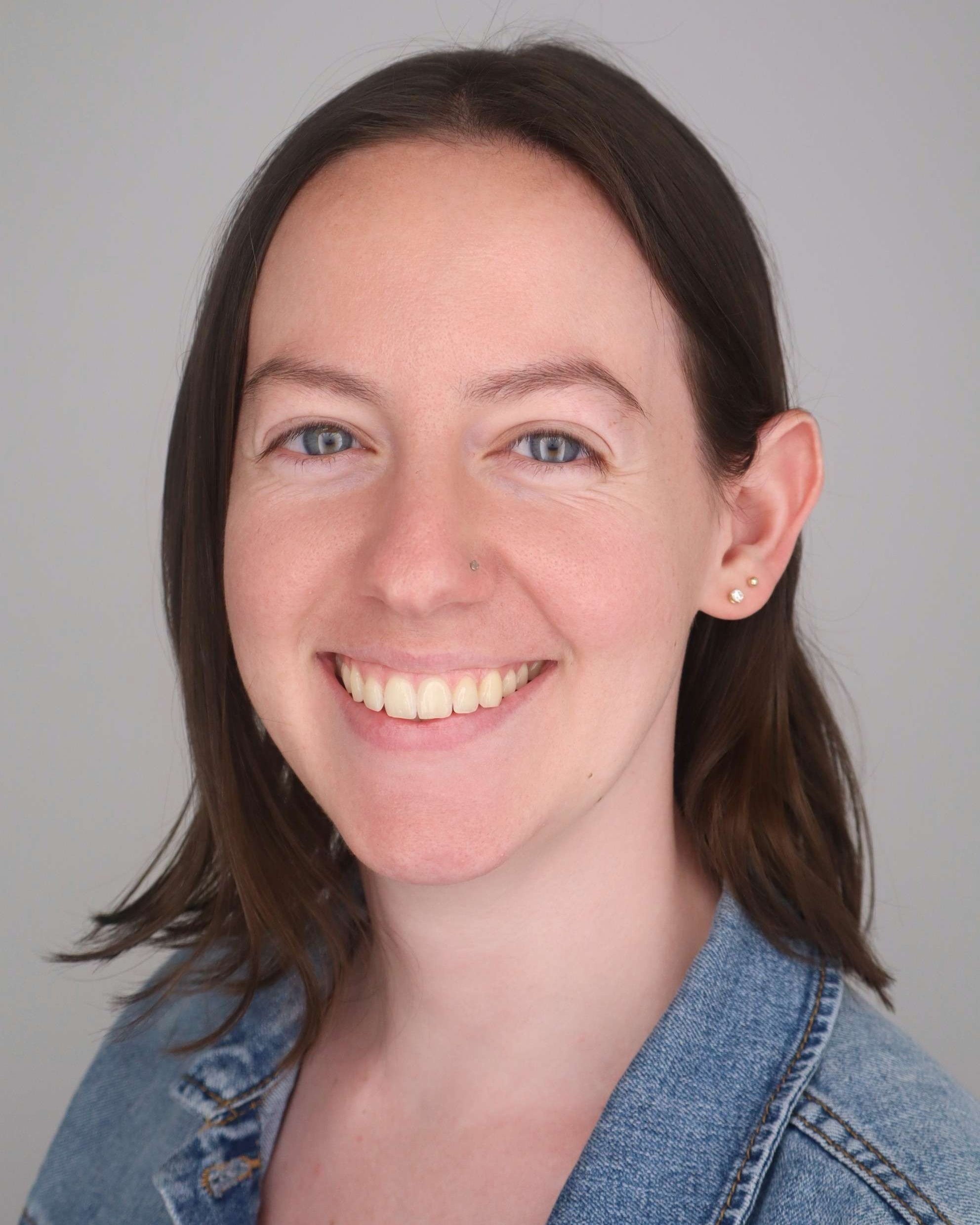
Emily Johnson, MSW, LICSW
Clinical Social Worker
Boston Children’s Hospital

Florence Gagné, MD
Pediatrician
Montréal Children’s Hospital
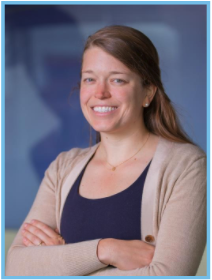
Host: Kristina Malik, MD
Assistant Professor of Pediatrics
University of Colorado School of Medicine
Medical Director, KidStreet Pediatrician, Special Care Clinic, Children’s Hospital Colorado
In this Complex Care Journal Club podcast episode, Ms. Emily Johnson and Dr. Florence Gagné discuss a scoping review of interventions to assess social needs for children with medical complexity. They describe the different approaches to screening and intervention in the five included studies, implications for practice, and opportunities to engage social workers in research.
Learning Objectives:
At the conclusion of this educational program, learners will be able to:
- Discuss emerging evidence in the care of children with medical complexity.
- Describe methodological considerations for recent publications in complex care
- Identify opportunities to translate research findings into clinical practice.

In support of improving patient care, Boston Children’s Hospital is jointly accredited by the Accreditation Council for Continuing Medical Education (ACCME), the Accreditation Council for Pharmacy Education (ACPE), and the American Nurses Credentialing Center (ANCC), to provide continuing education for the healthcare team.
Physician
Boston Children’s Hospital designates this live activity for a maximum of 0.5 AMA PRA Category 1 Credits ™. Physicians should claim only credit commensurate with the extent of their participation in this activity.
Nurse
Boston Children’s Hospital designates this activity for 0.5 contact hours for nurses. Nurses should only claim credit commensurate with the extent of their participation in the activity.
Physician Assistant
Boston Children’s Hospital has been authorized by the American Academy of PAs (AAPA) to award AAPA Category 1 CME credits for activities planned in accordance with AAPA CME Criteria. This activity is designated for 0.5 AAPA Category 1 CME credits. PAs should only claim credit commensurate with the extent of their participation.
Social Worker
As a Jointly Accredited Organization, Boston Children’s Hospital is approved to offer social work continuing education by the Association of Social Work Boards (ASWB) Approved Continuing Education (ACE) program. Organizations, not individual courses, are approved under this program. State and provincial regulatory boards have the final authority to determine whether an individual course may be accepted for continuing education credit. Boston Children’s Hospital maintains responsibility for this course. Social workers completing this course receive 0.5 ACE CE continuing education credits.
MOC II
Successful completion of this CME activity, which includes participation in the activity, with individual assessments of the participant and feedback to the participant, enables the participant to earn:
0.5 MOC points in the American Board of Pediatrics (ABP) Maintenance of Certification (MOC) program
Disclosures
Boston Children’s Hospital adheres to all ACCME Essential Areas, Standards, and Policies. It is Boston Children’s policy that those who have influenced the content of a CME activity (e.g. planners, faculty, authors, reviewers and others) disclose all relevant financial relationships with commercial entities so that Boston Children’s may identify and resolve any conflicts of interest prior to the activity. These disclosures will be provided in the activity materials along with disclosure of any commercial support received for the activity. Additionally, faculty members have been instructed to disclose any limitations of data and unlabeled or investigational uses of products during their presentations.
The following planners, speakers, and content reviewers, on behalf of themselves, have reported the following relevant financial relationships with any entity producing, marketing, reselling, or distributing health care goods or services consumed by, or used on patients:
Emily Johnson, MSW, LICSW
None
Florence Gagné, MD
None
Kristina Malik, MD
None
Please see the FAQs below for common questions about how to work through a course. If you have a question or issue that is not addressed in the FAQ, please use this form to submit a help request, or if your issue is urgent, call the CME office at: 617-919-9908.
How do I navigate this course? There are two ways to access and navigate course content with the interactive table of contents: at the bottom of the main course page or in the sidebar on the right side of the page. Select the links in the table of contents to access the corresponding content. Depending on the course, access to content may be linear, in which case each content module or section can only be accessed if the prior ones are completed, or non-linear, in which case modules and sections can be accessed in any order. Use the breadcrumbs at the top of any course page to orient yourself within a course, or return to a previous course section or the main course page. How do I claim credit? If the course has been accredited, available credits will be displayed on the course home page. Select only those credits that apply to your profession, and click/tap “Apply Selection.” You may make your selection at any point while you are taking the course, or after you have completed it. How do I download a certificate? There are two ways to view/download your certificate: from within the course or from the course listing under your profile (select the document icon). In either case, you must have selected at least one available course credit type to generate a certificate. How do I view/print my transcript? You must be logged in to view your transcript. Select My Profile at the top of the page. If you do not see the transcript selector, be sure the Courses tab is selected. Select the type of credit and dates to include in your credit report. To include all credits from all time, leave the options blank. Select Download Transcript to view/download your transcript. Note each credit type in your transcripts starts a new page. How do I request a refund? Please email the CME Department to request a refund.How do navigate this course?
How do I claim credit for this course?
How do I download a certificate?
How do I view/print my transcript?
How do I request a refund?
Click Here to View Transcript
Kristina Malik, MD 00:04 Hello and welcome to the Complex Care Journal Club podcast. My name is Kristina Malik, and I am a pediatrician at Children’s Hospital Colorado, and your host for this episode. In this podcast series, we seek to discuss emerging evidence in the care of children with medical complexity and its implications for practice. I’m delighted to have Emily Johnson from Boston Children’s Hospital and Dr. Florence Gagne from Montreal Children’s Hospital joining me today. They are the lead authors of the article “Interventions to Assess Social Needs for Children with Medical Complexity and Their Families: A Scoping Review”, published in Patient Education and Counseling in February 2026. Thank you so much for being here today. Florence Gagné 00:40 Thank you for having us. Emily Johnson 00:41 Thanks for having us. Kristina Malik, MD 00:43 So, I’d like you to start with a little bit about why you decided to conduct this scoping study? What was the gap that you identified in your clinical practice? Emily Johnson 00:55 Thanks for asking. So, Florence and I work together in a primary care medical home for children with medical complexity, and we were looking to implement some sort of psychosocial assessment for our patients. And we wanted to first look at how other programs were doing that, and one of the things we talked about as a group, and two of the co-authors, Sarah Hadge and Sarah Wachter, are the other social workers in the program with me. We were thinking a lot about how social needs impact patient care and access, and specifically for children with medical complexity. One example I can think of is that if a patient is dependent on a ventilator at home, for example, and the family faces a utility shut off or financial hardship, that can be a really serious and emergent situation that could lead to hospitalization for the patient, and it requires really immediate action on the social workers and the rest of the medical team to make sure that the patient’s electricity stays on and that they’re able to remain in their home safely. So our goal with this study was to look at all of the different ways that different health systems, different places are integrating health-related social needs screening for specifically children with medical complexity, and we wanted to do a scoping review because we know that there’s a lot out there about health-related social needs generally, but there’s less information about children with medical complexity. And we knew based on our work that children with medical complexity are facing specific concerns related to health-related social needs outside of what the general population of pediatric patients are facing. Emily Johnson 03:12 So, our goal was to look at what was out there, see how they were implementing it, and then how can we adapt our own version of what they were doing for our patients? Kristina Malik, MD 02:47 Wonderful. Tell me a little bit about the results of this study, if you don’t mind sharing. Emily Johnson 02:55 Yeah, we found that the screening topics that the different clinics chose were pretty consistent, and there were a few things that people were asking more specific to kids with medical complexity, for the most part, they were asking about transportation, food insecurity, housing instability, general financial strain, and there were a couple of times where they asked other questions like interpersonal safety, intimate partner violence, caregiver mental health, which we know is really important to discuss with the caregivers for children with medical complexity, one of the things we were really happy to find was that there was a big use of interdisciplinary teams. As our team is very interdisciplinary, we have doctors, nurses, nurse practitioners, social workers, patient navigators. We wanted to see how they were integrating all members of the team in order to do the screening and provide introductions to families. A lot of times, the screening was done in person with families, which is really meaningful. There was one study that was partially completed during COVID, and so they transitioned to phone screening with families. But for the most part, it was an in-person interaction . Florence Gagné 04:06 And we found that there were already a few different settings where screening were taking place, it was pretty broad. So, we found a few that were done in more outpatient clinics as well as inpatient units, and more specifically, one of the screening that we found was done in the clinic specific to children with medical complexities. It was in a spina bifida outpatient clinic, so that was pretty neat because it felt like it was closer to our setting as well. And then there was another one that we found that was done in a primary care pediatric practice as well. Emily Johnson 04:41 And one really clear finding was that when patients were screened, they screened positive for unmet needs. One of the studies had 76% of their participants had an unmet need, and that’s an extremely high percentage if you think about the number of children with medical complexity in the United States, so for programs that want to integrate some of the screening, like we did, there needs to be some thought about this is a huge number of children that will screen positive on your screener. How are you going to implement the intervention for them? Do you have the staffing? Do you have the resources? Can you actually improve their unmet social needs? Otherwise, why are you asking those questions? Florence Gagné 05:32 In addition to what Emily just said, the studies that we looked into, some of them describe a really neat and innovative intervention. So, there was one study that had created an electronic resource map that could be specific to the family’s needs, and they could use it on their mobile device. So that was really nice because it kind of personalizes it specifically to the family’s identified needs, and they create something concrete that after you’ve identified the need, you can then give a resource to the family and act directly on the need that was identified. Kristina Malik, MD 06:10 Did any of them talk about either tailoring screening or tailoring the resources to the child’s medical complexity, or if there is unique findings in that realm? Emily Johnson 06:21 Interestingly, we didn’t find that many of the studies did that. There was one that took place in a clinic for children with sickle cell anemia, and they described a little bit more of a relationship between the social worker doing the screening and intervention and the families, and my guess is that the social worker was so integrated into the program and the program seemed pretty small that they had a greater sense of you know what are the specific medical challenges that the family is facing as well, but that is one of the things that we didn’t see so much of was that specifically the social workers and the screeners being integrated into also the medical complexity. Kristina Malik, MD 07:11 And one of the interesting findings you also noted was that a lot of times, even though there’s high rates of screening, often the clinics did not report high rates of using the resources or requesting resources. Can you tell me a little more about that? Emily Johnson 07:32 Yeah, I think it could speak to a couple of different things. One of them, families just might be able to meet their own needs, and they might feel like they have the independence to do that themselves and might not need the assistance of the medical team. They also might not be aware that the medical team could help with things like this, and so there may be a little bit of mistrust or an unknowing of what a medical home could offer to a family for things like financial insecurity, or utility insecurity, or housing insecurity, homelessness. In the past, the field of medicine hasn’t always been interwoven with things like how secure is your access to your apartment every day, and are you going to have that apartment tomorrow? That’s a relatively new way that the medical field is serving patients. And so, I think families could also use some education about what, what can the medical team help with? Florence Gagné 08:44 If I can add to what Emily was saying, I wonder too if there is a little bit of stigma that plays into it and the fear of being judged as well? Which we’re trying to address as much as possible by asking these questions in an open and a respectful manner, but I think unfortunately there still is some stigma and there might be some fear as well about talking when talking about these, these topics and with families sharing that information and the worry of the impact that sharing these information will have. Kristina Malik, MD 09:16 So yeah, let’s talk a little bit about what you think the impact on clinical practice would be from the results of your study. There is actually a section in your conclusion about practice implications. So I’d love to hear about how you wrote that section. And how it was integrated into the manuscript too. Florence Gagné 09:38 Yeah, so I think it’s really important for clinical team members to understand all of the different things that caregivers are dealing with when they bring their child in for an appointment, and I think that’s something that we know. But unfortunately, we’re often already tight in time. The visits are packed with all sorts of medical concerns that need to be addressed, and we know that we want to address the psychosocial factors, and they might be playing a big role. But it’s just easy to kind of go through the visit without necessarily having the time to get to them, or just assuming that they may have been addressed in a different setting. So I think we identified and thought about it in in a way that by having a standard screening in place, it makes sure that these topics are addressed for every single patient that comes through, and that once these are identified, then we can work as a team to try to address them appropriately, and I think again, like when we were going through the study and looking at these the screening, it made us reflect that as a medical establishment, when the team members are often very focused on treating the medical concerns, and it can be hard to take the time to zoom out and see the family as a whole, and not just like the reason why they’re coming in, but their whole family picture. And the research kind of highlights the importance of having a strong relationship between the clinical team, but also the whole patient support system and, and what their daily life looks like. I think that what we would recommend to a team of, interdisciplinary team that has social workers, medical team, nursing, and have the opportunity to work together. Is that if you’re noticing that there’s looks like there’s a disconnect between the child caregiver and the medical team, just to take a pause and see what else might be going on here? What else could be impacting the relationship between the team and the caregiver? And sometimes it can be things like the caregiver medical literacy might be impacting the way that they’re managing the medications, for example, or the family might not be able to come to their medical appointment. Why is that? Well, it’s because they don’t have transportation, and so to highlight the fact that it’s important to take a step back and be able to to see them as a whole and trying to understand what’s going on. Emily Johnson 12:05 I would add as well one thing to think about for maybe the business or administrative side of how clinics and hospital systems work is again you’re potentially going to generate a lot of work for team members who are providing interventions for health-related social needs, if you are dedicating your team to screening for them. And so, how do you think about the downstream impacts of what you’re going to uncover if you find out that 95% of your patients are housing insecure, and you have one social worker? How are you going to split that social worker’s time? How does the social worker figure out how to triage those families? What meaningful interventions can they provide to actually make a difference in that housing situation? And I think hospital systems, this is a great opportunity for them to think larger scale about how and why we’re screening for social needs? And how can we empower families along with the medical team and the interdisciplinary staff to address those needs with the resources, right? Because again, screening without the ability to actually make a difference with the things you’re screening for might actually disempower families from sharing those things in the future. They might feel like if you’re asking me this, but you can’t do anything to help me. Why am I telling you? That might hurt the relationship. Which is in the medical home, the most important thing that you can have is the relationship between the team and the patient and the family. Kristina Malik, MD 13:48 Yeah, what are your next steps for your program after doing this scoping review? Emily Johnson 13:54 So, we took all of this that we learned from this study, and what we’re working on right now is we did implement our own psychosocial assessment to screen new patients coming into our clinic and their families for a variety of social needs. We used a semi-structured social work assessment, a more fluid discussion with the family between the social worker and the family about what sort of needs they have, while making sure that we’re hitting on the topics that we found very consistently showed up in the screening in other places, and we’re working on publishing those findings right now. And I think one of the things that we want to think about more broadly is how do we again effectively use the social workers and the nurses and the patient navigators to really address those needs and measuring what difference does that make? So, one of the things we found was it’s really hard to measure outcome of these interventions because, again, in a place where housing is really scarce or very expensive, there’s limited things that a hospital system can do to meaningfully change that fact. And so, how do we measure what interventions were effective, and what does effective really look like when you’re thinking about intergenerational social needs? And so, I think one of the things that we’re looking to do next is sort of figure out how we measure that, and that way we can have consensus among the medical community about what does an effective social needs intervention look like? Kristina Malik, MD 15:35 And do you have any recommendations for families or patients based on your scoping review? Emily Johnson 15:45 One of the things that we discussed is that again, families don’t always know that they can bring these things up to providers. Not everywhere screens for it. Again, we found very few studies that were specifically focused on kids with medical complexity and the social needs that are impacting them and their families. And so, families, if they know that they can bring something up to their provider, I don’t have any way to get here today. Is there any way you can help me with transportation? If they know that’s something that the medical team can help with, you know, again, that strengthens the relationship between the family and the provider. That increases the show rate for the patient. That helps them access care more easily, and hopefully, it takes a burden off the caregiver’s shoulders that they’re the ones that have to figure out the transportation for the appointment, and so I think one thing I would say to families is, if there’s something that you feel like is impacting your ability for your child to access their medical care, talk to talk to the medical team about it. That is in their purview. That is why they are there is to help empower you to get your needs met and help your child access the care that they need. Kristina Malik, MD 16:55 Yeah, I felt like a lot of the interventions that you found in your scoping review were very, like you mentioned, intensive, like in person or on the phone, and really develop a relationship. And do you feel like that’s a required need for a intervention for this population, or do you think doing something electronic or paper is okay too? Emily Johnson 17:18 You know I think, we found that things were happening either way, both ways. One of the studies, I believe mentioned that families were able to choose how they wanted to access the resource information, and so I think it’s really important to step back and just say, ask the families how they want to receive the information. They are the, the decision makers. They are the center of the, the medical home for their child. And so, if a parent would prefer to access it electronically on their phone, so that they can take it with them anywhere they go, and they can check in the area to see I know this food resources where I am right now, that’s great. And if the family has enough trust in the medical team to say I actually have a hard time accessing on my cell phone websites or things that are not in my preferred language. Can you print this out for me, or can you call me next week and remind me that this is what we talked about? I think that goes a long way to help build trust between the family and also make sure that they are accessing the resources that are provided to them in order to address the need that they identified. Florence Gagné 18:33 And I think, although resource intensive, the big advantage of having direct communication, either like in person or a phone call, is that it won’t necessarily discriminate against families who might not be able to read or write in English or might not be able to access resources online. And so, I think that’s also a big factor as to why it might be more beneficial. Kristina Malik, MD 18:59 I’d like to talk a little bit about what you identified when you were conducting your scoping review, like some challenges, some opportunities, either with the using a scoping review, but also in general, what you think that other researchers could take away from this? Emily Johnson 19:17 I think one thing that we ran into was that one of the reasons why we chose to do a scoping review is because this area of research is pretty new. The idea that children with medical complexity are facing social needs that might be unique to them over and above the general pediatric population. And so we dug pretty hard, and we found five papers that looked at what we were looking for, which was both to screen patients and also intervene to address their social needs, and we found five papers, and so we tried as hard as we could to keep our scope pretty broad because we didn’t want to close ourselves off any more than we had to, while still staying true to what our goal of the paper was, which was to focus on kids with medical complexity. We felt pretty strongly that we didn’t want to open up our scope to include general pediatric practice or children with chronic conditions, which might not be categorized under medical complexity, because we really wanted to identify that for children with medical complexity, which have a lot of medical appointments, use a lot of medical technology, have a lot of hospitalizations, have long hospitalizations. They are important to show and highlight that they have needs unique to the general pediatric practice. Kristina Malik, MD 20:45 Is there anything else that you wanted to talk about today? Anything else you wanted to bring up? Emily Johnson 20:50 The one thing I would just add, as the social worker in the room, is it was really intimidating as a social worker to try and start this research project and finish it, and it took a really long time. And I think it’s important to highlight that because it can be difficult for hospital social workers to lead research projects in clinical settings. Social workers are extremely clinic-based, and usually, at least I can speak for myself, don’t have protected research time, and are not scheduling appointments with patients, but going into a room when there’s a need, or getting a phone call from a family. And so, one opportunity we had was that we have really strong support from our medical director for the social workers to be leading this project and doing this project. And one thing I would just say to other social workers who are interested in this is, if it’s something that you want to do, the support of your medical leadership is really important. But also, research is not something that should be scary. And I think a lot of social workers are intimidated by doing clinical research, especially when you’re sort of interwoven with the medical complexity. It can be a little bit tricky to figure out, you know, am I qualified to be doing this research? Is this something that I have something to say about? And so, I would say also for medical directors, if you’re seeing this, if this is resonating with you, and you’re finding the same things in your clinical setting, and you have a social worker, or you have a patient navigator, or a community health worker. Get them involved in the research as well, because I think social workers, patient navigators, allied health workers are doing a lot of the work, and they have a lot of insight into what patients and families need and how to improve care. And I think a lot of times it can be daunting for those disciplines to be sort of at the head of the research team, and so the collaboration between the medical team and the social work team is really, really important, and I think leads to better research. Florence Gagné 23:07 100% agree with this. Emily has been a star in leading this whole project, and we’ve just been supporting her in the background as much as possible. But truthfully, she has done a wonderful and amazing job. Kristina Malik, MD 23:20 Yeah, well, thank you so much for your time today. Thank you to you and your team for the research you’ve done to advance the field off complex care. So, thanks for listening to the Complex Care Journal Club Podcast. We aim to highlight research that has the potential to be practice-changing, that values patient and family engagement, is relevant across disciplines and diagnoses, and uses high quality or novel research methods. We invite you to join the conversation by suggesting an article that you would like to see discussed in the podcast using the form provided on the OPENPediatrics YouTube channel. Thank you for joining us. Journal Club Article Johnson ER, Hadge SM, Wachter SM, Gagné F. Interventions to assess social needs for children with medical complexity and their families: A scoping review. Patient Educ Couns. 2026;148:109555. doi:10.1016/j.pec.2026.109555. Other References Ming DY, Jones KA, Sainz E, Tkach H, Stewart A, Cram A, Morreale MC, Dizon S, deJong NA. Feasibility of implementing systematic social needs assessment for children with medical complexity. Implement Sci Commun. 2021 Nov 21;2(1):130. doi: 10.1186/s43058-021-002373. PMID: 34802465; PMCID: PMC8606226.
